

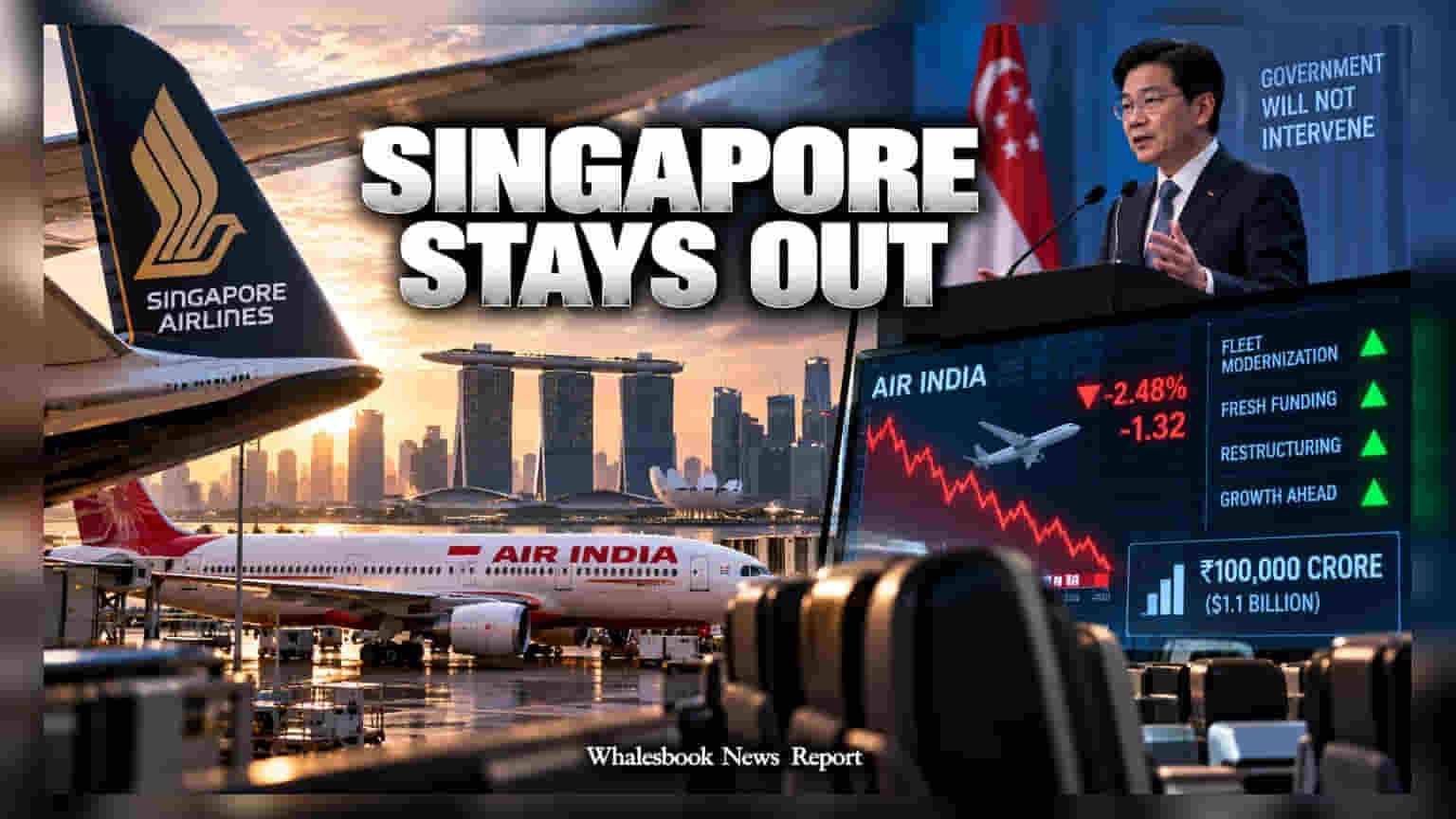
Singapore’s government has confirmed it will not influence Singapore Airlines' investment decisions regarding Air India. This follows the airline's requirement for a 100 billion rupee capital infusion to support its restructuring. The policy ensures that any financial commitment will be determined by commercial performance and business logic rather than political intervention, protecting long-term shareholder value.
The government of Singapore has firmly stated that it will not intervene in the investment choices made by Singapore Airlines regarding its stake in Air India. This clarification arrives as Air India seeks approximately 100 billion rupees, or $1.1 billion, in fresh funding to support its ongoing restructuring, fleet modernization, and operational needs. By maintaining a hands-off approach, the Singaporean government aims to ensure that corporate leadership remains focused on financial discipline and market-based returns rather than external political pressures.
Air India, which is majority-owned by Tata Sons, relies on its shareholders for capital support. Tata Sons holds a roughly 75% stake, while Singapore Airlines holds the remainder. Given the structure of this partnership, any fresh capital injection is expected to come from both parent entities in proportion to their ownership. The current funding proposal is designed to be released in tranches, rather than a single lump sum, with disbursements likely tied to specific operational performance milestones. This structure acts as a safeguard, ensuring that money is spent effectively as the airline meets its business goals.
For investors and market observers, this clarity on corporate governance is significant. It signals that Singapore Airlines' management team is solely responsible for determining whether the investment in Air India meets the group's internal profit and return criteria. This removes uncertainty about whether the investment might be motivated by national or political interests, allowing for a clearer focus on the airline's business case.
However, the capital raise comes during a challenging period for the carrier. Air India has been working to navigate significant operational headwinds, including rising fuel costs and the fallout from regional instability in the Middle East, which has complicated route planning and increased operating expenses. The airline is also managing the long-term impact of the June 2025 crash of a Boeing 787-8, known as Flight 171, which resulted in significant loss of life near Ahmedabad. This tragedy and the subsequent regulatory and public scrutiny have added layers of complexity to the airline's turnaround efforts.
Financially, the pressure remains high. The airline reported losses exceeding $2 billion in the previous fiscal year, highlighting the scale of the financial burden involved in stabilizing the business. Investors monitoring the situation should track the airline’s ability to hit performance milestones, as these will dictate the flow of the proposed capital. Furthermore, future updates regarding the timeline of these tranche payments and any changes to the airline's restructuring plan will be important indicators of the company's progress toward achieving stability.