

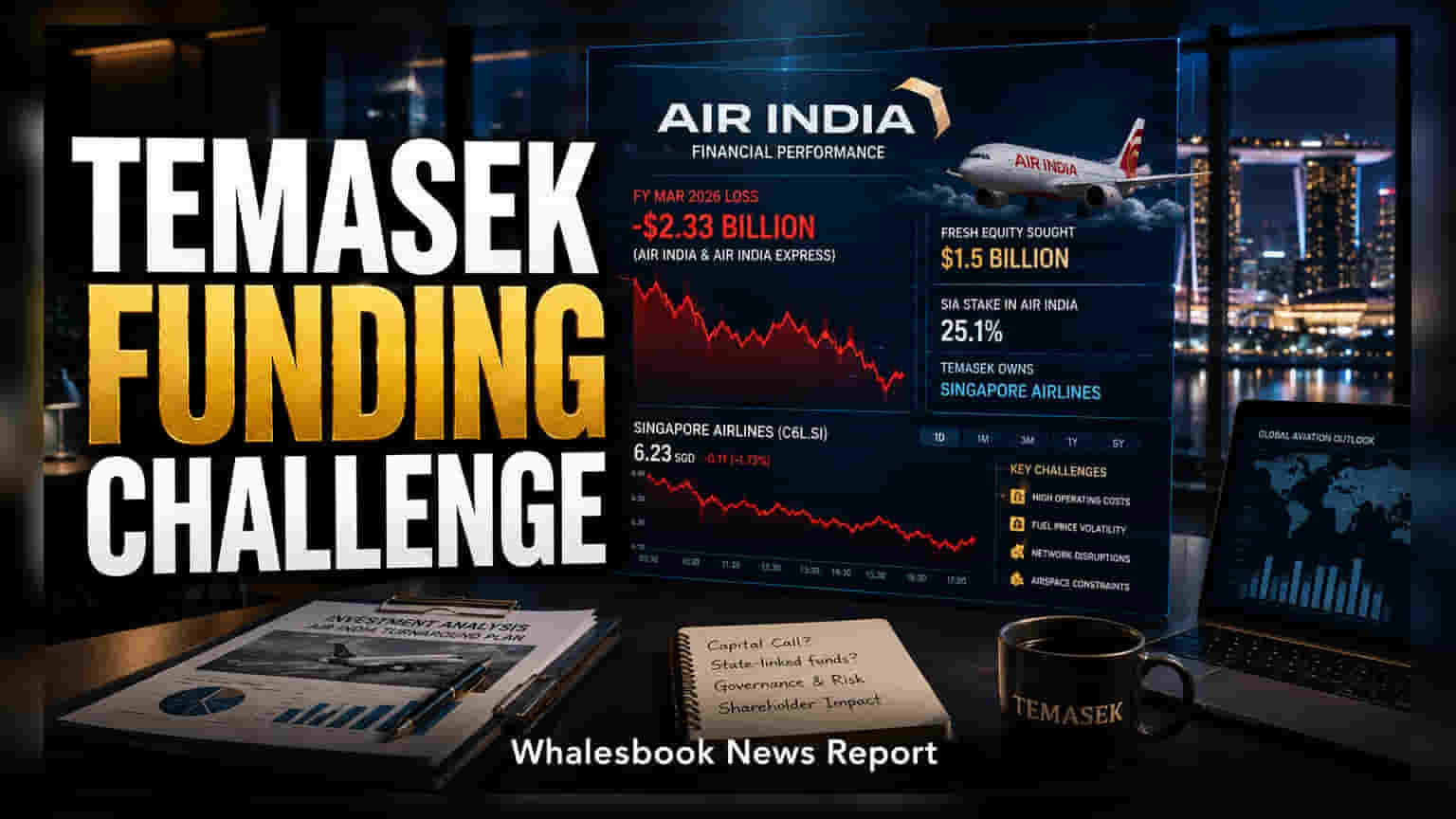
A Singaporean lawmaker has challenged the use of state-linked funds to support Air India, which is seeking $1.5 billion to fuel its turnaround. The airline group reported a $2.33 billion loss for the year ending March 2026. This scrutiny underscores the high cost of restructuring for Air India, in which Singapore Airlines holds a 25.1% stake.
Political scrutiny has intensified in Singapore regarding the ongoing financial requirements of Air India. Kenneth Tiong, a member of parliament, has publicly questioned the potential use of state-linked capital—specifically funds involving the investor Temasek—to facilitate further investments into the Indian carrier. This development comes as Air India reportedly seeks approximately $1.5 billion in fresh equity to sustain its long-term turnaround strategy led by the Tata Group.
The controversy centers on the structure of the investment. Singapore Airlines (SIA) maintains a 25.1% stake in Air India, while Temasek Holdings is the majority owner of Singapore Airlines. The lawmaker argues that this chain of ownership makes the funding request a matter of public interest, suggesting that SIA should meet its financial commitments to the Indian carrier from its own balance sheet rather than relying on capital ultimately connected to Singapore’s state investment structure. Tiong has filed a parliamentary question for the session on September 8, 2026, seeking clarity on how these foreign investments and potential losses impact the national carrier's stability.
Financial data adds context to why this debate is gaining traction. For the fiscal year ending in March 2026, Air India and its subsidiary, Air India Express, recorded combined losses of $2.33 billion. These losses represent a sharp increase compared to the previous year, highlighting the significant financial burden of the airline's massive restructuring plan. Chairman N. Chandrasekaran has previously noted that this transformation is an ambitious project that could span a decade.
For investors and sector observers, this situation underscores the reality of the aviation turnaround. The airline industry continues to face operational pressures, including high fuel costs, network disruptions, and regional airspace constraints. These factors have contributed to persistent financial strain, making the need for regular capital injections a standard, yet sensitive, part of the business model. Singapore Airlines has previously addressed similar inquiries at its annual general meetings, maintaining that the board evaluates all capital calls based on its broader corporate strategy and competing priorities.
The upcoming parliamentary discussion is likely to be watched by those monitoring the governance of state-linked investments and the financial health of the Tata-led aviation group. The key monitorable for the coming months will be how Singapore Airlines navigates these capital requirements while balancing the demands of its stakeholders and the evolving financial needs of its Indian associate.