

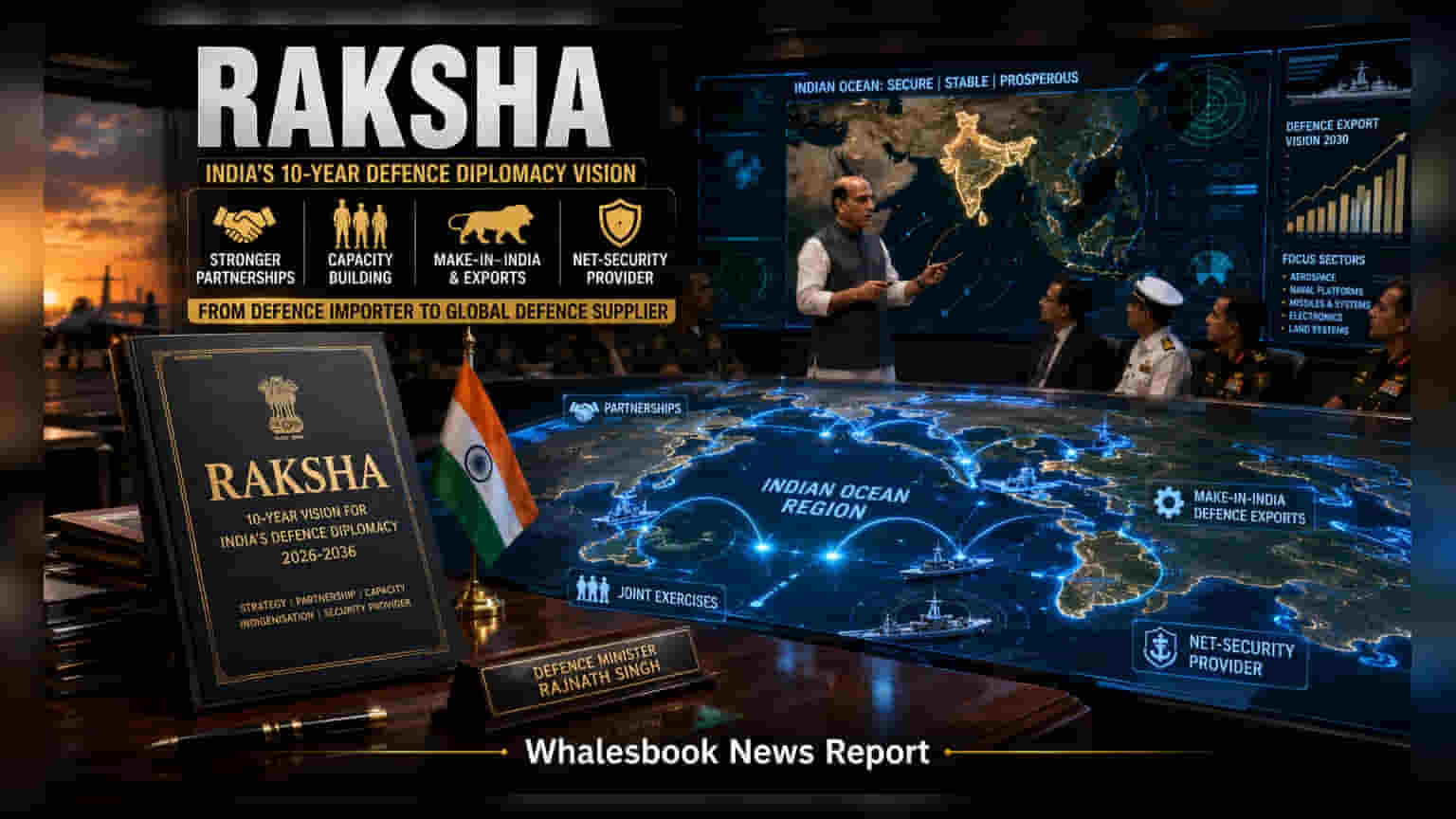
Defence Minister Rajnath Singh has launched 'Raksha', a 10-year strategic roadmap aiming to transform India into a global defense manufacturing and export hub. The policy focuses on deepening international partnerships and maritime security, providing long-term policy visibility for the domestic defense sector.
Defence Minister Rajnath Singh has officially launched the 'Raksha' strategic framework, setting a clear 10-year vision for India’s defense diplomacy. The document serves as an operational roadmap for the Ministry of Defence and the Ministry of External Affairs, aiming to shift India’s stance from a defense importer to a consistent global supplier of military equipment.
The strategy is built on four core operational pillars. First, it prioritizes the deepening of bilateral and multilateral security partnerships to strengthen India's regional influence. Second, it focuses on capacity building through standardized joint military exercises and the exchange of tactical knowledge with allied nations. Third, the policy strongly promotes the 'Make-in-India' initiative, with a stated goal of converting domestic manufacturing capabilities into a reliable engine for defense exports. Finally, the framework reinforces India's role as the primary net-security provider in the Indian Ocean Region, maintaining readiness for humanitarian and security responses.
For investors, this policy announcement provides long-term stability and visibility for the Indian defense manufacturing sector. By aligning diplomacy with industrial goals, the government intends to support companies involved in defense production, such as Hindustan Aeronautics (HAL), Bharat Electronics (BEL), Bharat Dynamics, Mazagon Dock Shipbuilders, and Garden Reach Shipbuilders. These entities are central to the government’s efforts to improve indigenous production and increase export volumes to friendly nations.
While the roadmap signals strong government support, it also brings specific challenges. The primary risk for the sector is the execution of large-scale manufacturing and the ability to compete in international markets. Transitioning from importing defense technology to becoming a global exporter requires high-quality manufacturing, competitive pricing, and successful integration into global supply chains. Additionally, maintaining a high level of operational readiness in the Indian Ocean Region will require consistent budget allocation and resource management over the next decade. If geopolitical tensions rise, or if international defense demand fluctuates, the pace of export growth could be impacted.
Investors tracking this sector may monitor upcoming developments such as concrete export order wins, government budget allocations for the modernization of the armed forces, and specific partnerships formed under this new diplomatic framework. The long-term success of the 'Raksha' roadmap will depend on the government’s ability to meet its indigenous manufacturing targets and the industry's ability to maintain competitive standards in a complex global market.