

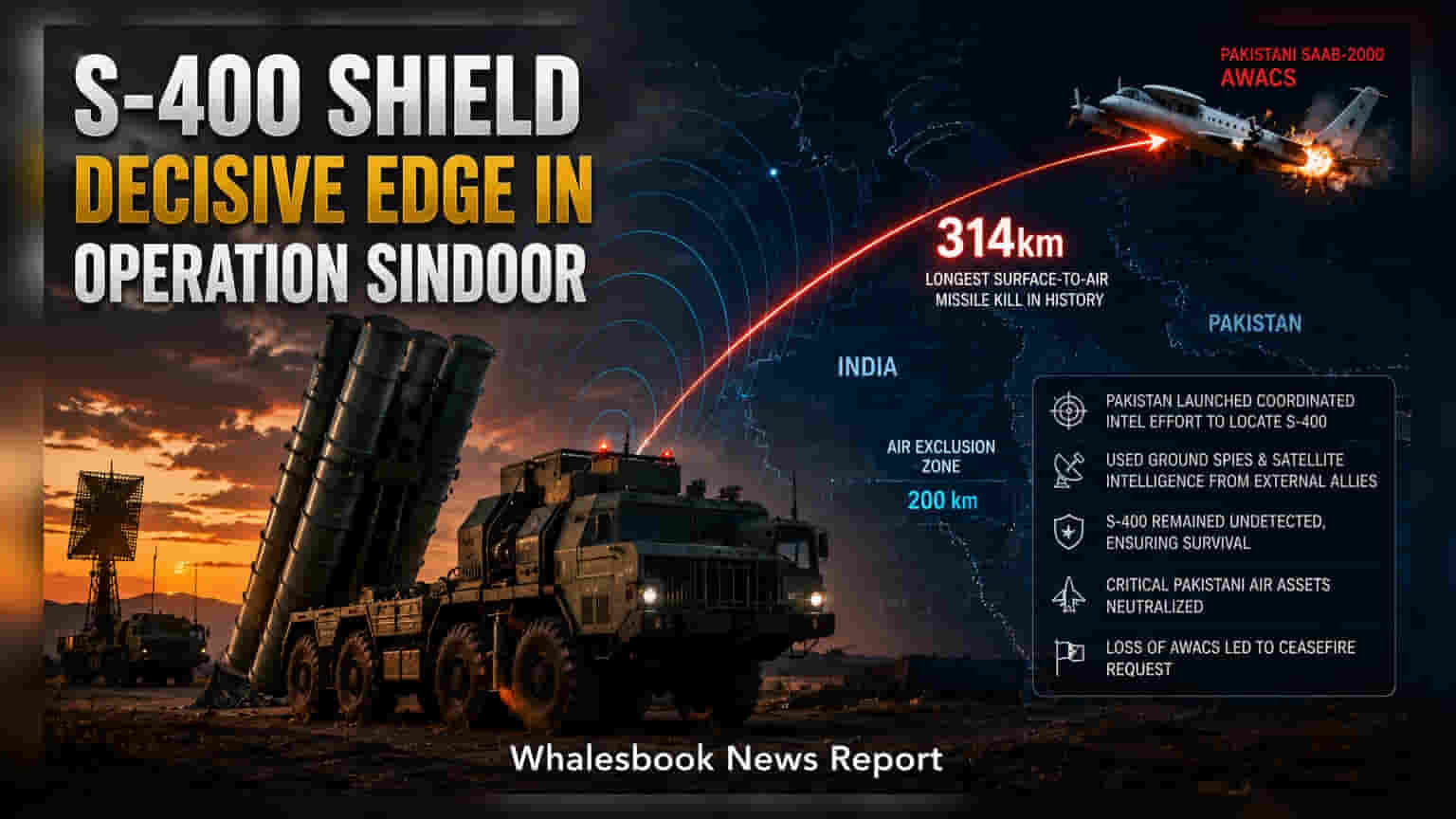
Retired Air Marshal Jeetendra Mishra has disclosed that Pakistan deployed spies and sleeper cells to locate India's S-400 missile systems during the 2025 Operation Sindoor conflict. Despite these efforts, the mobile defense platform remained secure. The Indian Air Force also achieved a historic 314-kilometer strike against an enemy AWACS aircraft, which significantly impacted the tactical power balance.
Retired Air Marshal Jeetendra Mishra has disclosed that Pakistani intelligence networks launched a coordinated effort to track the locations of India's S-400 missile systems during the border conflict known as Operation Sindoor in May 2025. This revelation sheds light on the intense pressure faced by India’s defense infrastructure and the reliance on advanced surveillance to secure the country's borders during the escalation.
The S-400 platform served as a primary deterrent during the engagement, establishing an effective air exclusion zone of 200 kilometers. According to the former head of the Western Air Command, Pakistani military planners viewed the missile battery as a critical threat to their air operations. This assessment led them to deploy ground-based spies and utilize satellite intelligence from external allies in a frantic attempt to pinpoint the location of the missile batteries.
Despite these efforts, the operational security measures and the mobile design of the S-400 launchers proved effective. The system remained elusive to enemy targeting throughout the operation, ensuring its survival against hostile surveillance. The strategic significance of the deployment culminated in a major aerial engagement, where an Indian unit successfully struck a Pakistani Saab-2000 Airborne Warning and Control System (AWACS) aircraft at a distance of 314 kilometers.
The loss of this critical radar aircraft severely degraded the Pakistani Air Force's situational awareness, shifting the tactical advantage decisively in favor of India. This engagement is currently documented as the longest successful surface-to-air missile kill in military history, highlighting the transformative impact of the S-400 on regional aerial defense dynamics. The success of the operation eventually contributed to a request for a ceasefire, as critical Pakistani air assets were neutralized.