

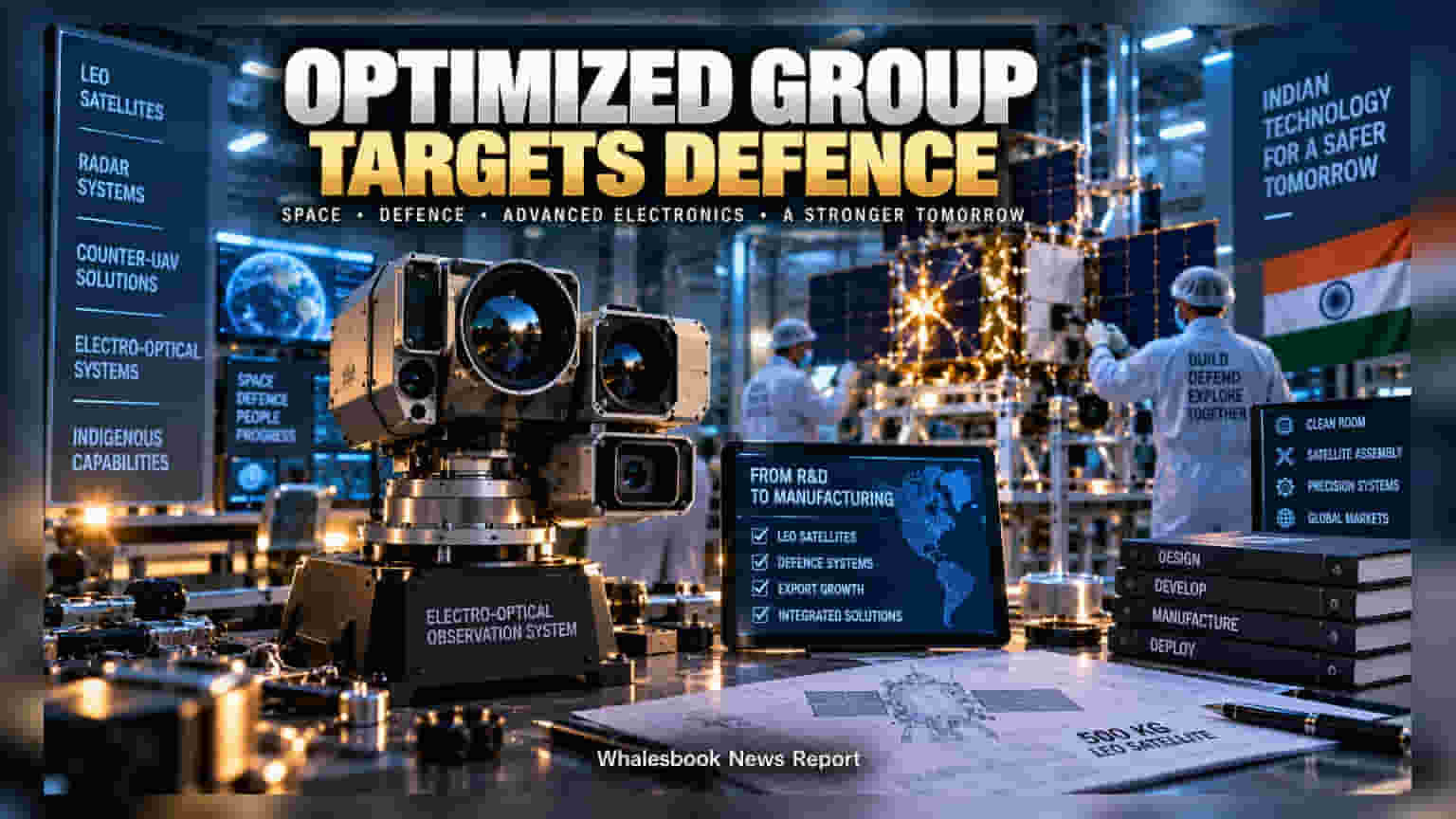
Deep tech company Optimized Group is reorienting its business to focus on defence, targeting half its total revenue from the sector within five years. The firm plans to double its export contribution to 20% by 2028 and is building a new 100,000-square-foot facility to support this growth.
Optimized Group is shifting its strategic direction, aiming to transform its revenue mix by focusing on defence products. Historically known for its work in space and nuclear sectors, the company now plans to make defence its primary business segment within five years. This shift comes as the firm transitions several long-term research projects into full-scale manufacturing.
To support this target, the company is building a 100,000-square-foot electronics development facility. This new plant will include clean-room capabilities to assemble Low Earth Orbit (LEO) satellites weighing up to 500 kilograms. Additionally, the infrastructure will include systems dedicated to radar and counter-unmanned aerial vehicle applications. The management intends to fund this significant capital spending using internal cash reserves and government-backed project financing, stating that no initial public offering is planned for the next two years.
Growth in international markets is a key part of this strategy. Currently, exports account for less than 10% of the company's total revenue. Management aims to increase this to 20% within the next 24 months by expanding its reach into Southeast Asia and Africa. The company is moving its sales strategy from basic components to offering integrated system solutions, such as its advanced electro-optical observation systems, which generally command better market positioning.
However, the strategy carries notable execution risks. The firm is moving from research and development into full-scale production, a process that can often face hurdles regarding manufacturing efficiency and cost control. Furthermore, while the company has outlined a plan for domestic localization, it currently remains dependent on high-precision imports from France, Israel, and the United States. This reliance on imported technology leaves the business vulnerable to global supply chain disruptions and potential cost increases, which could affect profit margins if the company cannot secure local alternatives efficiently.
For investors, the key monitorables will be the speed at which the new facility becomes operational and the company’s ability to secure new international defence contracts. Success will depend on how quickly it can scale production and manage its supply chain dependencies while moving toward higher domestic manufacturing.