

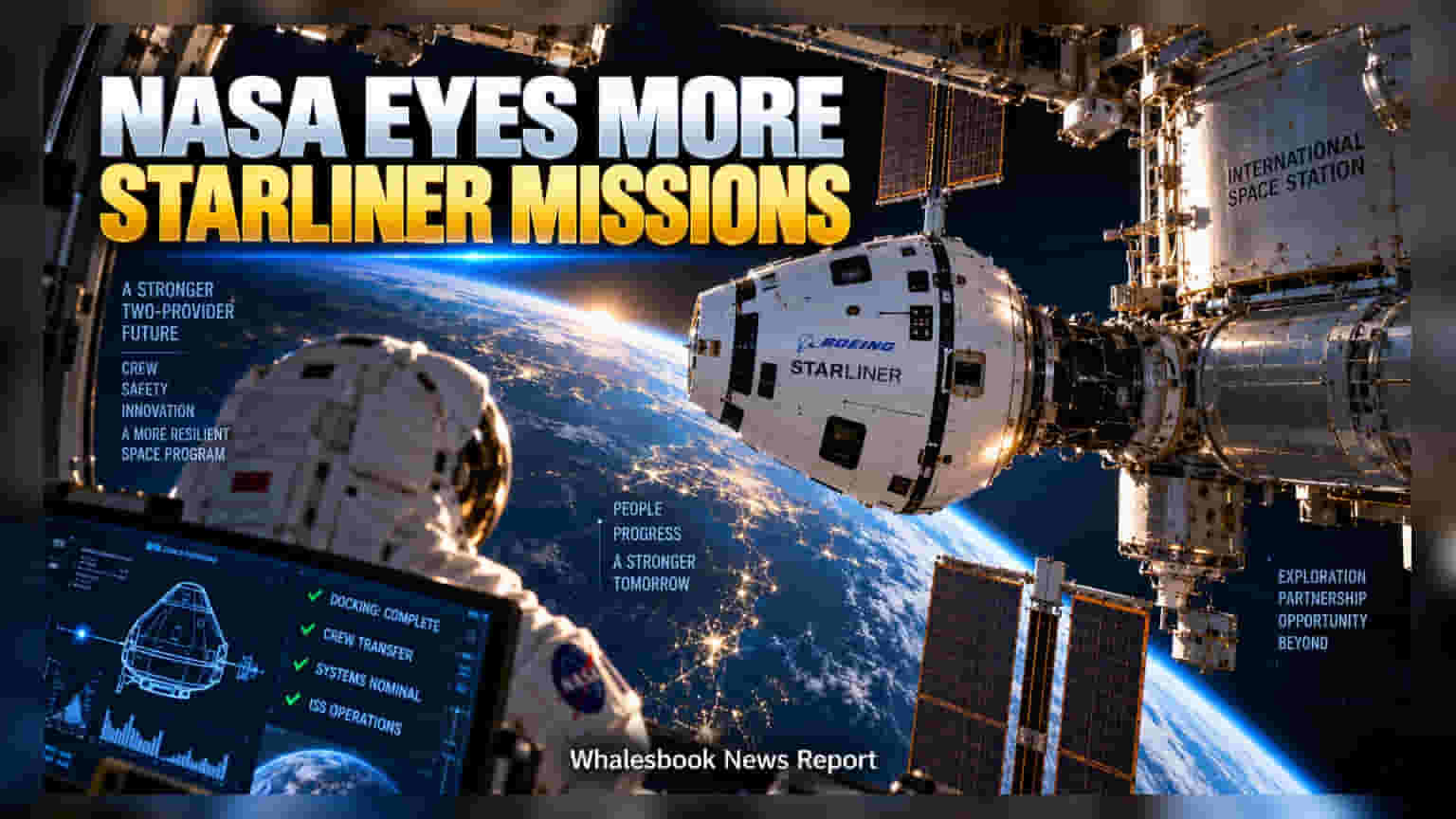
NASA is in talks with Boeing for at least ten future Starliner missions to maintain competition in space travel. While this could provide a boost to Boeing's space unit, the program faces intense scrutiny following recent technical failures and the reliance on SpaceX for astronaut returns. Investors are watching whether Boeing can resolve these operational risks and manage the financial impact of its space contracts.
NASA is working on a roadmap to potentially secure ten or more future missions from Boeing’s Starliner spacecraft. This move is part of the agency’s long-term plan to maintain two independent domestic companies capable of sending astronauts to the International Space Station, reducing reliance on a single provider. The agency remains committed to the principle of competition in the commercial crew sector, which was a core requirement when the program began in 2014.
Operational and Financial Hurdles
For investors, the path forward for the Starliner program involves significant operational challenges. The program recently faced a major setback when its crewed test flight suffered technical anomalies, including thruster issues. These problems forced the agency to bring the capsule back to Earth without its crew. Astronauts Butch Wilmore and Suni Williams, who were originally scheduled for a much shorter stay, eventually returned to Earth using a SpaceX Crew Dragon vehicle. This event highlighted the operational gaps that Boeing must close to meet NASA’s safety and reliability standards.
From a financial perspective, the Starliner program is structured as a fixed-price contract. In this arrangement, the company bears the cost of any technical delays or overruns. Historically, such contracts have created financial pressure for Boeing’s Defense, Space & Security division, as unplanned spending directly affects profitability. Investors will be monitoring whether future mission parameters allow for better financial management or if the program continues to weigh on the company's margins.
Competitive Landscape
While Boeing works to stabilize the Starliner, the competitive balance in low Earth orbit currently favors SpaceX. NASA has solidified its relationship with the Elon Musk-led firm, recently awarding a contract worth $946 million for three additional crewed missions, extending that partnership through 2030.
The next important phase for the program will be how Boeing aligns its hardware performance with NASA’s strict requirements. Investors should track future updates on technical certifications, mission timelines, and any disclosures regarding the financial health of the space division. The ability to successfully execute these future flights will be critical in determining whether Boeing can remain a viable, long-term competitor in the commercial crew sector.