

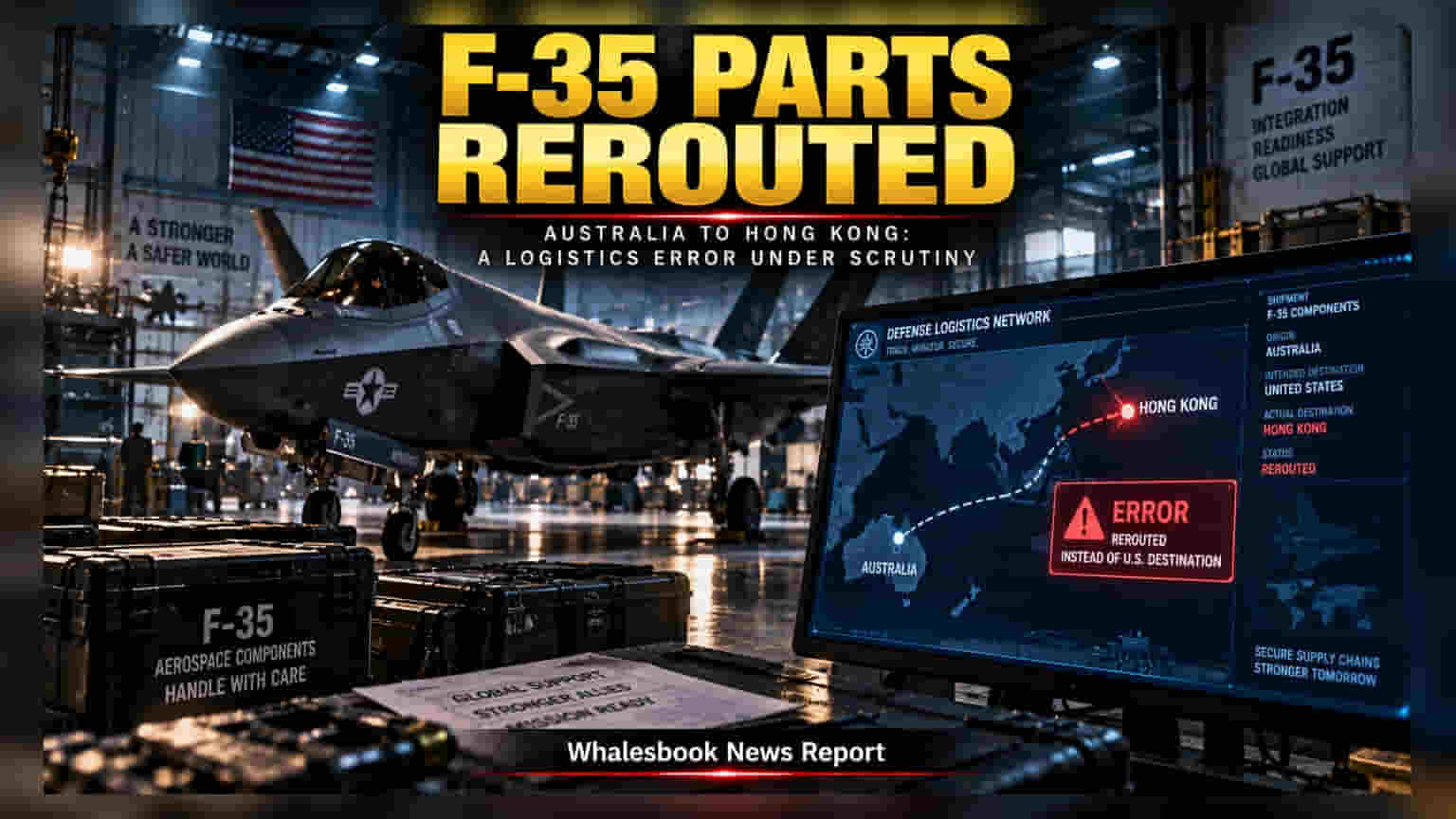
Australian and US authorities are investigating a shipment of F-35 fighter jet components that were diverted to Hong Kong instead of the United States. The incident highlights supply chain risks for major defense contractors. Investors should watch for potential impacts on logistics costs and future compliance regulations.
Lockheed Martin is under scrutiny following a logistical error that resulted in F-35 fighter jet components, shipped from an Australian warehouse, being routed to Hong Kong instead of their intended U.S. destination. While the Australian government has stated that the components involved are not sensitive military technology, the incident has drawn attention to the complex supply chain networks used by major global defense contractors.
The F-35 program relies on a vast, interconnected global pool of spare parts. To keep fleets operational across nations like Japan, Singapore, and South Korea, companies often use third-party commercial logistics providers. This incident exposes the reliance on these external partners and the difficulty in maintaining full visibility of military shipments once they are in transit. For a company like Lockheed Martin, which manages the logistics for one of the world's largest defense programs, any deviation from established shipping protocols invites investigation into compliance and security standards.
For investors, this event underscores the operational risks inherent in the aerospace and defense sector. Major defense firms are governed by strict regulations, such as the International Traffic in Arms Regulations (ITAR) in the United States, which control the transfer of defense-related articles. A breach of these protocols, even if unintentional, can lead to increased regulatory scrutiny, potential fines, and the need for more expensive, secure transportation methods. If the company is required to implement tighter oversight or change its logistics partners, it could lead to higher operational costs, which may eventually pressure profit margins.
The geopolitical context also adds another layer of complexity. The arrival of defense hardware in Hong Kong brings attention to the sensitive nature of US-China trade and military relations. While the hardware itself may not be classified, any perception that military logistics are vulnerable to unauthorized access can result in diplomatic pressure or tougher rules on how defense parts are moved internationally.
Looking ahead, investors should monitor the outcome of the ongoing investigation. The primary areas to watch include any changes to Lockheed Martin’s logistics procedures, potential updates to US Department of Defense shipping rules, and any commentary on whether this incident will lead to increased spending on supply chain security. The market will also assess if this event creates a trend of tighter compliance costs across the broader defense industry.