

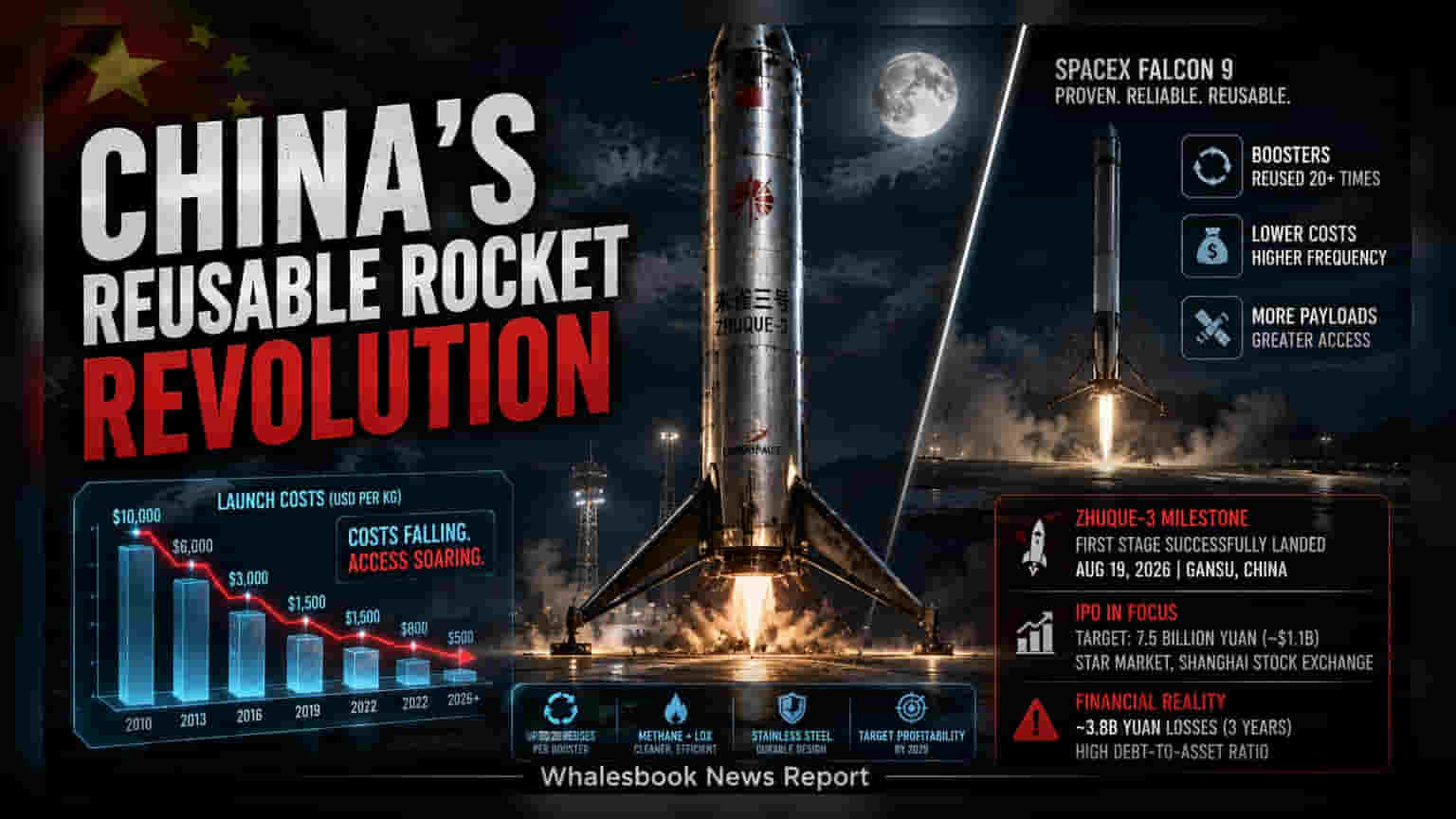
Chinese firm LandSpace has successfully landed its Zhuque-3 rocket, a milestone in its push for reusable space technology. The company is now progressing with plans for a 7.5 billion yuan IPO on the Shanghai STAR Market. However, investors should note the company faces significant challenges, including high debt and a target for profitability only by 2029. This firm is not listed on the Indian stock exchanges.
Chinese aerospace company LandSpace has achieved a significant milestone in space technology by successfully landing the first stage of its Zhuque-3 rocket in Gansu province. This event, which occurred on August 19, 2026, marks the company’s ability to recover an orbital-class booster, a critical step toward reducing the high costs associated with satellite launches. By mastering reusable rocket technology, LandSpace aims to compete more effectively with global players like SpaceX and Blue Origin.
The Zhuque-3 rocket distinguishes itself through its stainless-steel design and its use of a methane and liquid oxygen propulsion system, which is intended to burn cleaner than traditional fuels. While the rocket currently has a lower payload capacity than established U.S. competitors, the potential to reuse boosters up to 20 times could significantly improve the company’s long-term operational efficiency.
For investors, this technical success is closely tied to the company’s financial future. LandSpace is currently preparing for a public offering on the Shanghai Stock Exchange's STAR Market. The firm aims to raise approximately 7.5 billion yuan, or roughly $1.1 billion, to fund its ongoing development and expand its launch capabilities. After facing a suspension in early 2026 due to the expiration of its financial documents, the company has since restarted the IPO process with an updated prospectus.
Despite the positive technological momentum, the company’s financial health remains a key area for scrutiny. LandSpace has reported substantial losses amounting to roughly 3.8 billion yuan over the past three years. Additionally, the company operates with a high debt-to-asset ratio, which is common in the capital-intensive space sector but poses risks to financial stability. The company has publicly targeted achieving profitability by 2029, a goal that depends heavily on successful project execution and the ability to secure the necessary funding from its upcoming IPO.
It is important for Indian investors to note that LandSpace is a private Chinese firm and is not listed on the National Stock Exchange (NSE) or the Bombay Stock Exchange (BSE). The company’s progress serves as a broader indicator of global trends in space-tech innovation rather than a direct investment opportunity for retail participants in India. The primary monitorables for the company moving forward include its ability to secure the targeted IPO funding, manage its high debt load, and maintain the reliability of its rocket landings to prove commercial viability.