

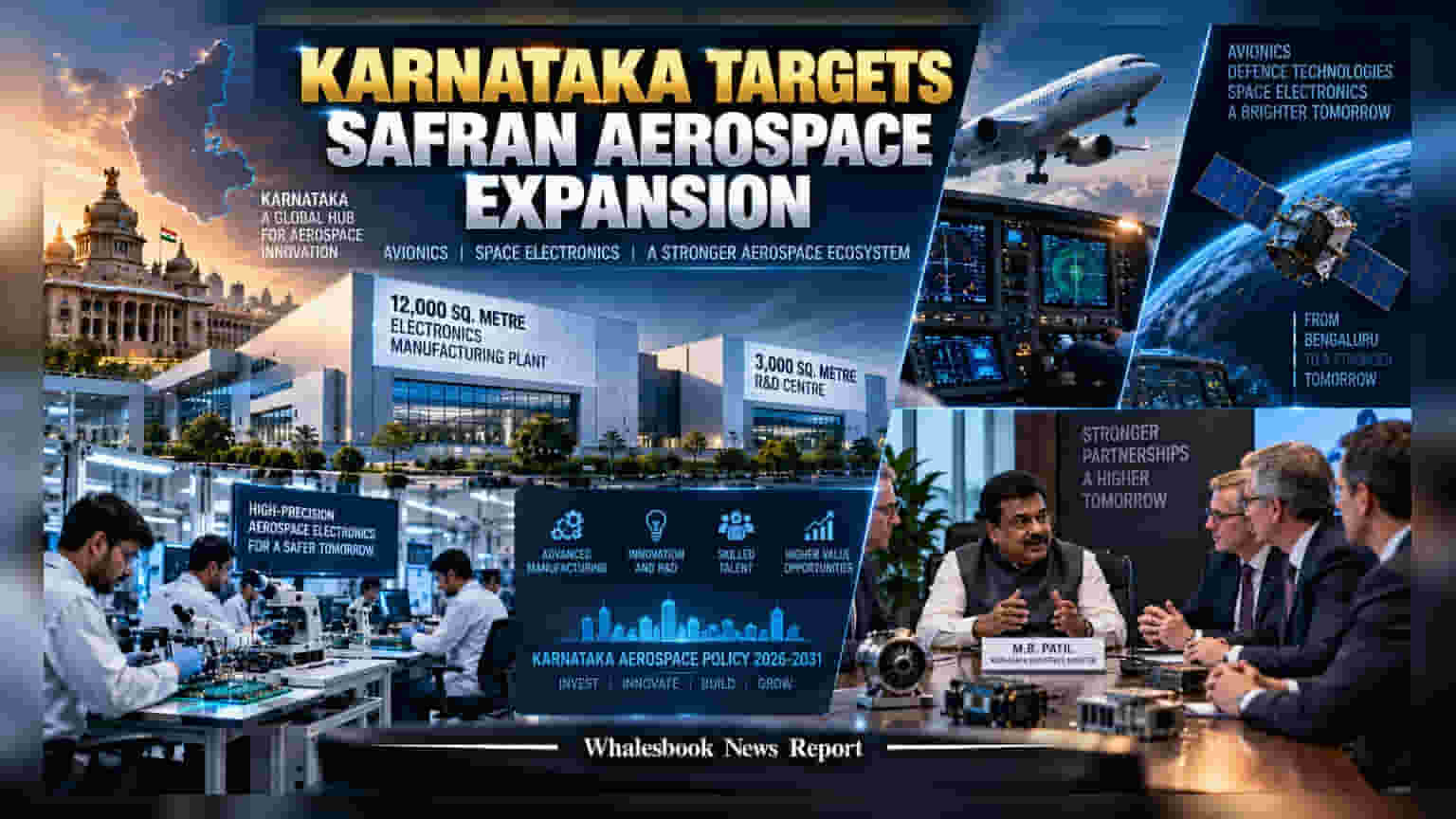
Karnataka’s industries minister has asked French aerospace firm Safran to expand into avionics and space electronics. This proposal follows the near-completion of Safran's existing manufacturing and R&D facilities in Bengaluru. The state recently launched its 2026-2031 Aerospace Policy with a ₹60,000 crore investment target, setting the stage for future high-tech manufacturing commitments.
Karnataka Industries Minister M.B. Patil has pitched to French aerospace giant Safran for a deeper footprint in the state, specifically targeting avionics and space electronics. This development comes as the state moves to implement its newly approved Karnataka Aerospace Policy 2026-2031, which aims to transform the local aerospace ecosystem.
Safran is already in the final stages of completing two major facilities in Bengaluru: a 12,000-square-metre electronics manufacturing plant and a 3,000-square-metre research and development hub at Kalyani Tech Park. These projects were originally committed during the 2025 Global Investors Meet and currently serve as the foundation for Safran's local operations. The company maintains a significant presence in India with approximately 3,500 employees across 18 sites.
The timing of this proposal is linked to the broader state strategy. On September 9, 2026, the Karnataka Cabinet officially cleared the Aerospace Policy 2026-2031, which sets a goal of attracting ₹60,000 crore in investments over the next five years. The government is actively encouraging existing players like Safran to shift their focus from standard component manufacturing toward higher-value segments such as advanced defence technologies and space electronics.
While the expansion proposal is ambitious, it remains at the discussion stage. There is no official commitment yet for the specific avionics and space electronics expansion mentioned by the minister. For investors and industry watchers, this means the focus remains on the operational success of the facilities currently nearing completion in Bengaluru.
The aerospace manufacturing sector involves long-term commitments and depends heavily on government policy support and technical supply chain integration. The state’s ability to attract further high-value investment will depend on the successful implementation of the new aerospace policy and the readiness of local infrastructure to handle complex, high-tech manufacturing. Investors will likely monitor upcoming investment summits for any formal agreements that might signal whether these discussions turn into concrete capital spending.