

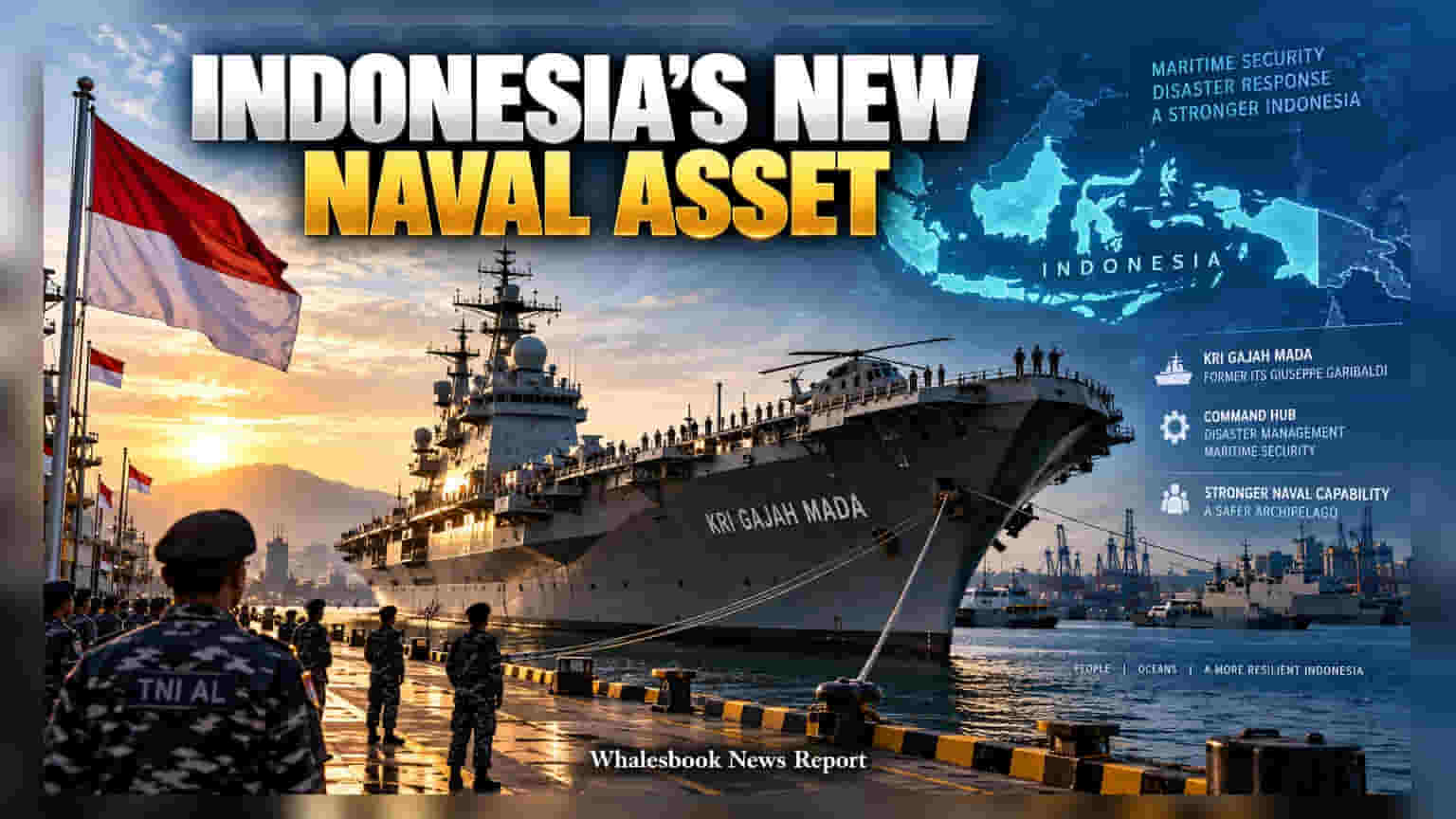
Indonesia has inducted the 41-year-old former Italian warship, ITS Giuseppe Garibaldi, as the KRI Gajah Mada, intending to use it for disaster relief. However, the acquisition is facing scrutiny due to high maintenance cost projections that could reach 16 trillion rupiah. Observers are questioning the fiscal balance as the nation weighs these expenses against its current social and military priorities.
Indonesia has officially received the former Italian aircraft carrier, ITS Giuseppe Garibaldi, which has been renamed the KRI Gajah Mada. The Indonesian government plans to use the vessel as a mobile command hub for disaster management and maritime security. This move represents a central part of President Prabowo Subianto’s plan to upgrade the country’s naval capabilities.
The project has triggered significant discussion regarding its financial viability. While the Ministry of Finance initially approved a budget of $450 million for the program, observers estimate that the total expenses for retrofitting and long-term maintenance could rise to nearly 16 trillion rupiah. This uncertainty is raising concerns among economists who note that the government is simultaneously managing major social programs, such as national nutrition initiatives, along with other defense procurement demands.
A key issue for observers is the age of the vessel. At 41 years old, the ship requires extensive maintenance to remain operational. This has led some to draw comparisons with Thailand’s experience with the HTMS Chakri Naruebet. That vessel, also an aircraft carrier, has faced challenges due to high maintenance requirements and significant time spent in port rather than at sea. Defense experts suggest that similar maintenance burdens could arise for the KRI Gajah Mada, potentially draining resources that might otherwise be spent on new frigates or submarines.
For those tracking the region, the situation highlights the trade-off between acquiring older, prestige assets and building a fleet of more functional, cost-effective vessels. The government continues to defend the platform by emphasizing its unique role in handling non-military emergencies, such as natural disasters in the archipelago. As the formal commissioning ceremony approaches next week, the primary monitorable for analysts will be the actual long-term maintenance cost and whether the government can manage these expenses without putting pressure on other essential state budget areas.