 Whalesbook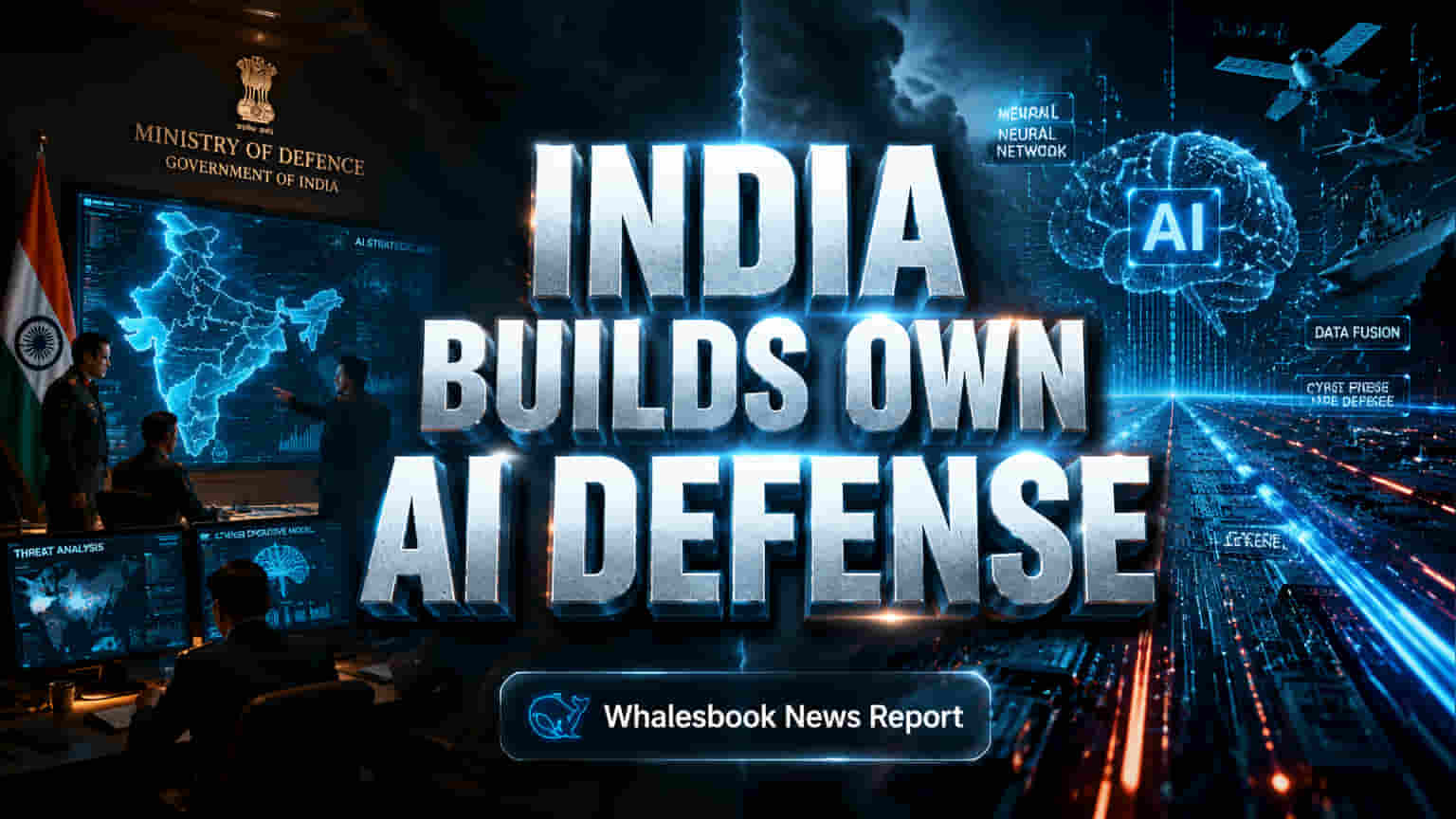


India's Push for Homegrown Defense AI
The Indian defense sector is re-evaluating its strategy, spurred by global conflicts that highlight the need for domestically developed Artificial Intelligence (AI) capabilities. Aiming for technological self-reliance, the Ministry of Defence is working with Indian firms like SarvamAI and BharatGen. These companies are developing foundational AI models, with plans to integrate this technology into India's defense systems. The goal is to build a domestic AI ecosystem, similar to the strategic advantages offered by platforms like Palantir, but with Indian control. This initiative recognizes AI as a critical tool for transforming battlefield decision-making and operational tempo.
The Hardware Bottleneck: Reliance on Foreign Chips
Despite progress in AI software and model development, India's defense AI ambitions are severely limited by its dependence on foreign hardware, particularly Graphics Processing Units (GPUs). These GPUs are essential for the computing power needed to train advanced AI models and form the foundation of modern defense systems. While Indian firms create AI solutions, the underlying hardware is largely imported. This leaves the nation vulnerable to geopolitical risks, including potential export controls and supply chain disruptions, especially in a highly competitive global environment. China's focus on 'intelligentised warfare,' integrating AI, robotics, and autonomous systems, increases the urgency for India to secure its own technological edge.
Government Steps In: Subsidies and Infrastructure Plans
The Indian government is addressing this challenge through initiatives like the IndiaAI Mission, backed by significant investment to boost domestic AI infrastructure and make computing power more accessible. The mission has made tens of thousands of GPUs available at subsidized rates to startups and researchers. Alongside this, the Semiconductor Mission aims to establish domestic chip manufacturing capabilities, with fabrication and assembly projects underway, including investments from Tata Electronics. SarvamAI is working on a defense AI Center of Excellence with government support, while BharatGen contributes AI models designed for broad accessibility. However, closing the gap between advanced AI software and domestic production of high-performance computing hardware remains a major long-term challenge, potentially leading to a lag compared to leading nations. The ambition for an "Indian Palantir" is thus tied to the harder goal of securing its own hardware supply.
The Risks of Relying on Foreign Hardware
India's path to full defense AI self-reliance faces significant risks. Its critical dependence on foreign GPUs means strategic defense capabilities can be affected by international trade policies and geopolitical tensions. The global semiconductor supply chain is highly concentrated and prone to disruptions, as seen in recent global events and U.S. export controls. While domestic semiconductor initiatives are progressing, developing cutting-edge fabrication plants and specialized AI hardware requires immense capital, time, and expertise, potentially leaving a persistent gap. China's integrated military-civil fusion model for AI development presents a tough competitive challenge. Furthermore, securing these essential hardware resources could lead to higher costs and longer development times for indigenous defense AI systems, affecting India's strategic readiness.