

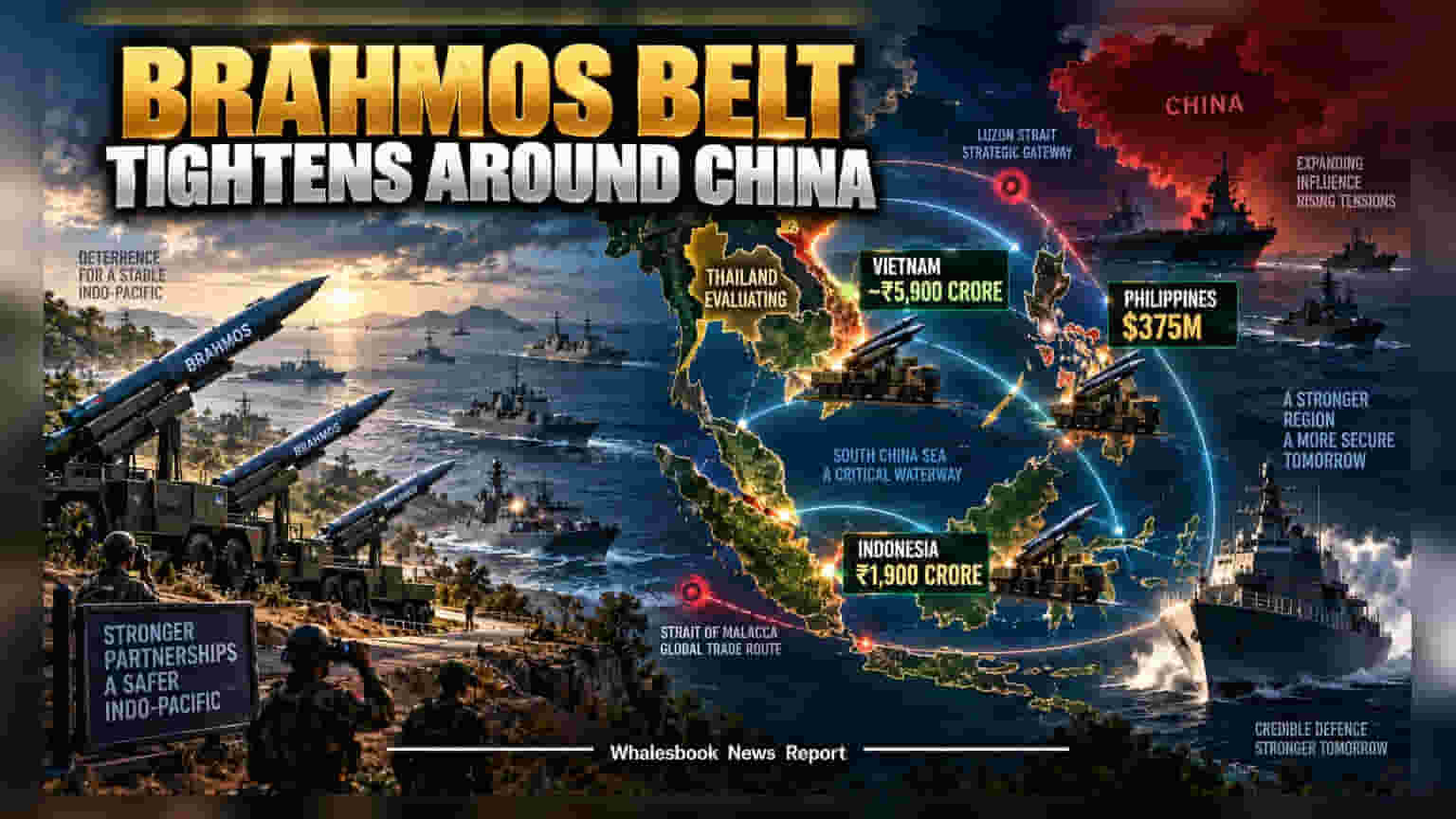
India is expanding BrahMos missile sales to Southeast Asia, forming a regional deterrent against naval maneuvers. With FY26 revenue topping ₹5,200 crore, the joint venture is shifting toward high-volume manufacturing. For observers, the focus is on the company’s ability to scale production while navigating dependencies on its Russian technology partner.
India’s BrahMos supersonic missile program is transitioning from a specialized defence project into a significant export-driven business model. As more nations in Southeast Asia acquire the system, defence analysts have noted the formation of a "BrahMos Belt"—a loose but strategically connected network of missile batteries along the South China Sea. This development is not a formal military alliance, but it significantly changes the maritime security calculations for naval operations in the region.
Scaling Up: From Experimental to Mass Production
The commercial scale of these exports has grown rapidly. Following the landmark 2022 deal with the Philippines, which was valued at roughly $375 million, India has moved to secure further contracts. Reports indicate that Vietnam is in line for a deal worth approximately $629 million, while Indonesia has progressed with a Memorandum of Understanding for two batteries estimated at $200 million. Thailand is also evaluating the system.
This export momentum is reflected in the financials of BrahMos Aerospace, the joint venture between India’s DRDO and Russia’s NPO Mashinostroyenia. The company reported revenue exceeding ₹5,200 crore for the 2025-2026 financial year. To sustain this growth, the organization is currently considering governance reforms aimed at moving away from an experimental R&D model toward a high-volume manufacturing operation. This shift is critical as the company attempts to balance its export order book with domestic defence requirements.
Managing Geopolitical and Delivery Risks
While the expansion of the BrahMos footprint is strategically significant, the business model faces specific operational hurdles. As a joint venture, every export sale remains subject to approval by the Russian partner. This creates a geopolitical layer that the company must navigate with each new client, adding complexity to the sales cycle.
Furthermore, scaling up production from an experimental setup to a mass-production facility introduces execution risks. Defence manufacturing often involves long payment cycles, which can strain working capital. The company must also manage potential fluctuations in raw material costs, a common challenge in the high-tech defence sector. Relying on success in system integration tests for final payment also keeps cash flow predictability lower than in other manufacturing sectors.
Investors and defence observers are now monitoring how the company manages these transitions. The primary area of focus will be the company’s ability to adhere to delivery timelines while maintaining the rigorous quality standards required for advanced missile systems. Additionally, any changes to the organizational structure, such as leadership restructuring or board updates, will be important markers of how well the company is preparing for its new role as a major regional defence supplier.