

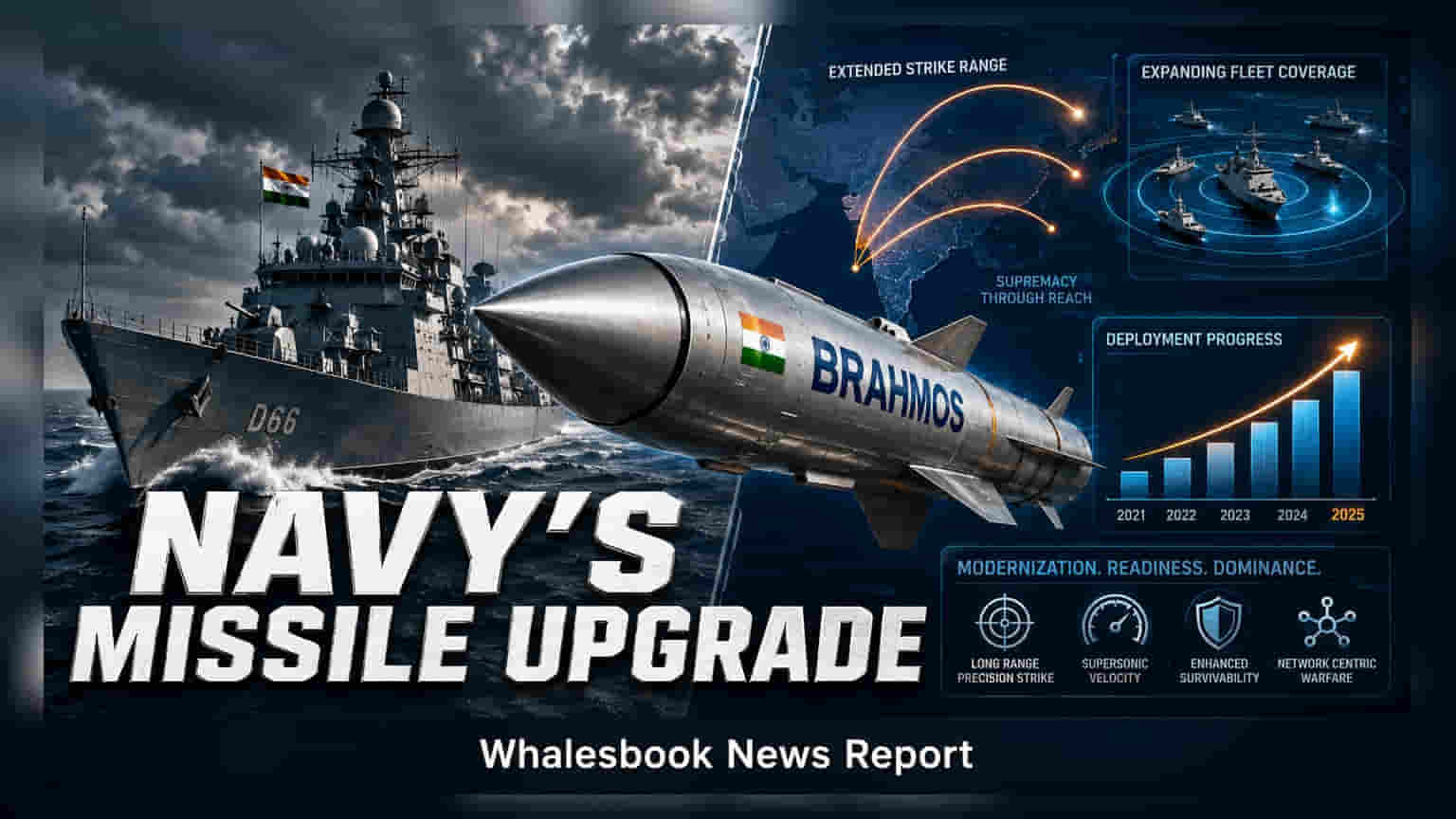
The Indian Navy is accelerating the deployment of BrahMos supersonic cruise missiles, aiming to outfit all major surface warships by 2030. With 20 vessels already equipped and a major order for over 220 new missiles approved, this expansion is creating significant opportunities across the Indian defence manufacturing supply chain.
The Indian Navy is actively speeding up the integration of BrahMos supersonic cruise missiles across its fleet. This strategic push is part of a larger plan to ensure nearly all major surface warships are equipped with the missile system by the end of 2030. The program has gained momentum, with more than six warships joining the roster in the last year alone, bringing the total number of BrahMos-equipped frontline vessels to approximately 20.
This expansion is supported by a large government approval from February 2024 to acquire over 220 BrahMos Extended Range missiles. The move is designed to upgrade the Navy's long-range strike power by replacing older missile systems with this advanced platform. Newer warships, such as the Nilgiri-class stealth frigates, are being built with the specific design to carry these missiles, highlighting a shift toward more modern and self-reliant naval platforms.
For investors and market observers, it is important to note that BrahMos Aerospace Private Limited, the company behind the missile, is a joint venture between India’s DRDO and Russia’s NPO Mashinostroyeniya. As a private entity, it is not listed on stock exchanges. However, the massive procurement program creates a ripple effect throughout the Indian defence manufacturing ecosystem. Shipbuilders, component manufacturers, and electronics suppliers that work on these naval platforms benefit from the high demand for integration, maintenance, and supply of related hardware.
Companies involved in the construction of frontline warships, such as state-owned shipyards and private heavy engineering firms, are central to this development. These firms are tasked with retrofitting older vessels and building new ones that can house the vertical launch systems required for the missiles. The focus on indigenisation means that a larger portion of the missile components and support systems are sourced from domestic players, which may influence the revenue and order books of companies integrated into the defence supply chain.
While this acceleration is a positive step for maritime defence, investors should be aware of the inherent risks in the defence sector. Large projects often involve long execution timelines, and payments from government agencies can sometimes take time, affecting cash flow. Additionally, the profitability of companies in this sector can be sensitive to fluctuations in raw material prices, such as steel and specialised alloys, as well as the rising costs of advanced electronic components. Regulatory changes or shifts in government policy regarding defence spending could also impact the speed of these deployments.
The key monitorables for the sector will be the commissioning schedules of new warships, the actual pace of missile deliveries, and the degree of indigenisation in future missile variants. Market participants will also track how successfully domestic suppliers scale up production to meet these increased requirements without significant cost overruns or delays.