

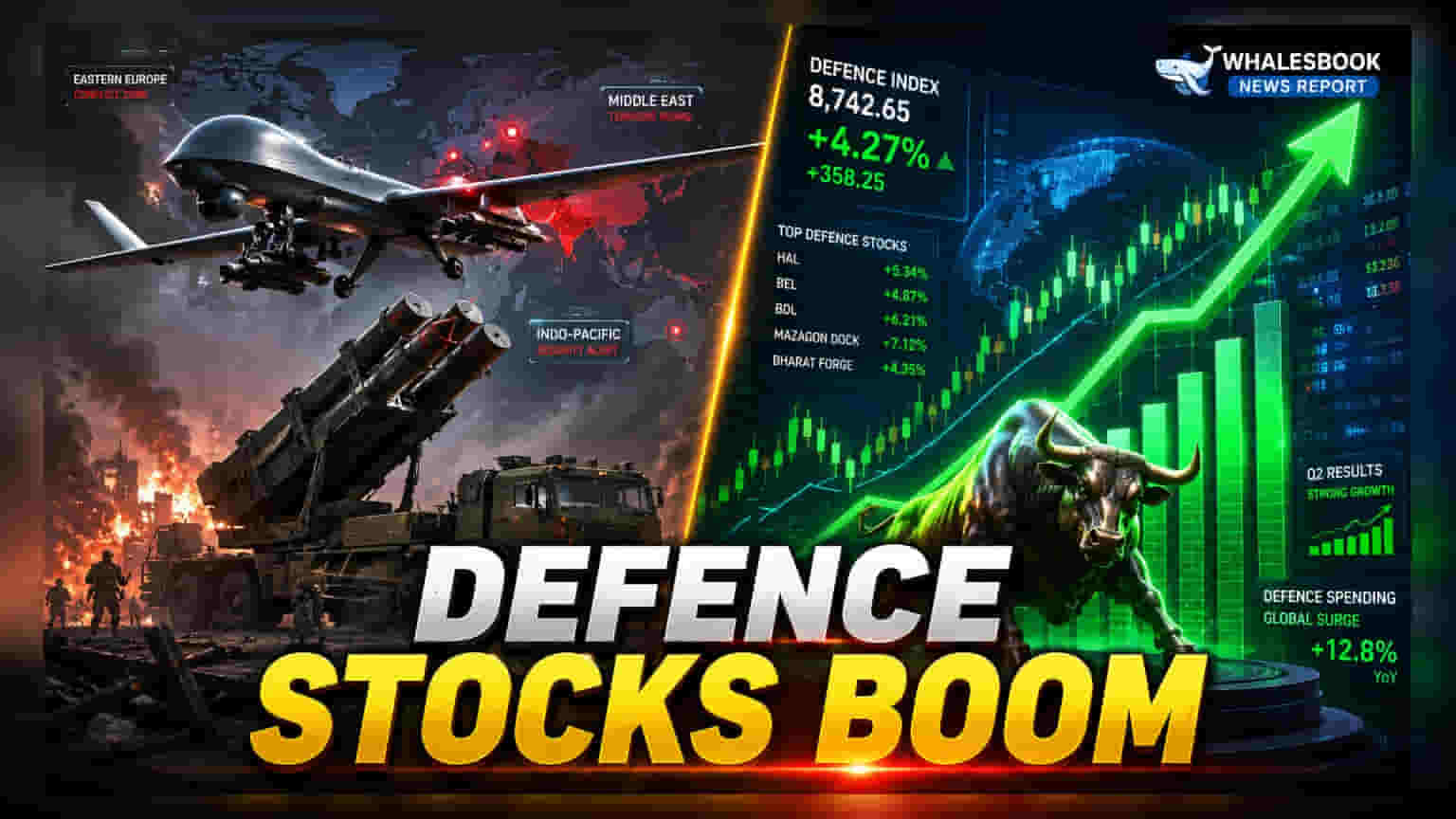
The Nifty Defence Index has risen over 20% year-to-date, driven by strong export goals and higher global military spending. While order pipelines remain robust, current valuations for many companies have reached levels that require careful assessment by investors.
What Happened
Indian defence stocks have seen a significant run-up this year, with the Nifty Defence Index gaining more than 20% year-to-date. This movement follows a period of strong focus on domestic manufacturing and rising global demand for Indian-made defence hardware. Investors are currently weighing the optimism surrounding long-term order books against the reality of higher market valuations. The sector is seeing activity in specific technology-heavy areas like drones, missile systems, and electronic warfare, which analysts suggest are key to sustaining growth.
The Growth Drivers
The narrative behind this performance is linked to the government’s push for indigenisation and an ambitious target to reach $5 billion in annual defence exports. Recent geopolitical events have highlighted the need for nations to secure reliable supply chains, which has opened doors for Indian manufacturers. The shift from simply importing defence equipment to producing and exporting it has been a core pillar of the current market sentiment. Large players like Hindustan Aeronautics (HAL) and Bharat Electronics (BEL), alongside smaller niche companies, are seen as the primary beneficiaries of these government-backed initiatives.
The Valuation Reality
While the business outlook appears positive, the rapid stock price growth has pushed valuations to notable levels. Market data shows that many Public Sector Undertakings (PSUs) in the defence space are currently trading at 30 to 40 times their annual earnings. Private sector defence companies are commanding even higher premiums, with price-to-earnings ratios often ranging between 40 and 50 times. For investors, this indicates that the market is already pricing in significant future earnings growth. When valuations are this high, the stock price becomes more sensitive to any earnings misses or delays in delivering on those projected growth figures.
Risks To Consider
It is important for investors to recognize that a high valuation leaves less room for error. The primary risk in this sector is the timeline for project execution. Defence deals often involve complex government-to-government agreements, which can take time to materialize. If there are delays in orders, cost overruns, or slower-than-expected commissioning of new projects, stock prices could face pressure. Furthermore, while the current global spending trend is supportive, any slowdown in geopolitical tensions or changes in foreign procurement policies could impact the export-led growth story that the market is currently betting on.
What Investors Should Track
The future performance of these stocks will depend on tangible results rather than just policy announcements. Investors should closely track the actual order inflow for key players and the execution timelines for those projects. Key monitorables include the quarterly revenue growth of these companies, the actual realization of export targets, and any commentary on order book sustainability in upcoming earnings reports. Watching how companies manage their operational costs while scaling up production will also be critical to understanding if these high valuations are justified in the long run.