

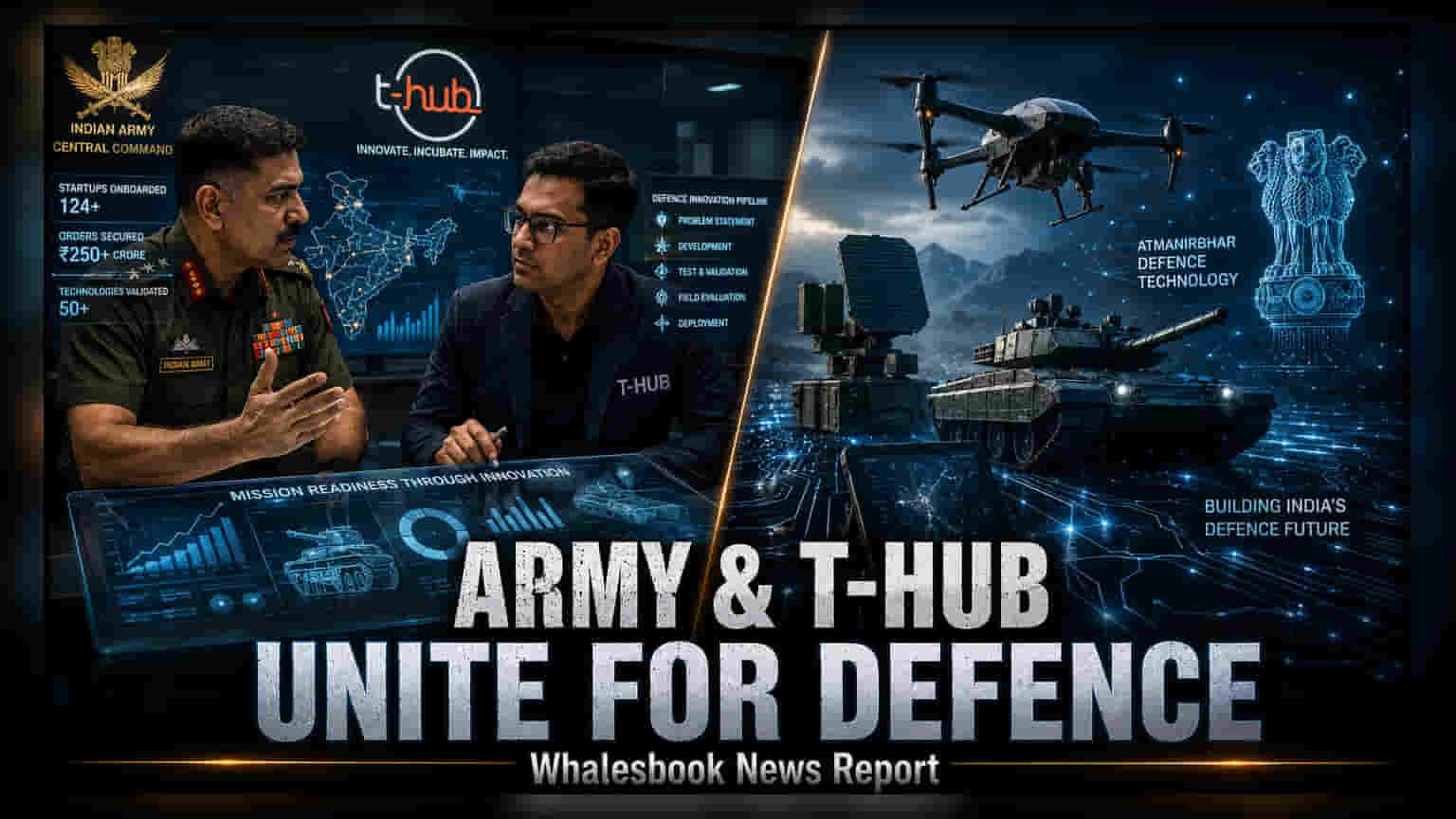
T-Hub and the Indian Army’s Central Command have formed a strategic alliance to provide defence start-ups with direct access to military problem statements. This collaboration aims to shorten the path from prototype to field use. Investors following the defence sector should note that while this support boosts innovation, the industry faces inherent risks including long procurement cycles and high research costs.
T-Hub, the Hyderabad-based technology incubator, has entered into a strategic partnership with the Central Command of the Indian Army to support domestic defence start-ups. This alliance creates a direct pathway for these start-ups to access real-world military problem statements and test their technologies against actual operational requirements.
The partnership seeks to address a persistent hurdle in the defence technology sector, often described as the gap between research and deployment. By allowing start-ups to work directly with the Army, the initiative aims to ensure that new technologies are validated under practical conditions before they are considered for large-scale procurement. A joint committee comprising officials from both the Army and T-Hub will manage this program, facilitating communication and overseeing the development milestones of the participating companies.
This initiative builds on T-Hub’s established involvement with the Ministry of Defence’s iDEX (Innovations for Defence Excellence) scheme. T-Hub’s previous work in this area has shown tangible results, with supported start-ups securing commercial defence orders exceeding ₹250 crore. This track record demonstrates the potential for incubator-led growth, but also highlights that the path to success in this sector depends on turning prototypes into verified, deployable solutions.
For those observing the defence ecosystem, it is important to consider the nature of this market. Defence technology is notoriously capital-intensive with long research and development cycles. Start-ups in this space often face significant risks, including the 'valley of death,' where a project fails to move from a prototype to a full-scale contract due to stringent military quality standards, complex procurement regulations, or budget constraints. Unlike consumer tech, where products can reach the market quickly, defence innovation requires a high degree of patience and endurance.
The success of such collaborations will likely be measured by the ability of these start-ups to successfully navigate the procurement process and achieve actual field deployment. Investors and industry participants will monitor whether this partnership can effectively reduce the time taken for technology adoption, a factor that remains a key challenge for the broader defence modernization agenda in India.