

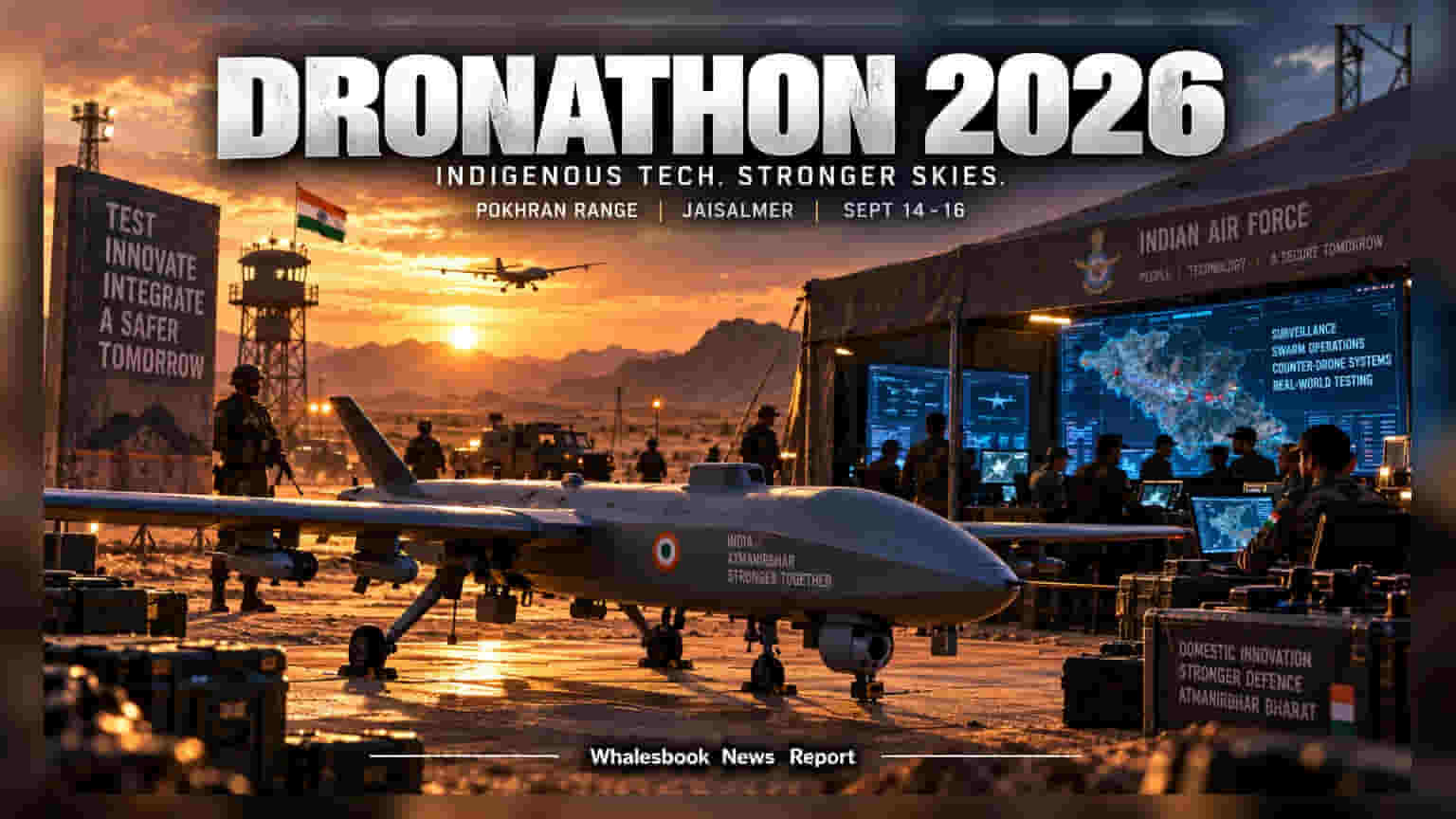
The Indian Air Force is hosting Dronathon-2026 in Jaisalmer from September 14 to 16 to evaluate homegrown unmanned and counter-drone systems. This event highlights the military's shift toward prioritizing domestic technology, a trend that serves as a long-term indicator for the Indian defense manufacturing sector and private sector innovation.
The Indian Air Force has scheduled the Dronathon-2026 exhibition at the Pokhran range in Jaisalmer from September 14 to 16. Unlike standard trade shows, this event is designed as a field-testing platform where domestic manufacturers, startups, and technology providers will demonstrate the operational capability of unmanned aerial systems and counter-drone solutions. The focus will be on testing swarm technologies, autonomous reconnaissance, and electronic warfare suites in real-world conditions.
Strategic Shift in Procurement
For investors and industry observers, this event signals a continued evolution in the military's procurement strategy. The shift toward actively testing and integrating indigenous technology aligns with the broader Atmanirbhar Bharat initiative. By moving from static product displays to live field stress tests, the defense establishment is creating a feedback loop that helps local developers refine their products to meet specific military standards.
This trend is increasingly visible across the sector, where the government is encouraging domestic manufacturing to reduce long-term reliance on foreign imports. The rapid capital infusion into private aerospace startups—such as the recent $37 million Series A round secured by Bengaluru-based Airbound—reflects growing investor confidence in the long-term potential of the Indian drone ecosystem. However, these ventures remain high-risk, characterized by the typical challenges of early-stage deeptech companies, including high research costs and unproven long-term scalability.
Challenges for the Defense Sector
While the push for indigenous technology provides a supporting factor for the defense sector, investors should remain aware of the operational reality of defense procurement. The transition from a successful field demonstration to a signed contract can be a lengthy process. Defense procurement cycles are often complex, involving rigorous quality checks, budgetary approvals, and multi-stage bidding.
Furthermore, the competitive landscape is intensifying. As more private players enter the drone and counter-drone space, established defense companies and new entrants are competing for the same limited pool of military orders. Successful execution will depend on a company’s ability to meet stringent technical specifications, ensure reliable supply chains, and demonstrate clear operational benefits over existing solutions.
What Investors Should Monitor
The most important monitorable following events like Dronathon-2026 is not just the exhibition itself, but the subsequent movement of these technologies into the official procurement pipeline. Investors tracking the defense sector should watch for updates on contract awards, the conversion of pilot projects into long-term orders, and the impact of indigenous technology adoption on the profit margins and order books of domestic defense manufacturers. While the sector holds long-term promise, the pace of military adoption remains the primary factor that will influence the actual financial performance of companies involved in this space.