

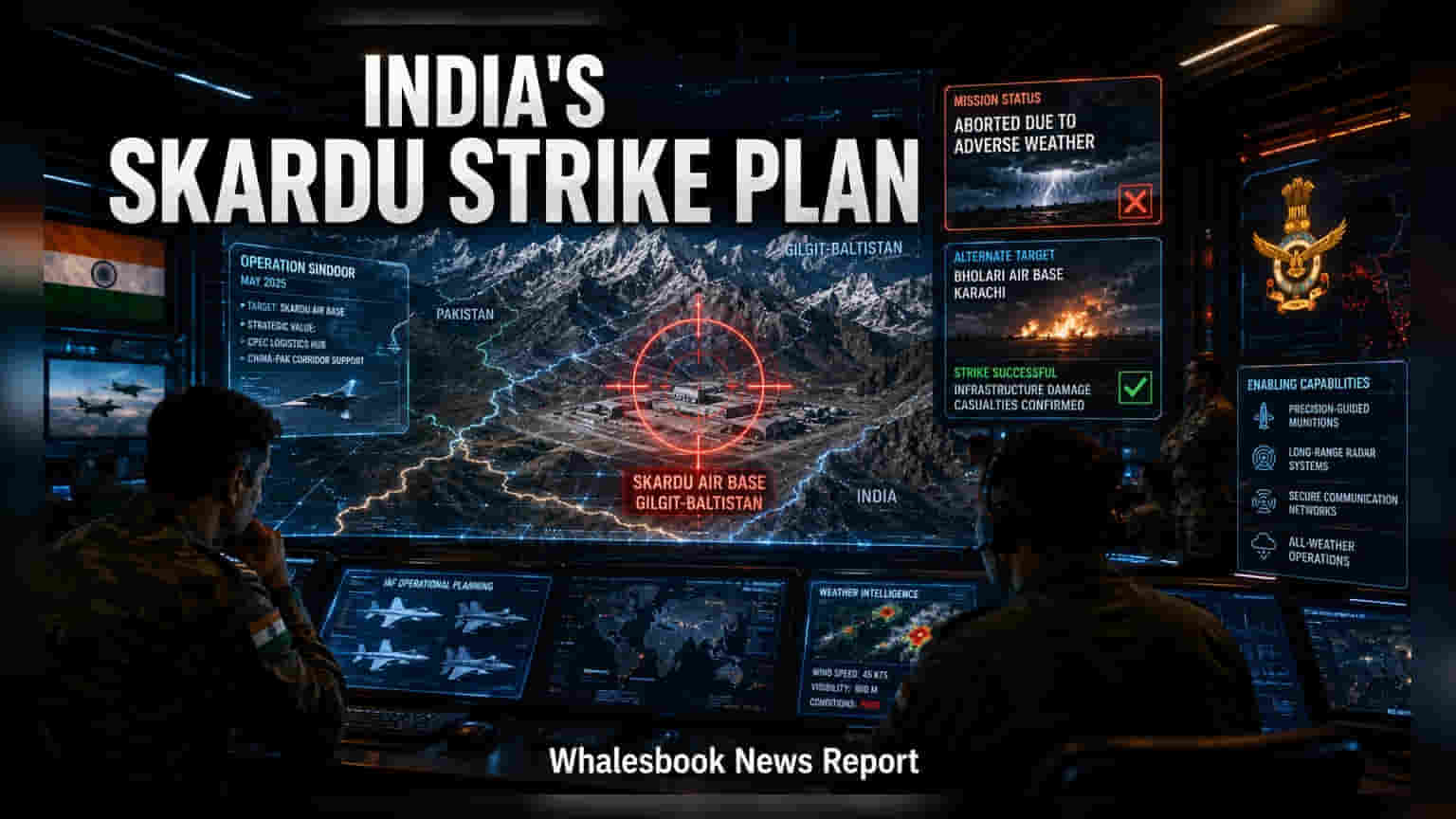
Declassified records from Operation Sindoor in May 2025 reveal that the Indian Air Force identified the Skardu air base as a target to deter Chinese logistics support. The mission was ultimately aborted due to adverse weather, leading the force to pivot to the Bholari air base instead. This disclosure highlights the evolution of India's strategic aerial deterrence and the integration of infrastructure protection in regional security planning.
Military records recently made public regarding Operation Sindoor, conducted in May 2025, have detailed the operational planning used to manage regional security threats. The operation was launched following a terror attack in Pahalgam, with the Indian Air Force (IAF) identifying the Skardu air base in Pakistan-occupied Kashmir as a strategic target. The planning aimed to project military strength and deter China, given the base’s role in providing logistical and security support for the China-Pakistan Economic Corridor (CPEC).
While the mission to target Skardu was authorized, the Indian Air Force was forced to abort the strike due to deteriorating weather conditions in the mountainous terrain. Instead of the planned engagement at Skardu, the IAF successfully launched strikes against the Bholari air base in Karachi. This alternate mission resulted in significant damage to critical infrastructure and verified personnel casualties, marking a shift in the operational cycle.
For the Indian defense sector, these details provide insight into the changing requirements for modern aerial combat. The focus on high-value, deep-penetration targets requires advancements in precision-guided munitions, long-range radar systems, and secure communication networks. As India continues to emphasize indigenous defense manufacturing, the operational necessity for capabilities that can neutralize logistics hubs like Skardu creates a demand for advanced aerospace and surveillance technologies. Companies involved in the defense supply chain are increasingly aligning their research and development with these requirements for enhanced deterrence and border security.
The disclosure also clarified issues regarding the Kirana Hills, where officials noted that while no deliberate targeting occurred, an errant loitering munition may have struck the area unintentionally during high-intensity operations. Managing such incidents is a key part of regional stability in an environment involving nuclear-armed neighbors.
Looking ahead, investors and observers tracking the defense sector will focus on the government's ongoing budget allocation for modernization and the speed of technology adoption. The ability of domestic manufacturers to deliver hardware capable of operating in challenging weather conditions and performing deep-strike missions remains a central monitorable for long-term sector growth. Future updates regarding defense procurement contracts and the pace of capacity expansion among aerospace firms will be essential to understanding the sector's trajectory.