

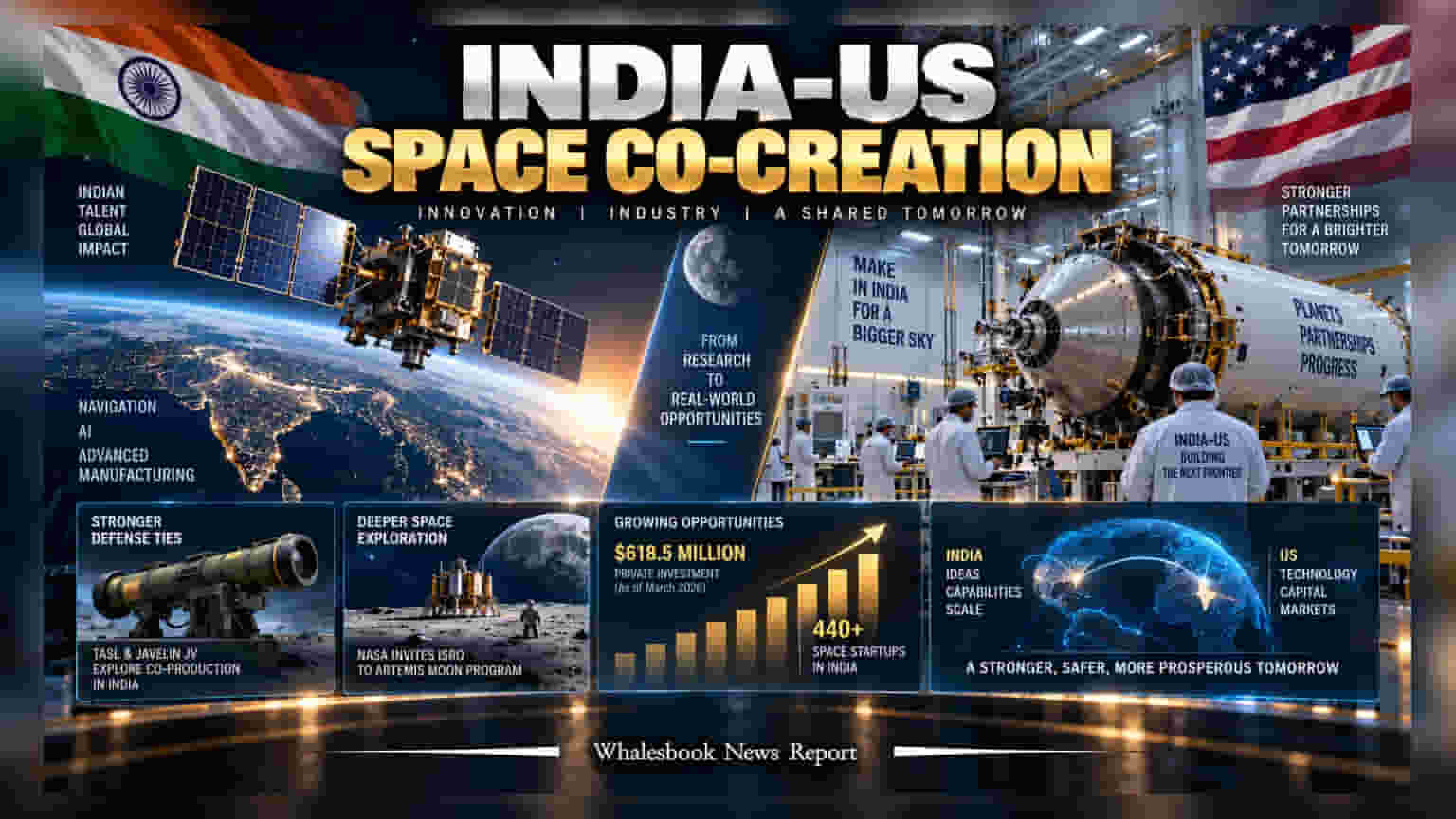
The US and India have pivoted their space partnership toward a 'co-creation' model, emphasizing joint commercialization and private investment. At the Bengaluru Space Expo 2026, the nations announced a pact for Tata Advanced Systems to explore the co-production of Javelin missiles, marking a deeper integration of defense and space manufacturing.
The India-US space partnership has officially entered a new phase, shifting from traditional government-to-government research to a commercial-first strategy. US Ambassador to India Sergio Gor announced this policy shift at the Bengaluru Space Expo 2026, highlighting a move toward 'co-creation' where startups, private capital, and engineering talent are integrated across borders. The framework, known as the TRUST initiative, is designed to accelerate joint development in navigation, artificial intelligence, and advanced manufacturing.
Scaling Defense and Space Production
A primary result of this intensified cooperation is the memorandum of understanding signed between Tata Advanced Systems Limited (TASL) and the Javelin Joint Venture, which includes major American defense contractors Lockheed Martin and Raytheon. This agreement aims to explore the domestic co-production of Javelin All Up Round (AUR) missiles in India. For investors, this move signals a transition toward deeper industrial entanglement, where US capital and technology are increasingly paired with Indian manufacturing capacity to secure supply chains and compete in global markets.
The collaboration also extends to deep-space exploration, with NASA officially inviting the Indian Space Research Organisation (ISRO) to join its Moon base program as part of the Artemis Accords. This invitation highlights the growing strategic importance of Indian space assets in international exploration missions.
Private Sector Expansion and Investor Context
The broader Indian space sector has gained significant momentum, with private investment reaching $618.5 million as of March 2026. The ecosystem now comprises over 440 registered startups. This growth is attracting venture capital that seeks to capitalize on the government’s push for indigenous space and defense capabilities. The 'co-creation' model is intended to remove barriers for these firms to enter the American market and vice versa, potentially creating a larger addressable market for domestic space-tech companies.
Regulatory and Execution Risks
While the expansion of the India-US space and defense ecosystem provides growth potential, the transition involves complex business risks. A significant challenge for companies like TASL and other private participants is the regulatory environment surrounding technology transfer and export controls. Projects involving advanced defense systems often face strict oversight concerning intellectual property and security, which can lead to compliance complexities or delays in project execution.
Additionally, while the private sector is growing rapidly, many emerging Indian space startups remain dependent on government-operated infrastructure. Future monitoring for investors should focus on the specific timelines for the Javelin co-production project, as well as any updates regarding regulatory approvals that could impact the pace of industrial scaling. The success of this co-creation model will depend on the ability of both nations to navigate these export control frameworks while maintaining the momentum of private commercial ventures.