

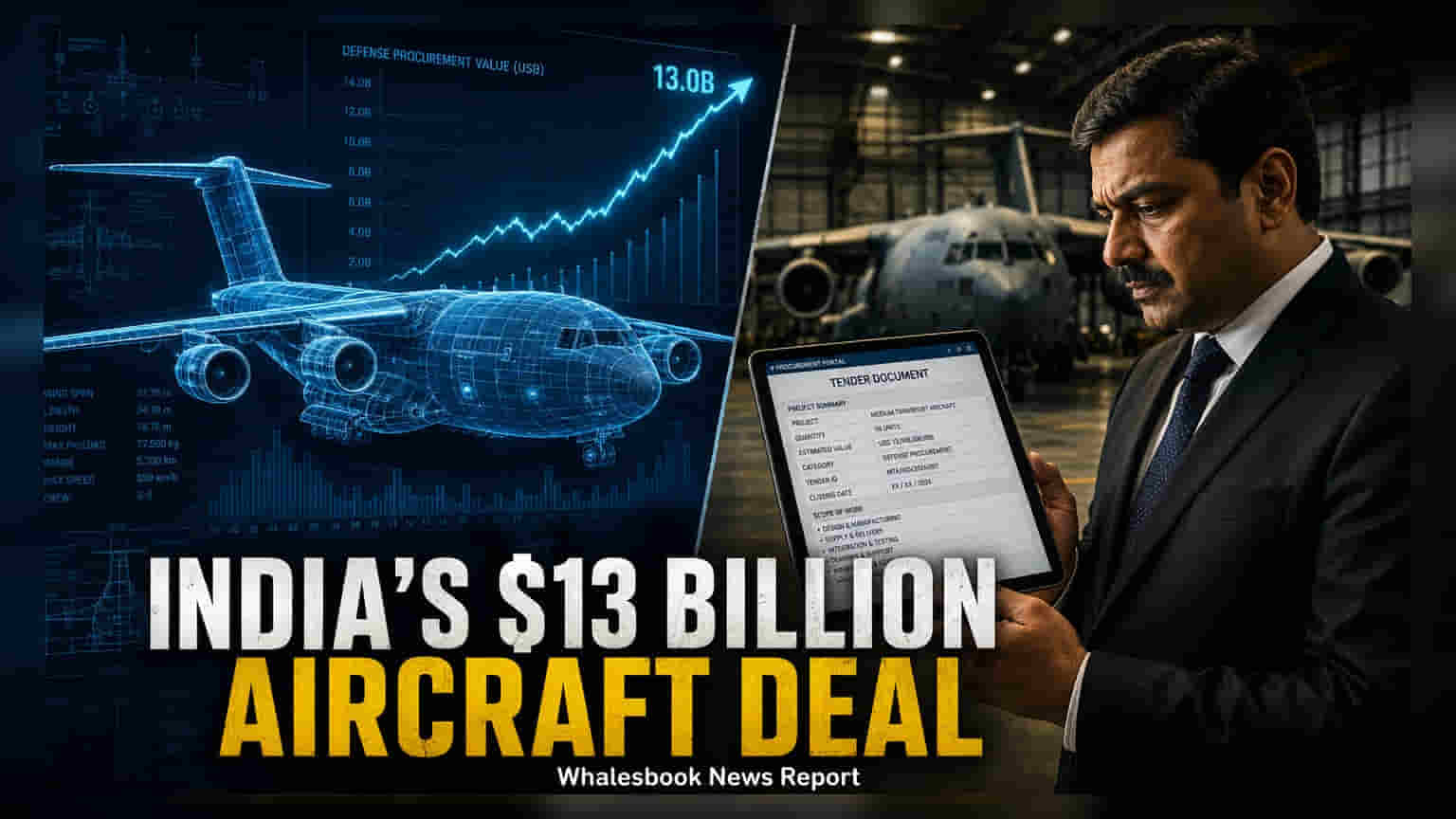
The Ministry of Defence has floated a ₹1 lakh crore tender for 60 multirole transport aircraft to replace the Indian Air Force's aging An-32 fleet. The deal mandates that 80% of the aircraft be manufactured in India with over 60% indigenous content, creating significant order opportunities for domestic defense players.
The Ministry of Defence has initiated a massive procurement process on August 12, 2026, seeking 60 multirole transport aircraft for the Indian Air Force. Valued at approximately ₹1 lakh crore, the program is designed to phase out the Soviet-era Antonov An-32 fleet, which has been the backbone of the IAF's tactical airlift operations for years. This replacement is expected to significantly enhance the military's logistical and transport capabilities across diverse terrains.
The tender includes specific conditions to boost the domestic aerospace industry. Under the government's self-reliance push, only 20% of the aircraft are to be acquired in fly-away condition from international manufacturers. The remaining 80% must be manufactured within India, with a requirement of over 60% indigenous content. This structure is intended to deepen the local aerospace supply chain, similar to the ongoing C-295 program currently being executed by Tata Advanced Systems in partnership with Airbus.
Competition and Strategic Partnerships
Major Indian defense firms are actively positioning themselves to secure this contract. Hindustan Aeronautics Ltd, Tata Advanced Systems, and Mahindra Defence have received the tender documents and are expected to bid in collaboration with international original equipment manufacturers. Mahindra Defence has aligned with Brazil's Embraer for its C-390 aircraft, while Tata Advanced Systems is collaborating with Lockheed Martin, leveraging the C-130 platform. HAL is also expected to play a lead role in the domestic manufacturing and technology integration phases.
These aircraft are expected to bridge the operational gap between smaller transporters like the C-295 and heavy-lift platforms like the C-17 Globemaster, adding versatility for missions such as rapid troop deployment and aerial refueling.
Execution and Operational Risks
For defense contractors, projects of this scale come with unique business challenges. The requirement for over 60% indigenous content and local assembly necessitates significant investments in manufacturing infrastructure and specialized labor. Investors may note that such long-term defense programs typically involve long gestation periods, meaning revenue recognition and cash flows are spread over many years.
Additionally, there is the risk of project delays or cost overruns, which are common in complex, high-technology defense acquisitions. Maintaining the strict indigenization targets while managing technology transfer agreements with foreign partners will be a key performance indicator. The intense competition among domestic players also means that profit margins will depend on bidding strategies and the ability to control production costs over the life of the project.
The next steps for the industry will include the submission of technical and commercial bids, followed by a rigorous evaluation by the Ministry of Defence. Market observers will track which domestic entities successfully secure these partnerships and how these large-scale manufacturing commitments impact their capital spending and balance sheets in the coming years.