

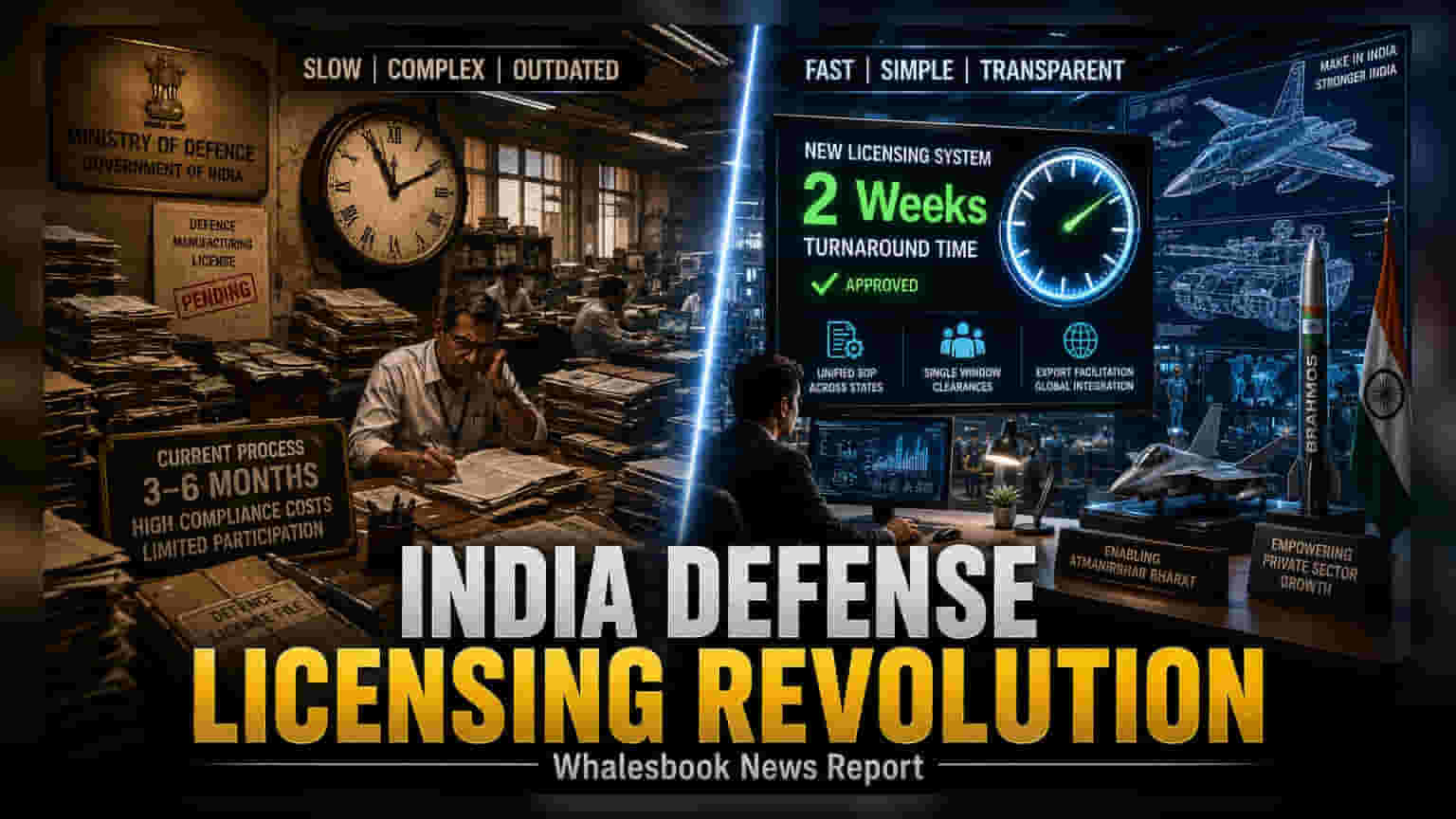
The Ministry of Defence plans to reduce defense manufacturing license processing times to under three weeks to improve the ease of doing business. While this move aims to attract new private investment, investors should monitor the gap between issued licenses and actual production levels, as many licenses currently remain inactive.
The Ministry of Defence is planning a significant overhaul of its licensing process for defense manufacturing, with the goal of reducing turnaround times to under three weeks. This is a major shift from the current process, which can take several months. The initiative aims to lower compliance costs and encourage private companies to participate more actively in the country’s defense production ecosystem.
A new concept paper is currently awaiting approval from the Union Ministries of Commerce and Home. Once implemented, this is expected to introduce a unified standard operating procedure across different states, creating a more predictable environment for companies looking to enter the defense sector.
While this policy change is intended to speed up growth, investors should look at the current ground reality. Senior government officials have noted that while 871 defense manufacturing licenses have been issued over the years, only about 240 to 250 of these are currently active. This gap suggests that obtaining a license is only the first step and that the path to actual manufacturing involves significant execution challenges.
The administrative process has already undergone some changes to improve efficiency. Since March 2025, the 19-member evaluation committee previously responsible for approvals has been dissolved. Now, approvals are handled directly by a Joint Secretary within the Department for Promotion of Industry and Internal Trade (DPIIT). This process now involves direct consultation with the Defence Research and Development Organisation and the Directorate General of Quality Assurance, which has already helped reduce wait times.
Beyond domestic manufacturing, the government is also looking to streamline export licensing. There are discussions about introducing one-time, multi-year export authorizations for Indian companies that supply to global manufacturers. Bringing more items under the open general export license category is also being considered to help Indian manufacturers integrate better into global supply chains.
For investors, the key monitorable remains the actual conversion rate of these licenses into operational production. While easier licensing is a positive signal for the Make in India and Atmanirbhar Bharat initiatives, the long-term success of private sector players will depend on their ability to execute projects, secure orders, and innovate rather than just obtaining permits. Market observers will be tracking whether this three-week target is consistently met in practice and if it leads to a rise in active production capacity over the coming quarters.