

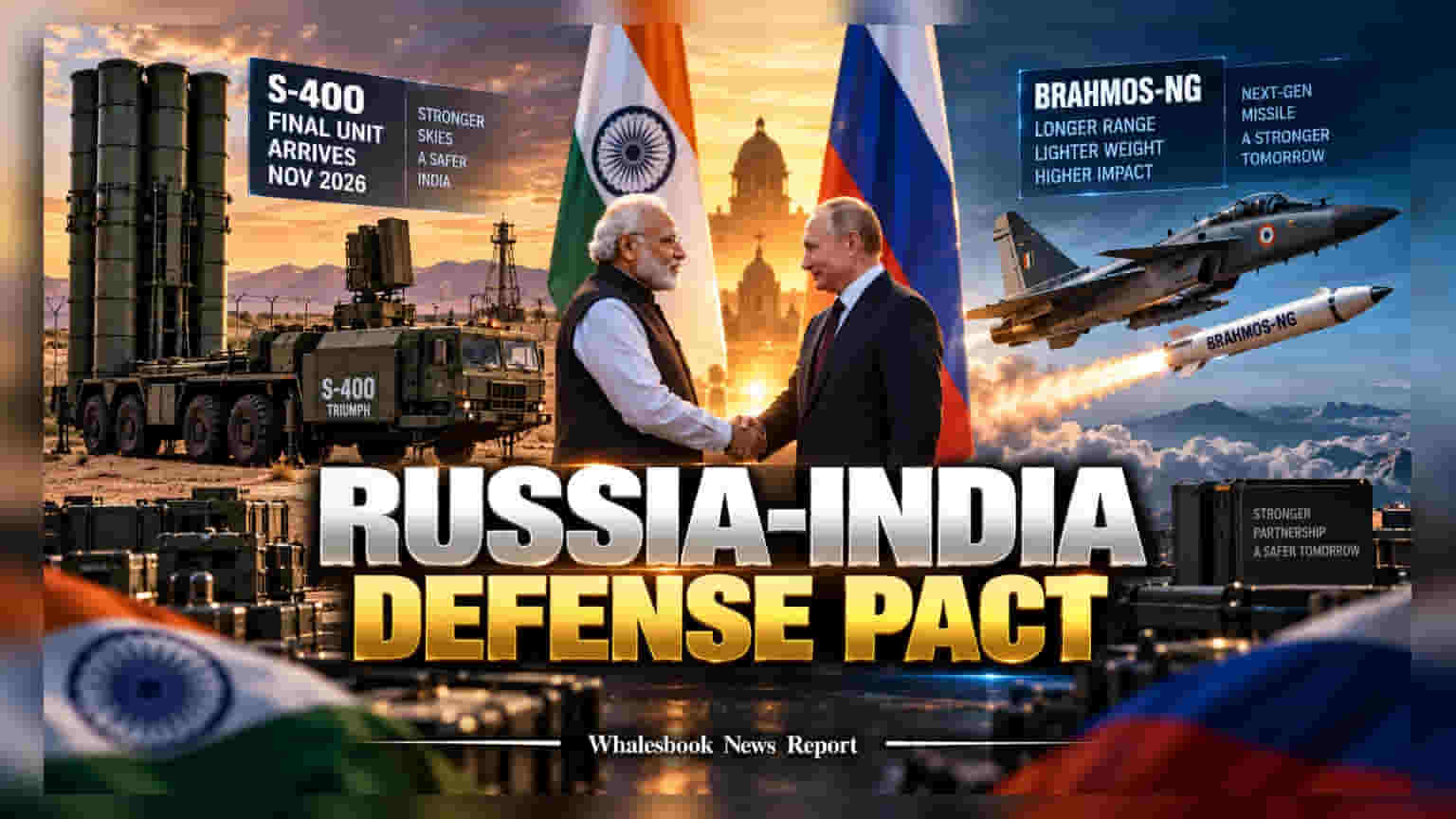
Prime Minister Narendra Modi and President Vladimir Putin are set to meet in New Delhi on September 11 to finalize the delivery of the last S-400 regiment and advance the BrahMos-NG missile program. This meeting signals a move from a traditional buyer-seller model toward deep co-production. For the defense sector, this shift highlights the scaling potential of joint ventures, though investors should monitor execution timelines and working capital cycles.
Prime Minister Narendra Modi and Russian President Vladimir Putin are scheduled to hold a bilateral summit in New Delhi on September 11, 2026, ahead of the upcoming BRICS Summit. A primary agenda item is the formalization of the final S-400 Triumf air defense unit delivery, which is now confirmed for November 2026. This arrival will complete the ₹45,000-crore air defense deal signed in 2018, resolving previous logistical delays caused by global geopolitical tensions. While the S-400 acquisition bolsters India's defensive posture, the summit will also mark a strategic pivot toward next-generation missile technology.
The discussions will center on the development and accelerated production of the BrahMos-NG (Next-Generation) missile. This new variant is designed to be lighter, weighing approximately 1.3 tonnes, while carrying an improved operational range exceeding 400 km and a top speed of Mach 3.5. By integrating this missile into smaller fighter platforms like the Tejas and MiG-29, the program aims to shift defense strategy toward high-density aerial strikes. This evolution is vital for BrahMos Aerospace, which reported revenue exceeding ₹5,200 crore in FY2025-26, supported by successful exports and strong order intake.
From a strategic perspective, the partnership is transitioning from a legacy buyer-seller model to one defined by joint research and shared manufacturing. This shift is intended to help both nations scale production and tap into third-party markets, particularly in Southeast Asia, where the system has already secured initial export success. For the broader Indian defense supply chain, which includes public sector units and private manufacturers, this push toward localized production provides a roadmap for long-term growth and technology absorption.
Investors tracking the defense sector should keep in mind that the industry operates with unique structural realities. While order books appear robust, companies often face elongated working capital cycles, meaning cash collection can take time despite strong reported revenue. Furthermore, while the joint-production model reduces reliance on finished imports, it introduces complexities regarding international export controls, regulatory compliance, and supply chain synchronization between the two nations. The primary monitorable for shareholders in companies tied to the defense supply chain will be the actual commissioning timeline of these next-generation projects and the speed at which the joint-production framework translates into sustained operational cash flow.