

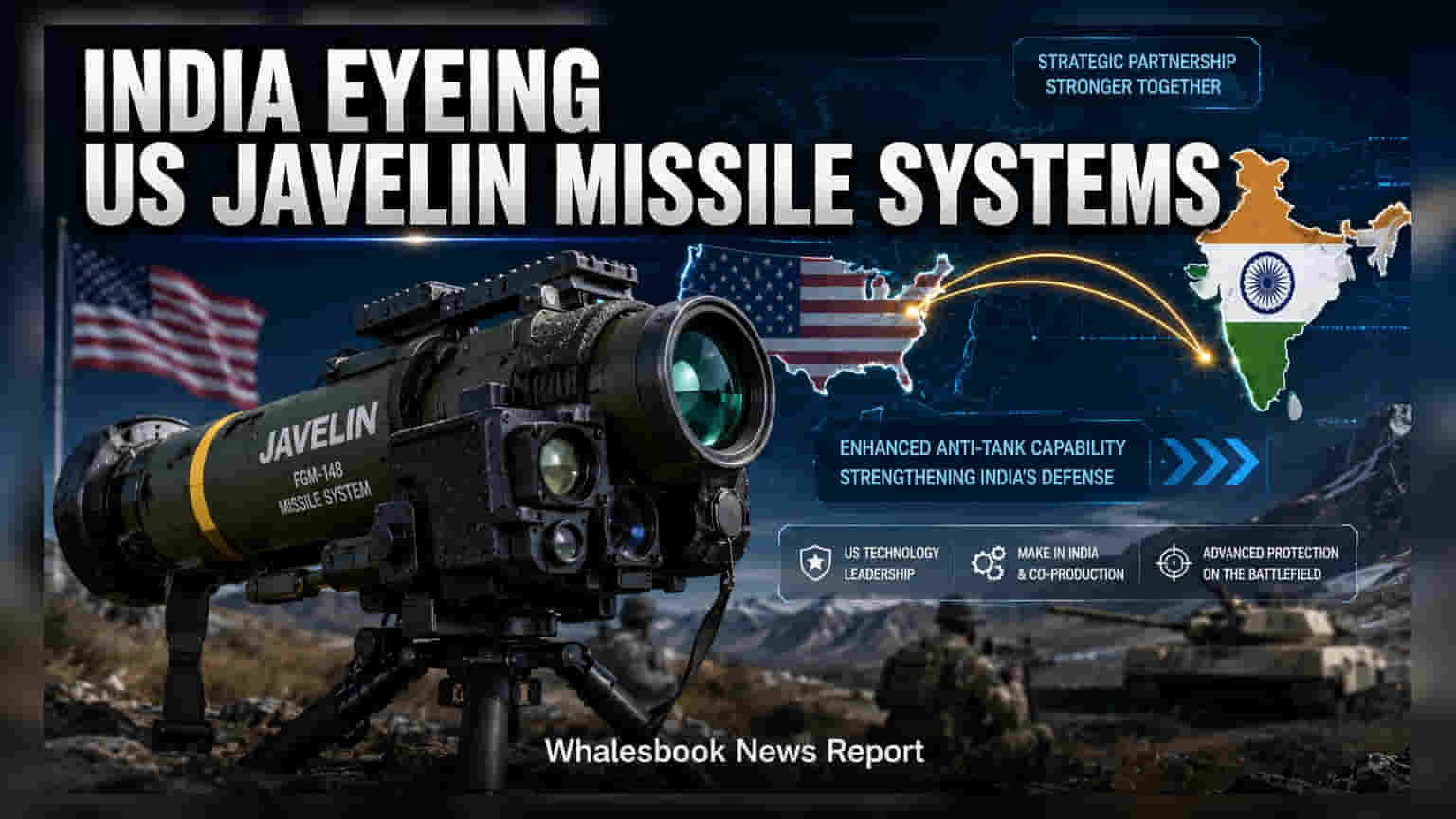
India has confirmed plans to procure the Javelin anti-tank missile system from the United States, marking a key update in defense modernization. This follows a previous $45.7 million approval for the equipment from the US defense agency. Investors are now tracking details on local co-production, as India shifts focus toward domestic defense manufacturing.
India has announced plans to procure the Javelin anti-tank missile system, a move that highlights a significant step in the defense relationship between New Delhi and Washington. US Ambassador to India Sergio Gor confirmed the development, which is expected to help modernize India's ground-based anti-tank capabilities.
The Javelin system is produced by a joint venture between two major US defense firms, RTX Corporation and Lockheed Martin. While the exact value and quantities of this specific deal remain to be finalized, the US Defense Security Cooperation Agency (DSCA) had previously notified the US Congress of a potential foreign military sale of Javelin missiles and related support equipment, estimated at approximately $45.7 million, in November 2025.
For investors and the defense sector, the most important aspect of this move is not just the purchase of ready-made equipment, but the potential for technology transfer and co-production. India has been actively pushing its 'Make in India' policy, which encourages foreign defense firms to manufacture equipment within the country alongside domestic private partners. This strategy aims to build local technical expertise and reduce reliance on imports over the long term.
However, history shows that defense procurement deals of this nature often face challenges. Indo-US defense cooperation on advanced systems has frequently experienced delays, sometimes lasting for years. These delays are often caused by the need for complex field trials, negotiations over technology sharing, and bureaucratic processes. Successfully moving from an initial announcement to actual production involves navigating these regulatory and technical requirements, which can slow down project timelines.
Investors monitoring the defense sector should keep an eye on how these discussions evolve. The key focus for the market will be on whether the deal includes specific plans for local manufacturing, which private Indian companies might be selected to collaborate on the project, and how quickly the production can actually begin. Understanding the execution timeline and the extent of technology transfer remains critical to assessing the long-term benefit for the domestic defense ecosystem.