

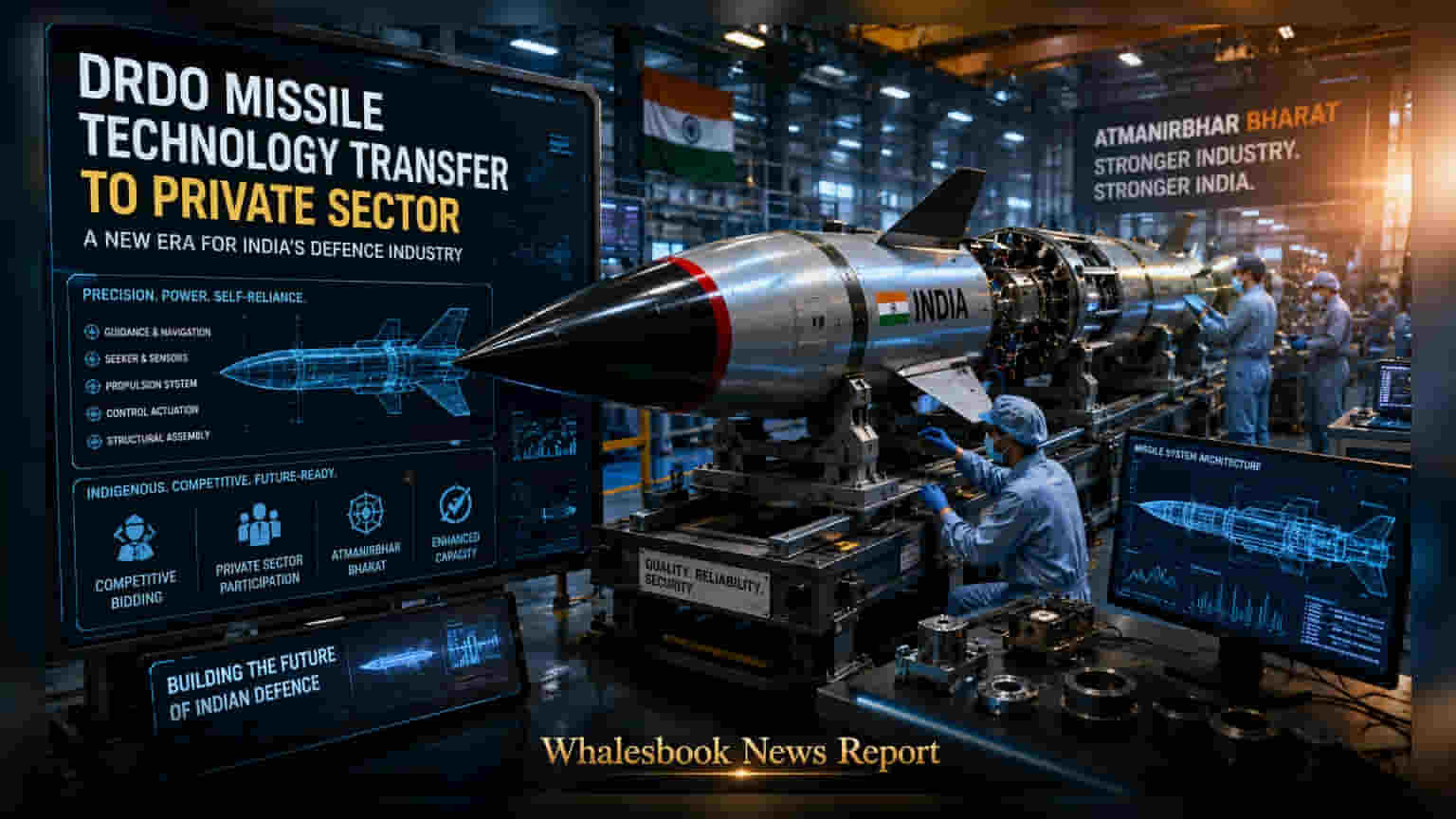
The Indian Ministry of Defence has authorized the transfer of DRDO-developed conventional missile technology to the private sector, ending the reliance on state-run nominations. This policy change invites private companies to bid for manufacturing contracts, aiming to boost local production. Investors are tracking how this transition impacts the order books of defense manufacturers and the feasibility of large-scale, high-tech implementation.
On August 25, 2026, the Indian Ministry of Defence announced a significant policy shift by approving the transfer of technology (ToT) for conventional missile systems developed by the Defence Research and Development Organisation (DRDO) to the domestic private sector. This move marks the end of the traditional nomination model, where contracts were almost exclusively awarded to state-run entities like Bharat Dynamics Limited (BDL).
Under the new framework, the government will use competitive bidding to select development-cum-production partners from the private industry. This change is intended to speed up the transition from laboratory prototypes to industrial-scale manufacturing, supporting the broader goal of indigenous defense production under the Aatmanirbhar Bharat initiative. It is important to note that this policy specifically covers conventional, non-nuclear systems. Strategic assets, such as the Agni series, remain under centralized management and are excluded from this transfer.
The inclusion of private players is expected to broaden the supply chain for complex subsystems, including electronics, radar, guidance systems, and mechanical components. Companies with existing manufacturing and defense-oriented R&D capabilities, such as Solar Industries, Larsen & Toubro, Bharat Forge, and Astra Microwave, are among those potentially well-positioned to participate in the upcoming bidding processes. However, the move is not without its operational challenges.
While the policy intent is to boost capacity, missile manufacturing is a highly complex field. Private firms face a steep learning curve regarding the establishment of qualified production lines and the maintenance of rigorous quality control standards. Furthermore, the industry faces a genuine risk regarding supply chain maturity. Currently, significant dependence on imported high-end sensors and specialized materials persists. True self-reliance will require these firms to not only manufacture but also effectively integrate components into finished products while managing sensitive intellectual property and security protocols.
For investors, the long-term viability of this transition hinges on more than just the ability to win contracts. Success will depend on the government’s ability to provide predictable, consistent procurement cycles. Heavy capital investment is required to set up these high-tech production lines, and commercial success will rely on sustainable order volumes. The government must also navigate the regulatory balance between fostering private participation and maintaining the tight security oversight required for defense manufacturing. The market will monitor the first round of competitive bids and subsequent production timelines to assess the true pace of this industrial transformation.