

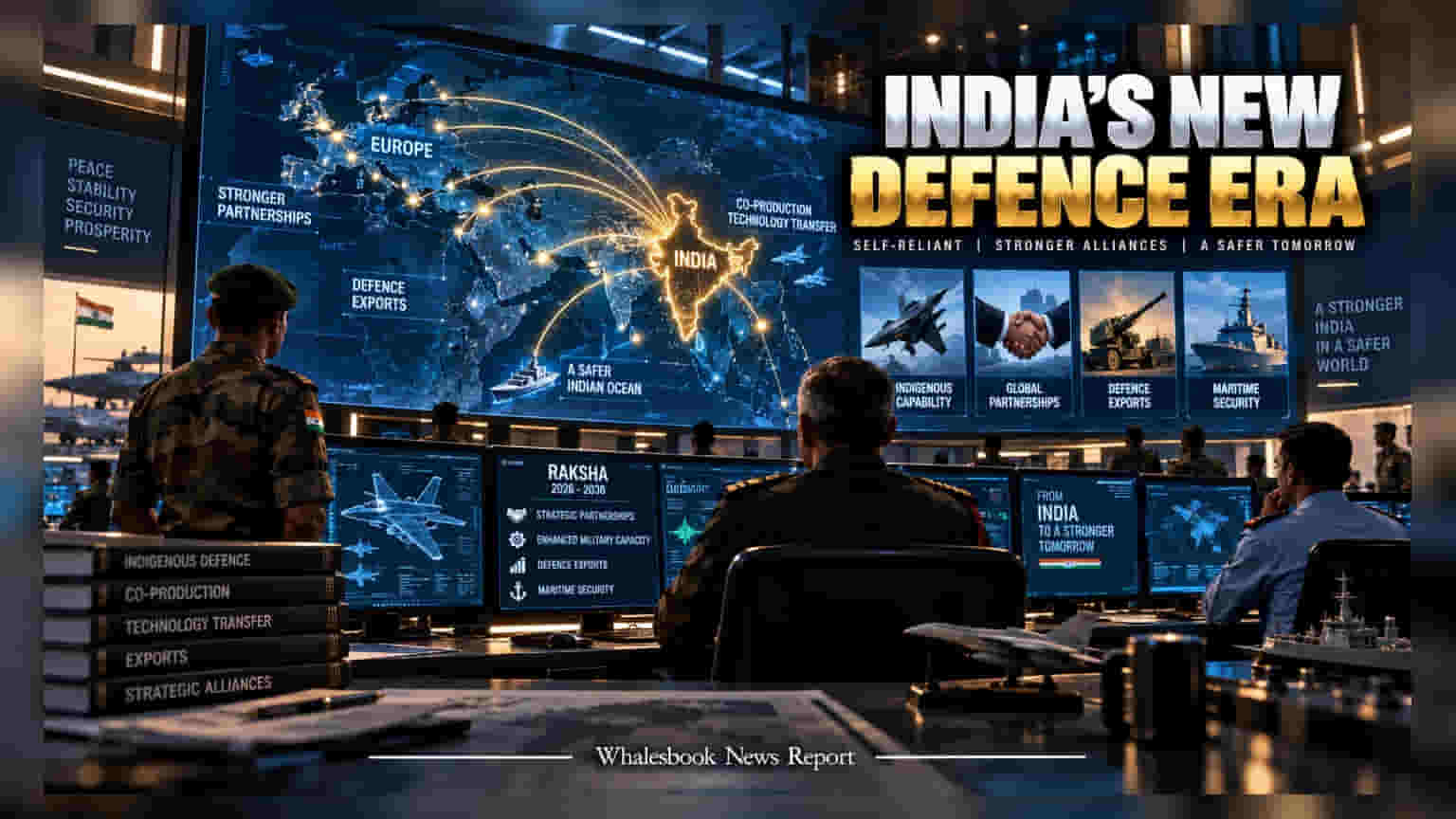
India’s Ministry of Defence has unveiled the RAKSHA framework, a 10-year strategy designed to shift the country from a major equipment importer to a global co-developer and exporter. The policy aims to diversify military partnerships and strengthen domestic manufacturing. While this provides long-term support for defence companies, investors should track operational risks like maintenance costs and the effectiveness of technology transfers from foreign partners.
The Ministry of Defence officially released the RAKSHA (Roadmap for Advancement, Knowledge, Security, and Holistic Autonomy) framework on September 8, 2026. This 10-year strategic plan, spanning from 2026 to 2036, aims to modernize India’s military partnerships and elevate its status in the global arms industry. Defence Minister Rajnath Singh introduced the policy, which shifts the focus toward building indigenous capacity, fostering co-production with international allies, and boosting defence exports.
The framework is structured around four pillars: establishing strategic bilateral and multilateral partnerships, enhancing military capacity through joint training, promoting the export of domestically made equipment, and ensuring maritime security in the Indian Ocean Region. For the domestic defence industry, this marks a clear policy pivot. By moving away from a heavy reliance on a limited group of traditional suppliers, the government intends to distribute procurement risks and encourage deeper technology integration within the local industrial ecosystem.
Impact on Domestic Industry
The RAKSHA strategy acts as a long-term policy tailwind for Indian defence companies. By prioritizing indigenous co-production and technology transfers, the government is looking to integrate both Public Sector Undertakings (DPSUs) and private sector manufacturers more deeply into the global supply chain. For investors, the potential benefit lies in companies that can secure contracts for joint development or manufacturing of advanced components. The success of this roadmap is expected to depend on how effectively these firms can absorb new technologies and scale production to meet both domestic military needs and international export demands.
Operational Risks and Challenges
While the policy aims to increase autonomy, it introduces specific operational and logistical risks. Managing a more diverse and fragmented military inventory—sourced from a wider variety of nations—can lead to interoperability challenges. These issues often translate into increased maintenance costs and complex logistics, as different systems may require specialized support and spare parts.
Another key area for investors to monitor is the execution risk regarding intellectual property. While the government aims to secure technology transfers, the actual extent to which foreign partners share sensitive components or intellectual property remains a significant variable. If technology absorption remains limited to simple assembly or trade-based procurement, the long-term impact on domestic innovation and margin improvement could be less than expected.
What Investors Should Monitor
Moving forward, the primary monitorables for the sector will be concrete evidence of the strategy’s implementation. Investors may look for specific details in future contract awards, joint venture announcements, and order book growth for major defence players. Additionally, tracking the actual commissioning of indigenous platforms and the speed of technology transfer in new projects will be essential to understanding whether the RAKSHA framework is successfully delivering on its goal of making India a self-reliant global defence hub.