

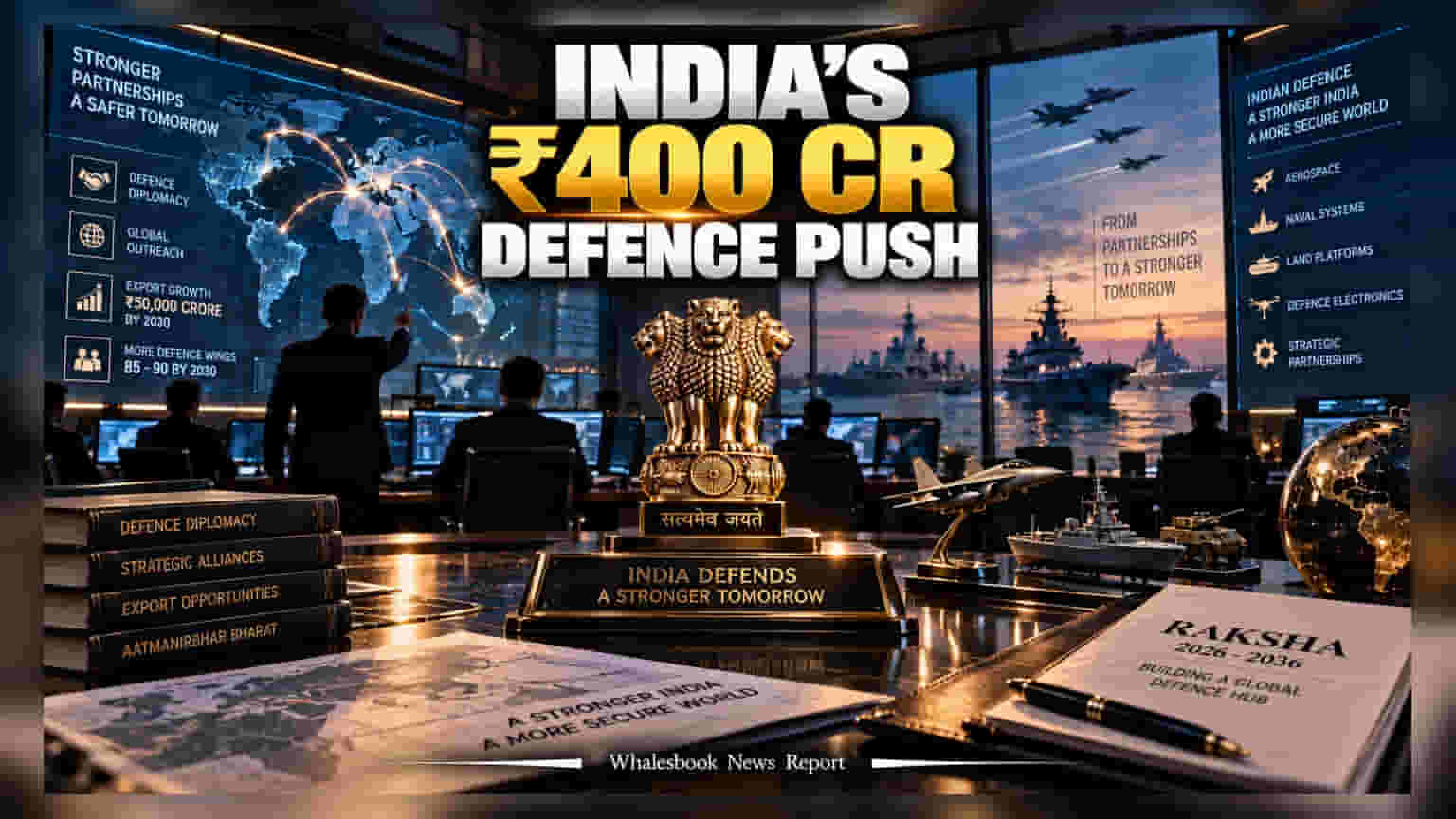
The Ministry of Defence has increased its diplomacy budget to ₹400 crore for FY26 to expand its global footprint. This shift, driven by the new 'RAKSHA' framework, aims to support an ambitious export target of ₹50,000 crore by 2030. Investors are watching how these diplomatic efforts will create new opportunities for Indian defence manufacturers.
The Ministry of Defence has allocated ₹400 crore for defence diplomacy in the 2025-26 fiscal year, a notable increase from the previous year's ₹300 crore. This financial commitment is part of a broader strategic shift designed to transform India into a significant global defence hub. The funds will support equipment gifts, infrastructure outreach, and the expansion of defence wings in friendly nations, moving beyond traditional import-focused relationships toward a strategy that prioritizes exports and strategic partnerships.
This allocation aligns with the recently launched 'RAKSHA' framework, a 10-year roadmap covering 2026 to 2036. The framework outlines a plan to increase the number of defence wings globally from the current 54 to between 85 and 90 by 2030. By reorienting the focus of defence attaches to regions with high export potential, the government aims to facilitate better market access for Indian-made defence equipment. These diplomatic efforts are directly linked to the national goal of achieving ₹50,000 crore in annual defence exports by 2030.
For investors, this policy direction is significant as it provides the necessary diplomatic backing to help domestic companies enter international markets. Many Indian defence manufacturers, ranging from state-owned entities to private players, have been investing in capacity expansion. With the government providing concessional lines of credit and fostering partnerships in regions like West Africa, the Pacific, and the Caribbean, the barrier to entry for smaller or newer export-focused defence firms may lower over time.
However, the path to these export targets involves substantial challenges. While the diplomatic framework sets the stage, the actual success depends on the ability of domestic manufacturers to scale production, manage complex global supply chains, and compete with established international players on both price and quality. Execution risk remains a critical monitorable, as meeting these ambitious targets will require consistent project delivery and the successful integration of technology transfers from strategic partners.
Investors may monitor the progress of these partnerships and the actual export numbers reported in the coming quarters. The effectiveness of the 'RAKSHA' framework will likely be reflected in the order books of companies involved in aerospace, shipbuilding, and electronics. The focus will remain on whether these diplomatic initiatives translate into tangible, high-value export orders that improve the profitability and revenue stability of India's defence sector.