

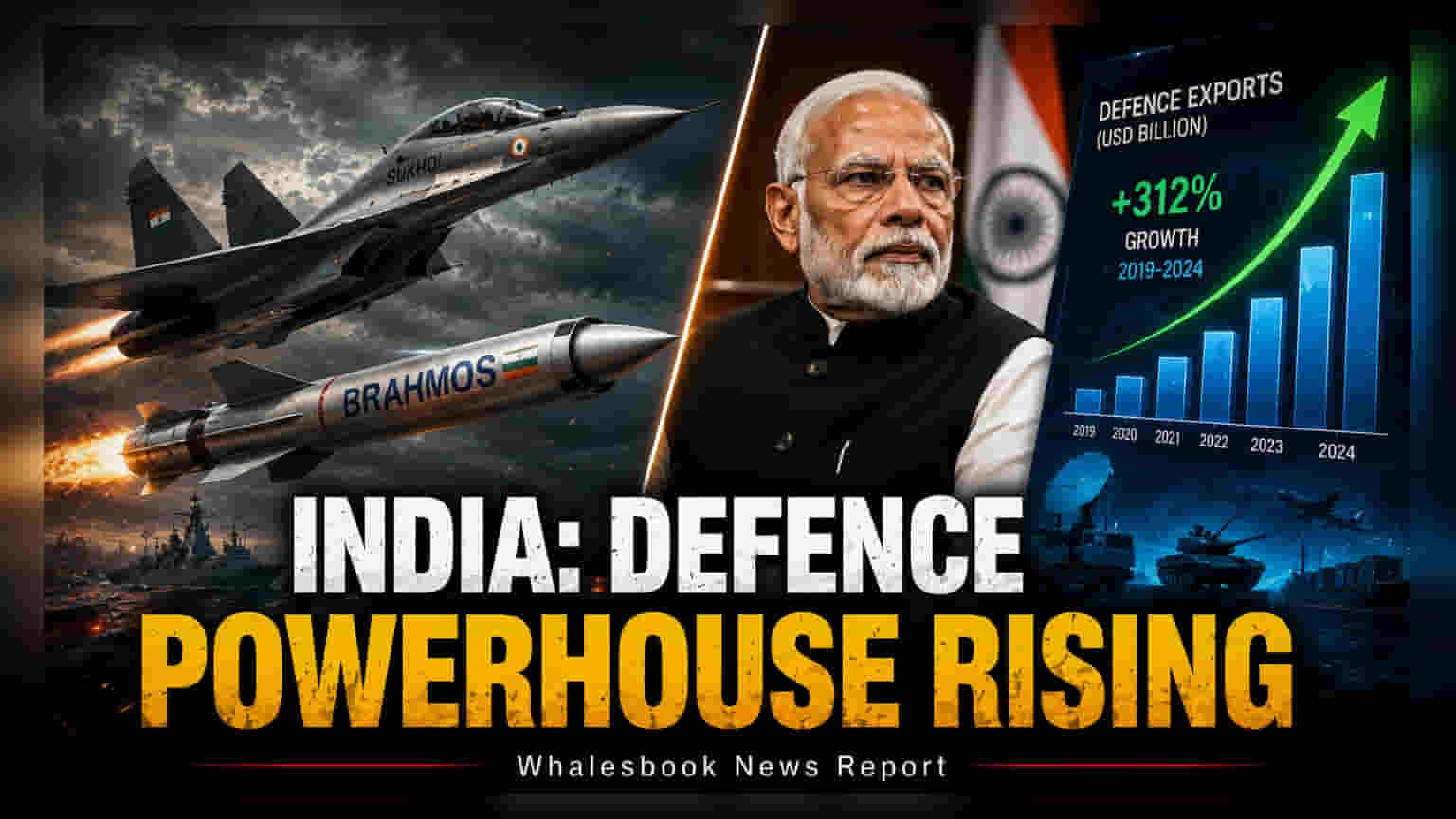
India is strengthening its status as a global defence supplier through increased exports and indigenous technology development. Recent successes include major missile pacts and the launch of the private-sector Vikram-1 rocket. Investors should track how these policy shifts and research milestones influence the long-term revenue growth and order book stability of domestic aerospace and defence companies.
Detailed Coverage
India is increasingly positioning itself as a reliable international supplier of defence equipment, a move that signals a potential shift in the revenue models of domestic aerospace and defence companies. Prime Minister Narendra Modi recently highlighted this progress, focusing on the country's rising capacity to manufacture advanced weaponry and technological systems for both domestic use and global markets.
Strategic Export Pacts and Technology Milestones
A key driver for this sector is the increase in international defence agreements. Among the most notable recent developments is a significant agreement with Indonesia involving the supply of BrahMos and Astra missiles. For investors, these international deals are important because they suggest that Indian defence products are gaining acceptance in global markets, which could diversify revenue streams beyond government contracts.
Simultaneously, the Defence Research and Development Organisation (DRDO) has made headway with the successful testing of the Pinaka Long Range Guided Rocket and the Kusha missile system. Successful trials are a prerequisite for production orders, and these technical milestones often precede the booking of new contracts for manufacturing firms and state-run defence entities.
Private Sector Growth in Aerospace
The space sector has also marked a transition with the launch of the Vikram-1 rocket, the first indigenous rocket developed by the Indian private sector. This success showcases the growing ecosystem for private players in space technology and aerospace manufacturing. The ability of private firms to innovate and reduce development timelines is a metric to watch, as it could lead to higher margins and a larger market share compared to traditional, longer-lead-time government projects.
Investor Monitorables in the Defence Sector
While the push toward self-reliance is clear, investors should maintain a balanced view by tracking specific business fundamentals. A primary monitorable remains the order execution speed, as supply chain constraints and raw material costs can pressure profit margins. Additionally, the transition from successful technology testing to mass production is critical; success in the lab does not always guarantee immediate revenue conversion or high profitability.
Monitoring the order book size, project commissioning timelines, and the ability of companies to manage their working capital will be essential. As the sector moves toward higher-value products and export markets, the competitive landscape will also evolve. Investors should watch for updates on government policy, export license approvals, and the ability of domestic players to compete on cost and technology against established global vendors.