

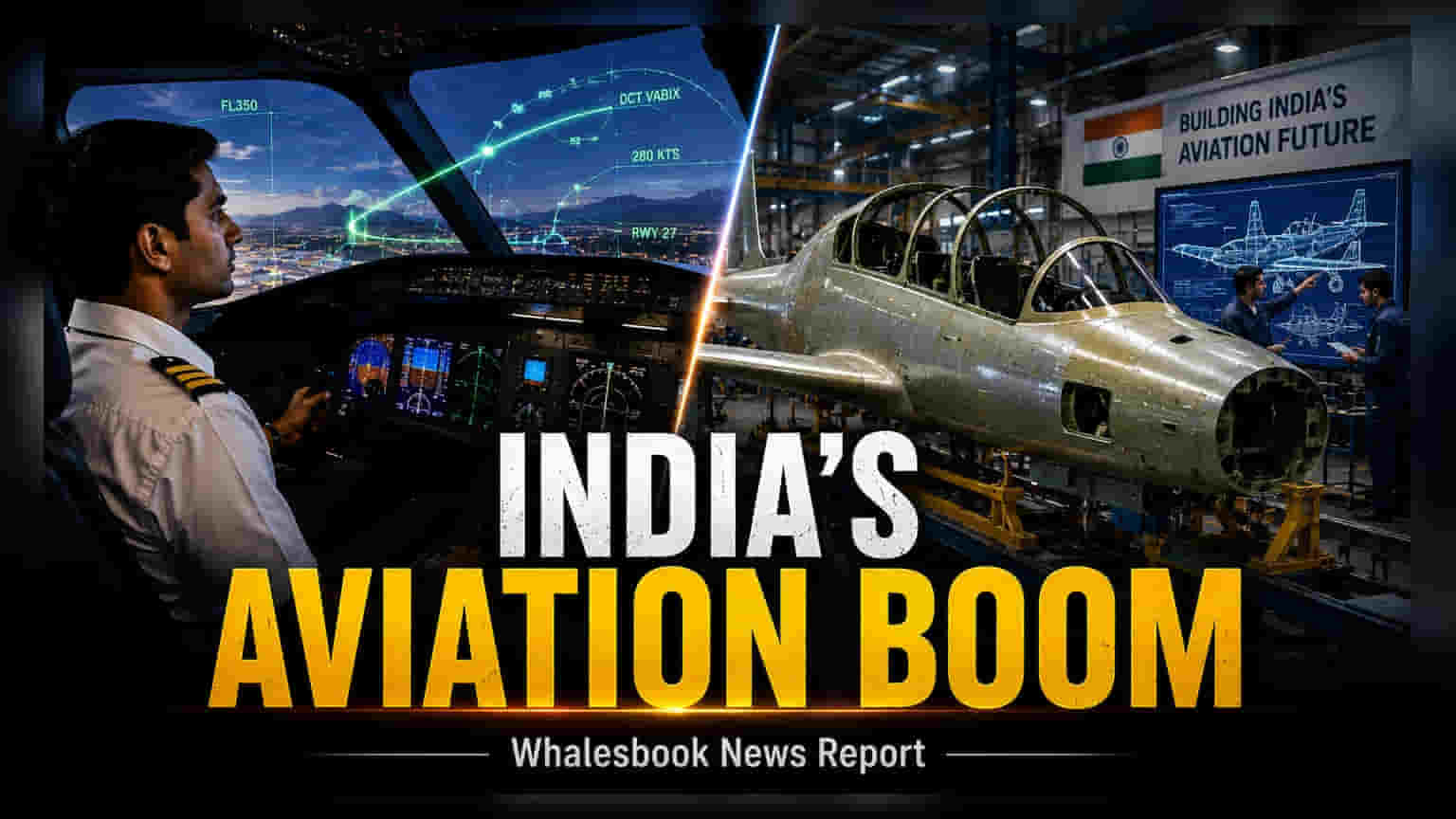
The Ministry of Civil Aviation has issued Letters of Intent for 11 new Flying Training Organisations (FTOs) at seven airports. This expansion aims to add 750 cadets annually to the pilot pipeline, addressing the shortage driven by 1,640 aircraft on order. The government is also pushing to build trainer aircraft domestically to lower dependency on overseas training and equipment.
The Indian government has fast-tracked the expansion of its aviation training infrastructure, issuing Letters of Intent to 11 new Flying Training Organisations (FTOs) across seven airports managed by the Airports Authority of India. This development is part of a coordinated effort to address the widening gap between the rapid expansion of airline fleets and the current domestic supply of trained pilots. The addition of these training bases is projected to increase annual training capacity by 750 cadets.
Scaling for Future Demand
This move comes at a time when Indian airlines are preparing for significant capacity growth, with approximately 1,640 aircraft currently on order. Industry estimates suggest that India will require around 25,000 additional pilots by 2035 to operate these new fleets. While 2025 saw a record issuance of 1,652 Commercial Pilot Licences (CPLs)—the highest in a decade—the government is focusing on building a 'Train in India' ecosystem to ensure that the reliance on foreign training resources and imported equipment is reduced.
Domestic Manufacturing Push
Beyond just training pilots, the Civil Aviation Ministry is shifting focus toward establishing an indigenous manufacturing base for trainer aircraft and seaplanes. By developing these capabilities within the country, the government aims to lower the cost of pilot training, which has historically been high, often pushing aspiring pilots to seek training abroad. The ministry has been working with the Directorate General of Civil Aviation to upgrade existing infrastructure and streamline processes, including the launch of a booking app to improve slot management for training flights.
Investor and Sector Context
For investors monitoring the aviation and aerospace sector, this push toward self-reliance is a structural shift. Airlines have traditionally faced high operational costs related to crew training and sourcing. An increase in the domestic supply of pilots, combined with potential lower costs for trainer aircraft, could improve the long-term operational efficiency of airlines. Furthermore, the government’s push for domestic manufacturing opens up opportunities for aerospace and defense companies that may venture into or expand their footprint in the light aircraft manufacturing segment.
Key Monitorables
While the expansion of FTOs is a positive signal, several challenges remain. The aviation industry faces infrastructure bottlenecks at existing training bases, and the high cost of flight training remains a financial hurdle for many students. Success in this initiative will depend on the government’s ability to execute these infrastructure upgrades on time, the stability of funding for new training ventures, and the ability of domestic manufacturers to produce reliable, cost-effective trainer aircraft. Investors may track the commissioning timeline of these new FTOs and subsequent policy updates regarding domestic aircraft manufacturing incentives.