 Whalesbook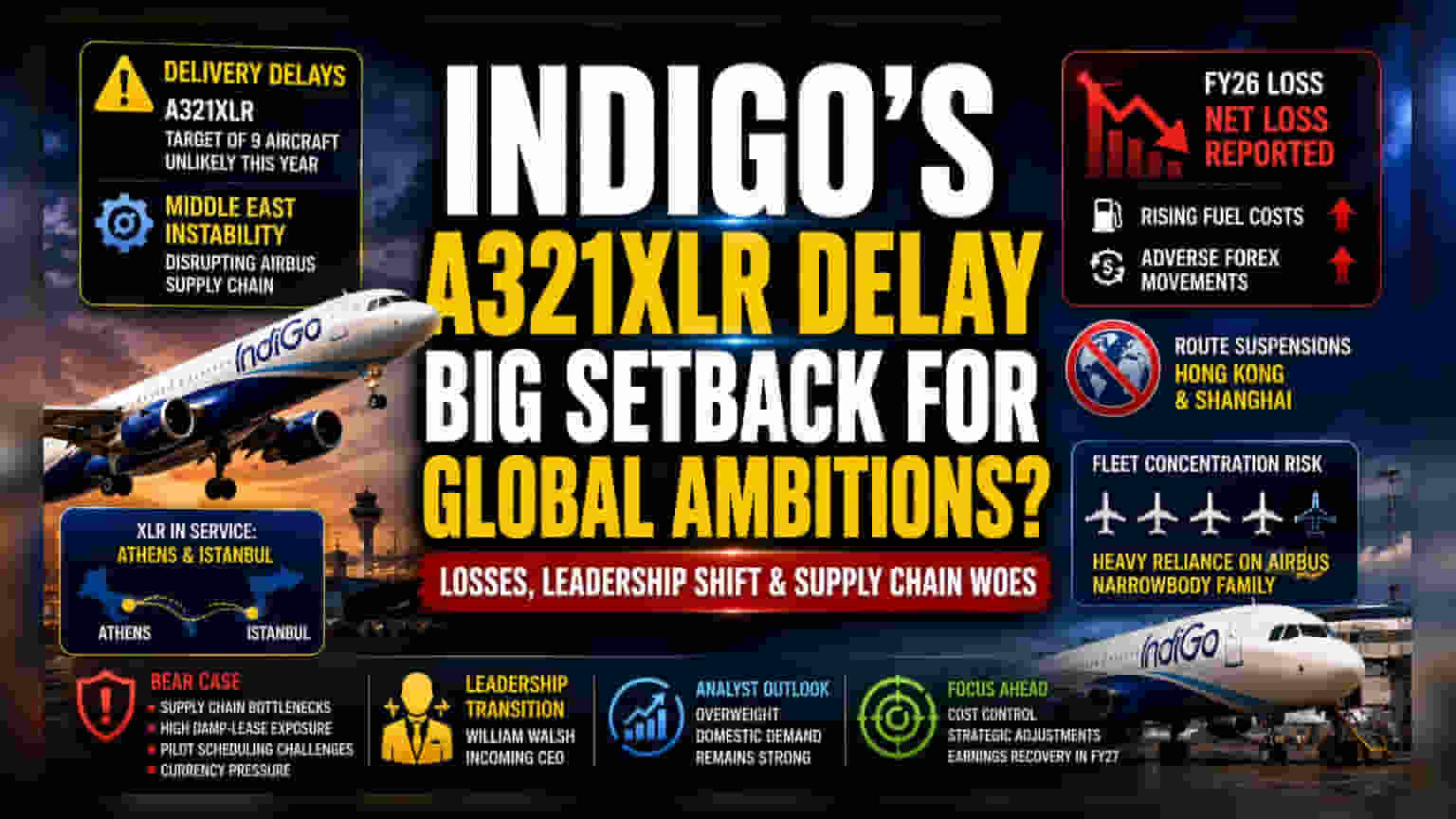


The Operational Bottleneck
The delivery schedule for IndiGo’s A321XLR fleet has encountered significant friction, with the airline unlikely to meet its original target of nine aircraft arrivals within this calendar year. Airbus has signaled that ongoing instability in the Middle East is creating persistent bottlenecks across its supply chain, affecting the production of these advanced, long-range, single-aisle jets. While the airline has already integrated two XLRs into its network for flights to Athens and Istanbul, the inability to scale this fleet as planned restricts the carrier's ability to efficiently bypass traditional hub-and-spoke models for long-haul connectivity.
Strategic Implications and Market Context
This delivery shortfall forces a tactical retreat from ambitious international growth plans at a time when IndiGo is already navigating a precarious operating environment. The airline recently reported a net loss for the fiscal year ending March 31, 2026, pressured by adverse foreign exchange movements and rising fuel costs. By suspending routes to secondary international markets like Hong Kong and Shanghai, management is effectively prioritizing core capacity and margin protection over aggressive network expansion. Unlike legacy competitors, IndiGo’s reliance on the A321XLR as a low-cost, long-haul solution creates a unique structural sensitivity; any delay in receiving these specific airframes directly limits its competitive positioning against rival carriers that utilize traditional, albeit more expensive, widebody aircraft.
The Bear Case: Structural Vulnerabilities
From a risk perspective, IndiGo’s current situation highlights the dangers of fleet concentration. The carrier's heavy dependence on specific Airbus narrowbody families leaves it vulnerable to singular manufacturing or supply chain issues. Management, now preparing for a leadership transition with William Walsh incoming, must contend with not only external geopolitical volatility but also internal operational constraints, including pilot scheduling complexities and high damp-lease exposure. Furthermore, the firm's balance sheet remains sensitive to currency depreciation, which exacerbated recent quarterly losses. Unlike competitors that maintain a more diversified aircraft mix, IndiGo’s specialized reliance on the XLR program leaves little room for maneuver if supply chain challenges persist into 2027.
Future Outlook and Analyst Consensus
Despite the current volatility, institutional sentiment remains largely constructive, with major brokerages maintaining an overweight bias. The consensus hinges on the expectation that India’s domestic aviation demand remains robust and that the eventual normalization of the XLR delivery timeline will provide the necessary tailwind for an earnings recovery in FY27. Market watchers are now monitoring the transition in executive leadership, anticipating a focus on rigorous cost-control and cross-border strategic adjustments to stabilize the carrier’s long-term growth trajectory.