 Whalesbook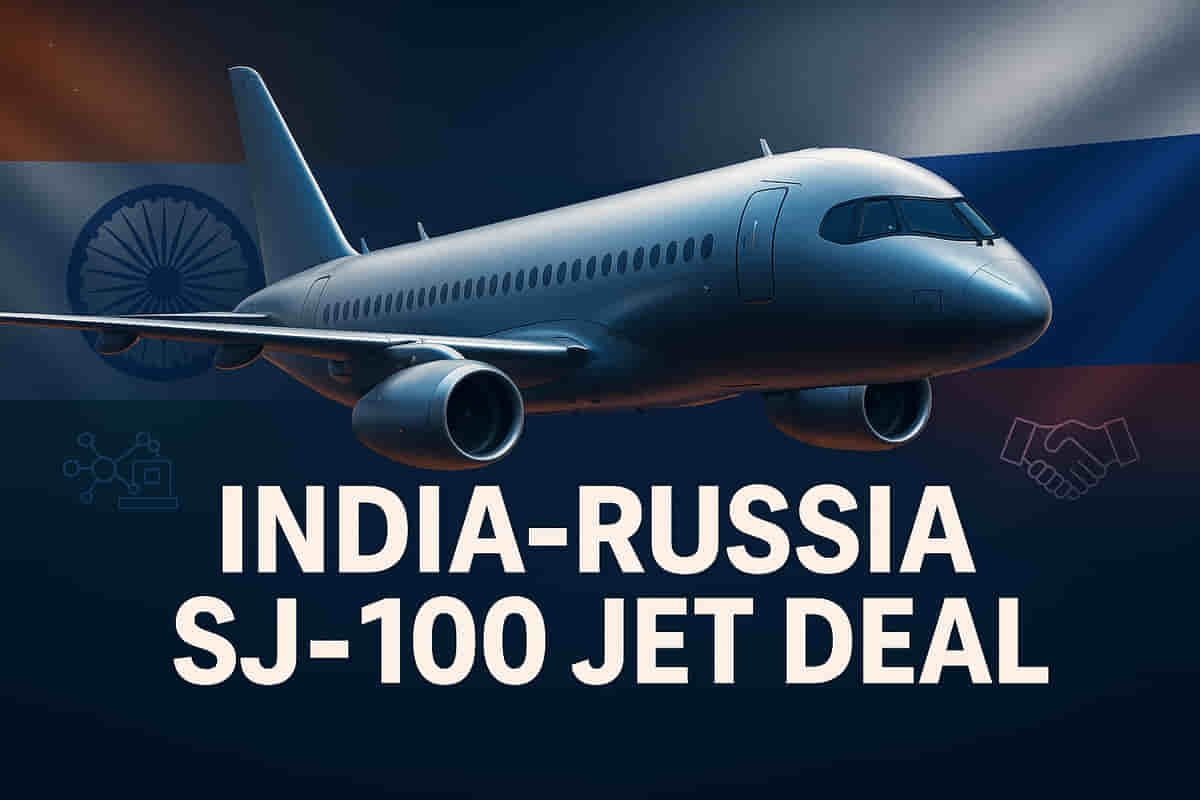


Hindustan Aeronautics Ltd (HAL) and Russia's United Aircraft Corporation (UAC) signed a memorandum of understanding (MOU) in Moscow to explore joint production of the 100-seater SJ-100 commercial aircraft in India. This collaboration is seen as a significant step towards realizing India's long-standing ambition to build commercial aircraft, amid a global shortage and dependence on major players like Airbus and Boeing. Russia seeks partners for its civil aviation programs due to international sanctions.
Business Case
Experts express uncertainty due to a lack of specifics on the deal's scope (full manufacturing vs. assembly) and the absence of confirmed Indian airline buyers. The regional jet market is highly competitive, with players like Embraer and Airbus already established. The SJ-100 itself has a troubled past, marked by engine problems and high maintenance costs, making its adoption by financially strained Indian airlines questionable. Aviation consultants highlight the need for improved reliability, strong after-sales support, and competitive ownership models.
Long Road
The deal holds symbolic importance for India's long-term vision of developing indigenous commercial aircraft and a robust civil aerospace infrastructure. Past attempts like the Saras project did not succeed. For this venture to succeed, factors like acquisition costs, operational expenses, technical quality, and long-term program competitiveness will be crucial. India's fleet mix could benefit from a 100-120 seater jet, but establishing certification, spares, and maintenance systems will require years and massive investment, with customer confidence being a major hurdle.
Pulls and Pressures
Geopolitical factors play a role, with Russia potentially using the deal to maintain its aircraft program's global visibility amidst sanctions. For India, the benefits are less clear, with many questioning HAL's readiness for civilian manufacturing and the potential impact of tightening Western sanctions. While technology transfer could be beneficial, its terms remain opaque.
Impact
This news has a moderate potential impact on the Indian stock market. While HAL's strategic long-term prospects could improve if the project materializes, immediate market returns are unlikely due to the project's nascent stage, significant uncertainties, and the long gestation period for commercial aircraft development. It's more relevant for long-term investors interested in India's industrial diversification and aerospace capabilities.
Impact Rating: 5/10
Difficult Terms
Memorandum of Understanding (MOU): A preliminary agreement between two or more parties that outlines the common line of action or intention. It's a formal agreement but not always a legally binding contract.
United Aircraft Corporation (UAC): A Russian state-owned company that consolidates Russian aircraft manufacturers.
SJ-100: A regional jet aircraft project, formerly known as the Sukhoi Superjet 100.
Sanctions: Penalties imposed by countries or international organizations on another country, typically for political or economic reasons, restricting trade or financial activities.
Civil Aerospace Manufacturing: The production of aircraft for civilian use (commercial airlines, private jets) as opposed to military use.
Regional Jet: A jet aircraft designed for short-haul routes, typically seating between 50 and 100 passengers.
Narrow-body Jets: Aircraft with a single passenger aisle, commonly used for short to medium-haul flights, typically seating 100-240 passengers.
OEM (Original Equipment Manufacturer): A company that manufactures products that are then sold to another company under its brand name.
Supply Chain: The network of organizations, people, activities, information, and resources involved in moving a product or service from supplier to customer.
Certification: The process by which an aviation authority officially confirms that an aircraft design meets all safety and airworthiness requirements.
Technology Transfer: The process of sharing skills, knowledge, manufacturing methods, samples of manufacturing, planning, and facilities with others for the mutual benefit of all parties.
Propulsion Technology: The technology related to the engines and systems that provide thrust for aircraft.