

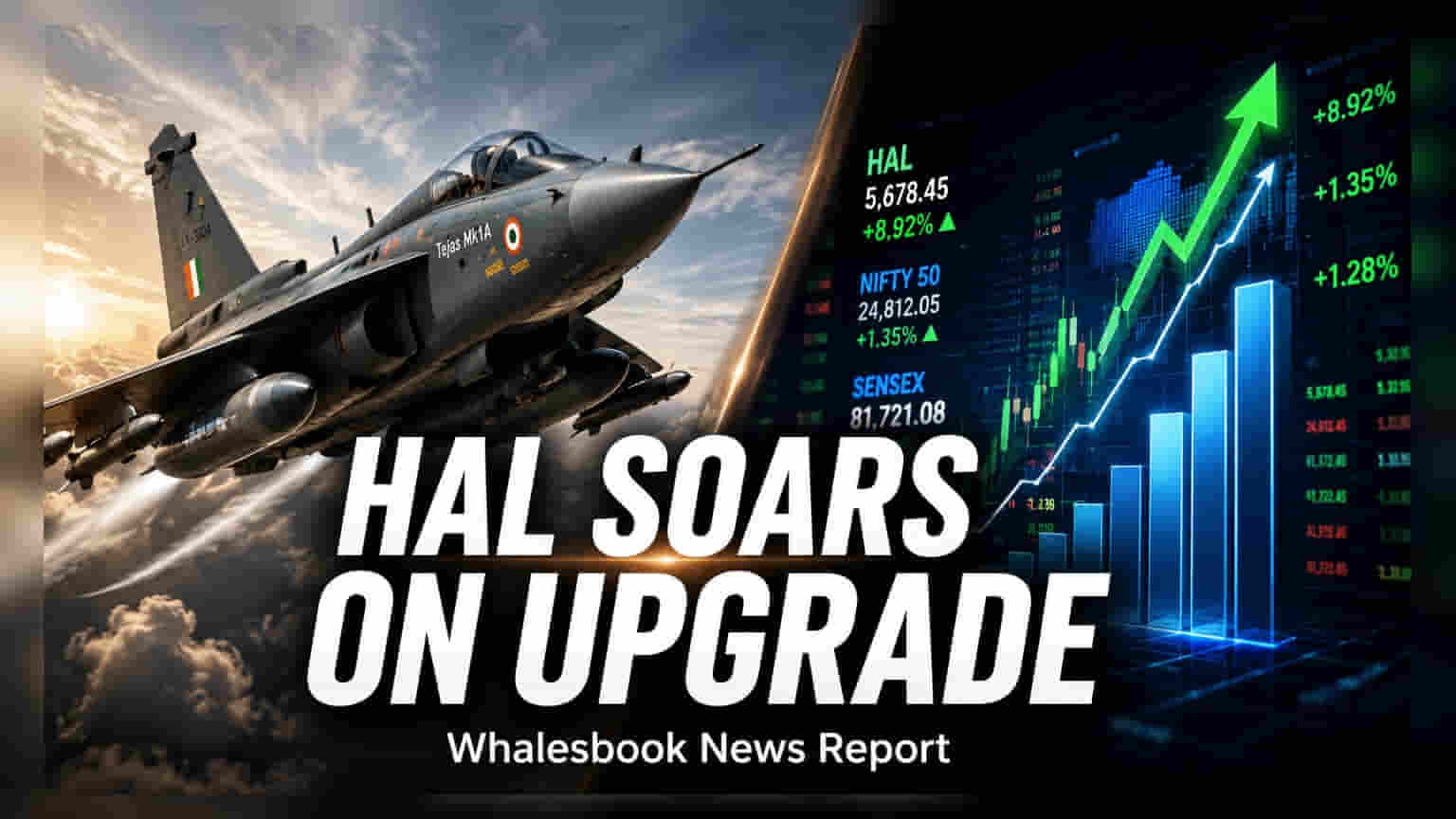
Shares of Hindustan Aeronautics Ltd. (HAL) climbed over 6% after Goldman Sachs upgraded the stock to 'Buy' from 'Neutral.' The brokerage set a target price of ₹5,870, citing smoother GE engine supplies and the expected start of Tejas Mk1A deliveries. This shift reflects growing confidence in the company’s ability to resolve production bottlenecks and clear its massive order backlog.
Hindustan Aeronautics Ltd. (HAL) saw its stock rise 6.09% to Rs 4,928.10 on Thursday following an upgrade from global investment bank Goldman Sachs. The brokerage firm improved its rating on the aerospace manufacturer from ‘neutral’ to ‘buy’ and increased its price target to Rs 5,870. This reflects market optimism about the company’s capacity to overcome previous execution delays.
Goldman Sachs indicated that the primary supply chain pressures, which had hampered production, appear to be easing. The brokerage expects a notable pickup in the delivery of the Tejas Mk1A fighter jets starting from the second quarter of this financial year. A significant factor behind this positive outlook is the stabilization of supply lines for the GE F-404 engines, which are essential for powering the aircraft.
Management at HAL has noted that the company has received a fresh batch of engines, with aircraft testing already in progress. The company aims to ramp up output significantly, targeting the supply of 20 aircraft during the current financial year. This is a sharp increase from the targets set for the previous year, which had to be revised downwards due to component supply constraints.
HAL’s long-term growth is supported by a massive order book, which stood at approximately Rs 2.5 lakh crore at the end of the last financial year. The Tejas Mk1A contract alone represents a significant portion of this, valued at about Rs 48,000 crore. Goldman Sachs suggested that market consensus estimates might have been too focused on just the Tejas program, potentially underestimating the revenue contribution from other upcoming projects in HAL’s portfolio.
Despite the positive outlook, investors should consider the operational risks involved. The company remains dependent on imported components, specifically the GE engines, creating a single-point failure risk that can directly impact delivery timelines. Additionally, the process of integrating advanced technology, such as radar systems and electronic warfare suites, into the fighter jets remains complex and can occasionally cause minor certification delays. Furthermore, with the stock trading at a price-to-earnings ratio of around 34, market expectations are high, meaning that consistent and timely execution is essential to support current valuations.
The most important monitorable for shareholders in the coming months will be the actual volume of Tejas Mk1A deliveries. Investors will track whether the company meets its production targets and if management provides further updates on resolving any remaining integration hurdles.