

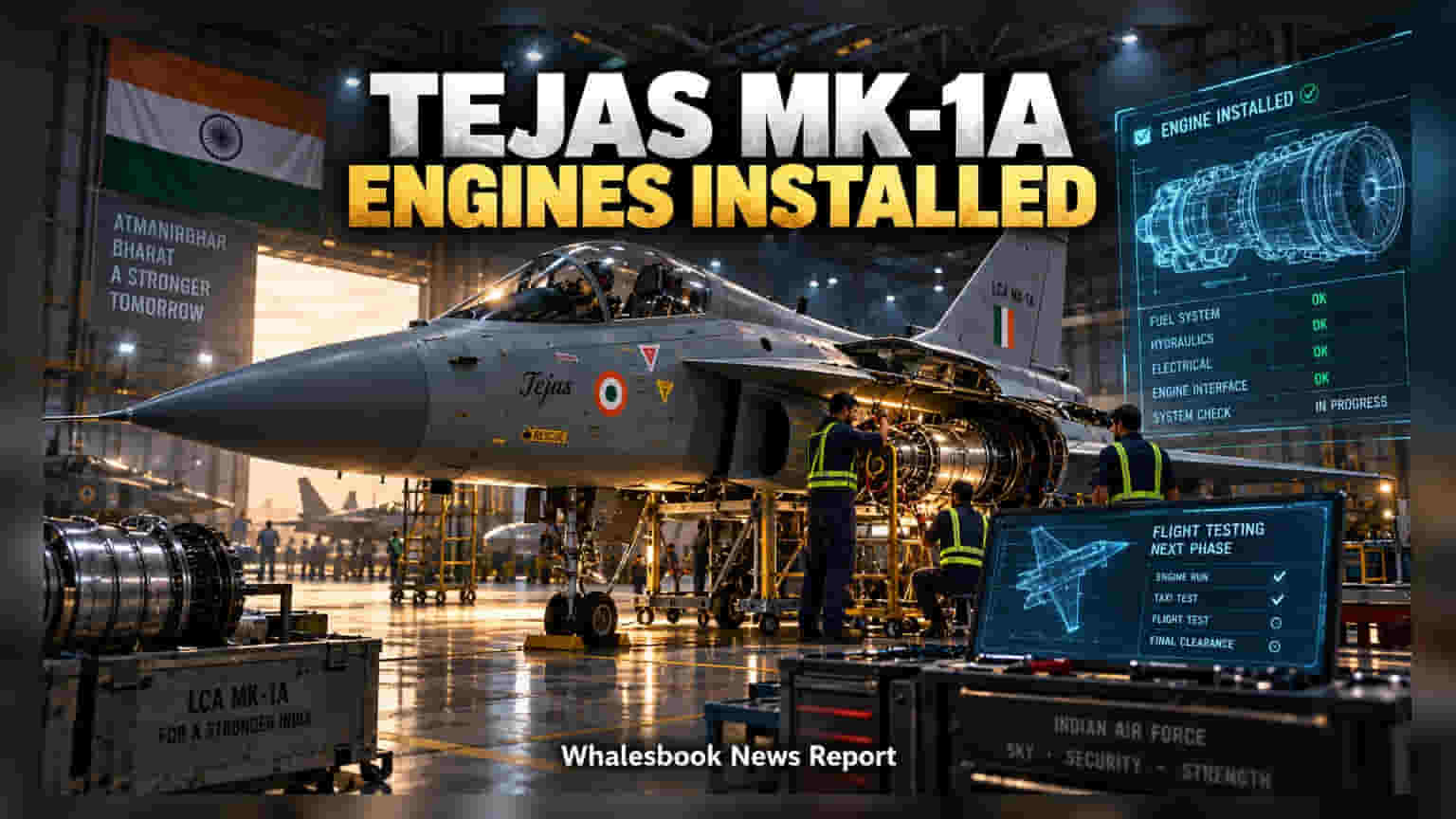
Hindustan Aeronautics Limited (HAL) has successfully installed engines in the LCA Tejas Mk-1A, a key step in its ₹48,000 crore defense program. Officials expect final technical requirements to be resolved within 60 days. This progress is a positive sign for the project's delivery timeline, helping address earlier supply chain constraints that had impacted the execution schedule.
Hindustan Aeronautics Limited (HAL) has hit a crucial milestone in its defense manufacturing operations. The Indian Air Force recently confirmed that the required engines have been successfully installed on the Light Combat Aircraft (LCA) Mk-1A fleet. This development marks a shift in momentum for the ₹48,000 crore project, which had previously faced delays due to supply chain shortages.
Clearing Supply Chain Bottlenecks
The project for 83 aircraft, consisting of 73 fighters and 10 trainers, is a major part of the company's order book. Delays in the delivery of these jets had previously created operational concerns and risks of cost increases. By completing the engine installation, HAL is addressing the primary bottleneck that had slowed down the production line. While the company still needs to complete a few remaining technical verification protocols, officials expect these to be wrapped up within the next 60 days. Once these checks are finalized, the aircraft can move toward formal induction into the operational fleet.
Why Execution Matters for Investors
For investors monitoring HAL, the primary focus is on the company's ability to execute its large order book on time. Defense manufacturing projects are capital-intensive and often involve complex supply chains for critical components like engines. Any disruption in receiving these parts can delay final delivery and impact the company's revenue recognition. The government's emphasis on project timelines highlights the strategic importance of these jets for modernizing the air force's infrastructure.
As a 4+ generation platform, the Tejas Mk-1A features advanced technology, including AESA radar and beyond-visual-range missile capabilities. Successfully bringing these jets into service is not only a boost to the country's defense capabilities but also demonstrates HAL’s operational stability. The company's performance will depend on its ability to maintain this pace and avoid further technical or logistics hurdles. Investors should track the progress over the next two months to see if the program meets the stated timeline for final certification.