

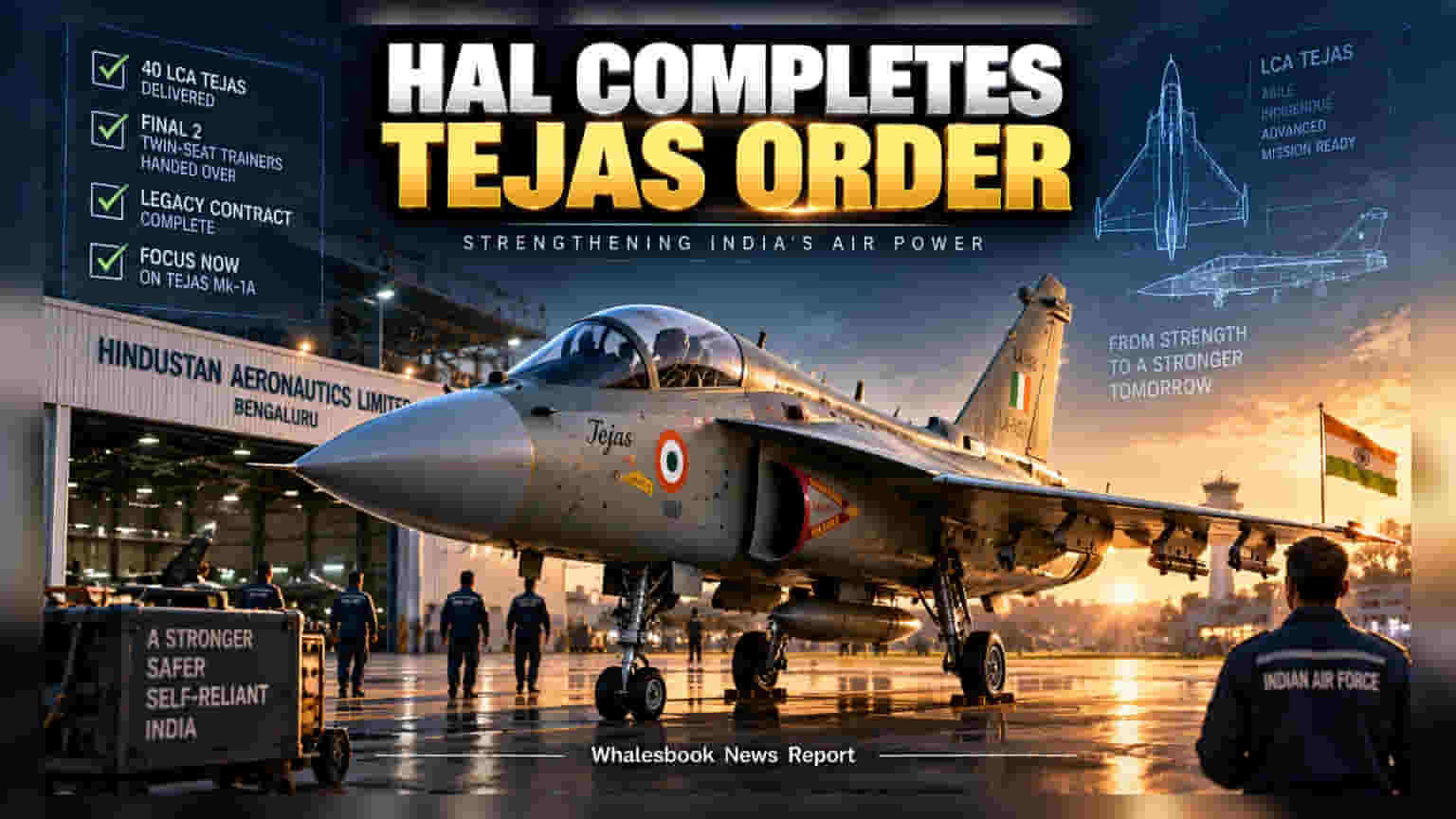
Hindustan Aeronautics Limited has delivered the final units of its original 40-jet Tejas Mk-1 contract. The company is now navigating technical software and radar integration challenges for its pending 180-aircraft Mk-1A pipeline. Investors are tracking delivery timelines as the firm aims to ramp up output for its multi-crore defense orders.
Hindustan Aeronautics Limited (HAL) has successfully concluded its original contract for 40 Light Combat Aircraft (LCA) Tejas. The final two twin-seat trainers were handed over to the Indian Air Force in Bengaluru this week, marking the end of a production cycle that began in 2006. With this legacy project now complete, the company is reallocating its manufacturing and engineering focus toward the more complex Tejas Mk-1A program.
The transition to the Mk-1A variant presents new technical challenges for the defense major. While the company has already manufactured 27 airframes, these units are not yet ready for mass delivery. The engineering teams are currently focused on resolving hurdles related to radar integration, weapons systems, and flight software. Management has indicated that they are prioritizing operational readiness and testing over providing a fixed delivery schedule, as these sophisticated systems require extensive calibration.
The company maintains a strong order book of 180 Mk-1A jets, which provides long-term revenue visibility. This includes a 2021 contract for 83 aircraft valued at approximately ₹48,000 crore and a 2025 order for 97 additional jets worth ₹62,370 crore. The ability of the company to capitalize on this order book depends heavily on its success in overcoming current testing and software bottlenecks.
Execution risk remains the most important factor for investors to monitor. As the company scales its production to meet the demands of the Indian Air Force, it must ensure that the performance of the newer Mk-1A fleet matches the standards set by the original Tejas program. On Friday, shares of HAL rose nearly 2% as the market assessed the completion of the legacy contract against the company's progress in resolving the technical hurdles for the upcoming fleet.