

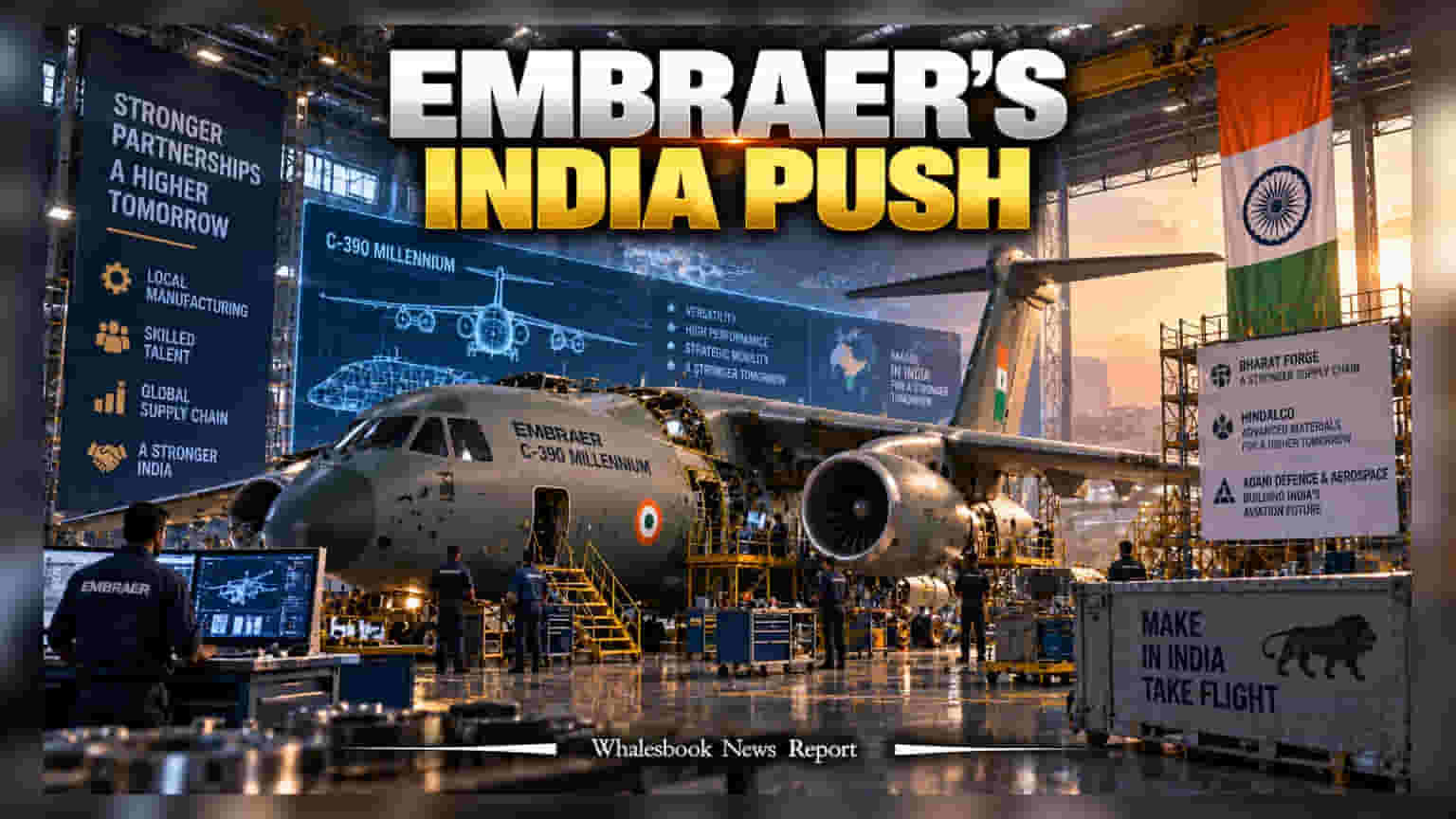
Brazilian aerospace major Embraer is deepening its India supply chain through partnerships with Bharat Forge, Adani Defence, and Hindalco. The company is actively bidding for the Indian Air Force’s ₹1 lakh crore transport aircraft tender while aiming to set up an E175 regional jet assembly line. Investors are watching for tender outcomes and firm volume commitments, which remain critical for these projects to move forward.
Embraer, the Brazil-based aerospace leader, is significantly shifting its strategy in India by integrating local industrial giants into its global supply chain. This move is part of a broader effort to align with India’s manufacturing initiatives and secure a foothold in both the defense and commercial aviation markets. The strategy relies on forming specific, high-value partnerships to produce everything from aircraft raw materials to complex components.
Expanding Local Partnerships
Embraer has moved beyond simple sourcing, signing a key contract in May 2026 with Bharat Forge. This deal establishes Bharat Forge as the first Indian supplier of forged components for Embraer’s aircraft. Alongside this, the company is working with Hindalco Industries to develop aerospace-grade aluminium, a critical raw material for modern aircraft manufacturing. Furthermore, Embraer has advanced its memorandum of understanding with Adani Defence & Aerospace. This collaboration is aimed at establishing a final assembly line for E175 regional jets within India. If realized, this would mark a major milestone in India’s commercial aircraft manufacturing capabilities.
The C-390 Millennium Defense Bid
The most significant opportunity for Embraer lies in the Indian Air Force’s Medium Transport Aircraft (MTA) program. The government issued a tender in August 2026 for 60 to 80 transport aircraft, an order estimated to be worth around ₹1 lakh crore. Embraer is positioning its C-390 Millennium for this contract. A victory in this competitive tender would be a catalyst for further investment, as the company plans to build a dedicated production and maintenance hub in the country if it wins the order. This facility would serve not only the Indian Air Force but also act as a regional support center.
Financial Context and Investor Monitorables
Embraer enters this expansion from a position of relative financial strength, having reported record earnings in the second quarter of 2026, supported by a firm order backlog of $34.5 billion. This financial stability gives the company the flexibility to fund these long-term industrial projects. However, the path forward involves significant risks that investors should monitor.
Firstly, the defense tender is highly competitive, with established rivals like the C-130J platform vying for the same contract. The final decision rests on government procurement outcomes, which can be subject to delays and intense bidding. Secondly, the proposed E175 assembly line in India is not a guaranteed investment. Embraer has indicated that the project would likely require firm commitments for at least 200 aircraft before it transitions into a formal, large-scale production setup. Consequently, the actual financial impact on Embraer’s Indian partners—and the realization of these manufacturing hubs—will depend heavily on securing these large-scale orders and meeting strict local manufacturing requirements.