

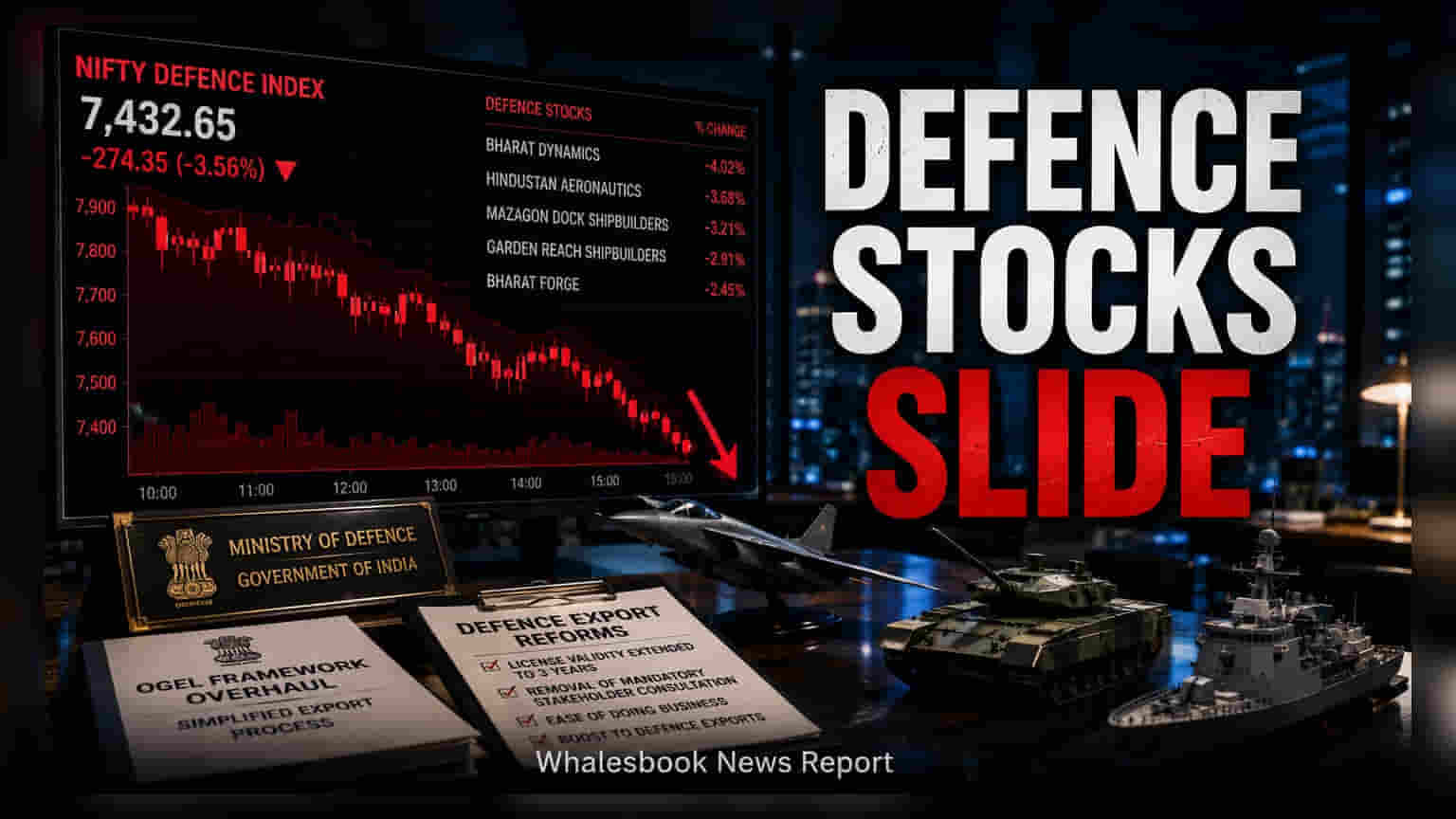
Shares of major defence companies like Bharat Dynamics and HAL fell on August 28, 2026, after the government eased Open General Export Licence (OGEL) rules. While these reforms streamline export procedures, the market reacted to the increased competition for state-owned firms from agile private sector players. Investors are now watching whether this level playing field will impact profit margins for legacy public sector undertakings.
Indian defence stocks faced selling pressure on Friday, August 28, 2026, as the Ministry of Defence announced a significant overhaul of the Open General Export Licence (OGEL) framework and the Defence Export Standard Operating Procedure. While the government aims to position India as a more active global defence exporter, market participants reacted to the potential for heightened competition within the sector.
The regulatory changes include extending the validity of export licenses from two to three years and consolidating compliance requirements. A key change is the removal of mandatory stakeholder consultations for the export of non-lethal defence items and for products meant for international tenders or exhibitions. This move is designed to expedite the export process, making it much easier for companies to ship goods to most countries, excluding those under UN sanctions or specific sensitive lists.
While the reforms are generally positive for the industry's growth, they have altered the competitive environment for Public Sector Undertakings (PSUs). Historically, companies like Bharat Dynamics, Hindustan Aeronautics, Mazagon Dock Shipbuilders, and Garden Reach Shipbuilders & Engineers have held a dominant position in the defence sector, often with government-backed protection or priority status. The simplified framework allows private sector companies to enter the export market more easily, effectively putting them on a more level playing field with these legacy state-owned firms.
In Friday's trading session, the Nifty Defence index moved lower, reflecting broad investor caution. Stocks including Bharat Dynamics and Hindustan Aeronautics saw declines of up to 4% as investors reassessed the competitive landscape. Other players, including Bharat Forge and various state-owned shipbuilders, also traded in the red. The sell-off appears driven by fears that the ease of doing business for private firms could lead to more aggressive bidding for global orders, potentially placing pressure on the profit margins of legacy PSUs that previously faced less private-sector competition for export contracts.
Although the long-term outlook for the Indian defence sector remains supported by government push for indigenization and exports, the immediate transition to this more open framework is causing short-term volatility. Investors are currently adjusting their valuations to account for a more crowded export market.
Moving forward, the key factor for shareholders will be execution capability. While the new rules make it easier to export, companies must still demonstrate the ability to deliver high-quality products on time to win international contracts. Investors may want to monitor how these companies maintain their order books and whether the increased competition leads to price wars or impacts the operating margins of the major state-owned manufacturers in coming quarters.