

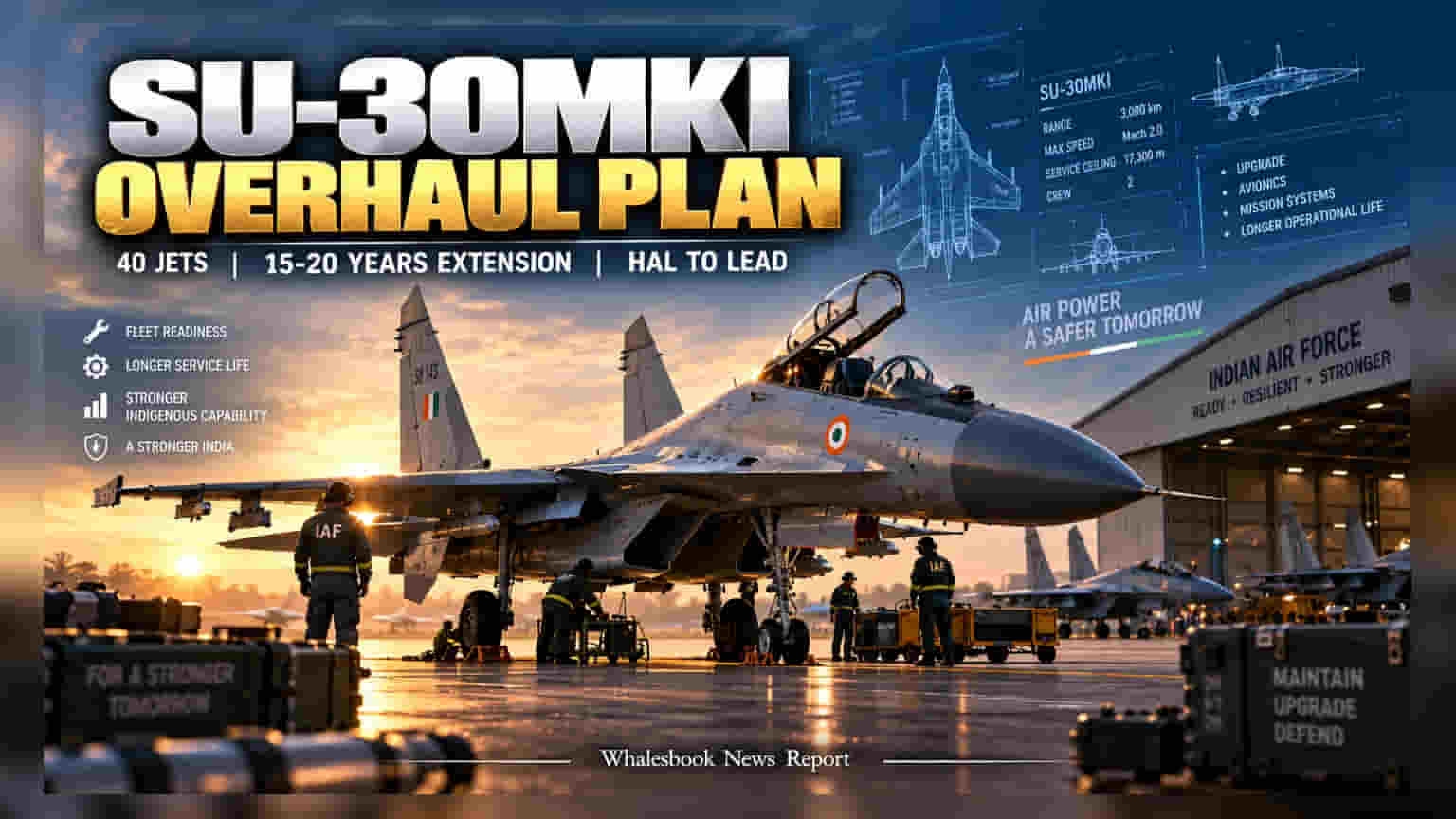
The Defence Acquisition Council is meeting Monday to evaluate a major maintenance proposal for 40 Su-30MKI fighter jets. As the key manufacturer and maintenance partner, Hindustan Aeronautics Ltd (HAL) remains the central focus for this project. Investors should watch for the approval status, as it impacts the company’s long-term service order book and operational outlook.
The Defence Acquisition Council (DAC), chaired by Defence Minister Rajnath Singh, is scheduled to meet Monday to review a comprehensive proposal for the overhaul of 40 Su-30MKI fighter jets. These aircraft are the backbone of the Indian Air Force's aerial combat fleet. Hindustan Aeronautics Ltd (HAL) is expected to be the primary entity tasked with executing this intensive maintenance program, which aims to extend the operational capability of these jets by 15-20 years.
Financial and Operational Context
For HAL, this maintenance work is part of a steady revenue stream that complements its manufacturing business. The company recently reported a consolidated net profit of ₹1,589.68 crore for the first quarter of fiscal year 2027, representing a 14.9% increase compared to the previous year. HAL’s profitability, reflected in its 27.9% EBITDA margin, is driven by both new defense contracts and the recurring service requirements of its existing fleet. This overhaul project, if cleared, would reinforce the company’s order visibility, building upon recent successes such as the contract for 12 new Su-30MKI fighters awarded in December 2024.
Strategic Importance of Fleet Readiness
The Indian Air Force currently operates over 260 Su-30MKI aircraft. Maintaining this fleet is essential to national security, especially given the current demand for fighter squadrons. Periodic, deep overhauls are necessary to ensure that these jets remain mission-ready. While manufacturing new jets generates high upfront revenue, the maintenance and upgrade cycle provides consistent, long-term business for domestic defense firms. This, combined with broader modernization efforts like the integration of indigenous radars, is central to the Ministry of Defence’s focus on increasing domestic manufacturing.
Execution Risks and Monitorables
While the maintenance business model offers stability, it is not without risks. The overhaul of sophisticated military hardware involves complex logistics and integration of flight control systems. Any reliance on external technical cooperation for deep avionics upgrades—particularly for the 'Super Sukhoi' program—can introduce dependencies that may impact project timelines.
Furthermore, maintaining high profit margins in long-term defense projects requires strict cost control. Investors will need to watch how HAL manages potential cost pressures related to parts and specialized labor. The ability to execute these overhauls on time without significant cost overruns will be a key factor in assessing the company's operational efficiency. Moving forward, the market will look for official confirmation of the project approval, the final contract value, and the estimated timeline for completion.