

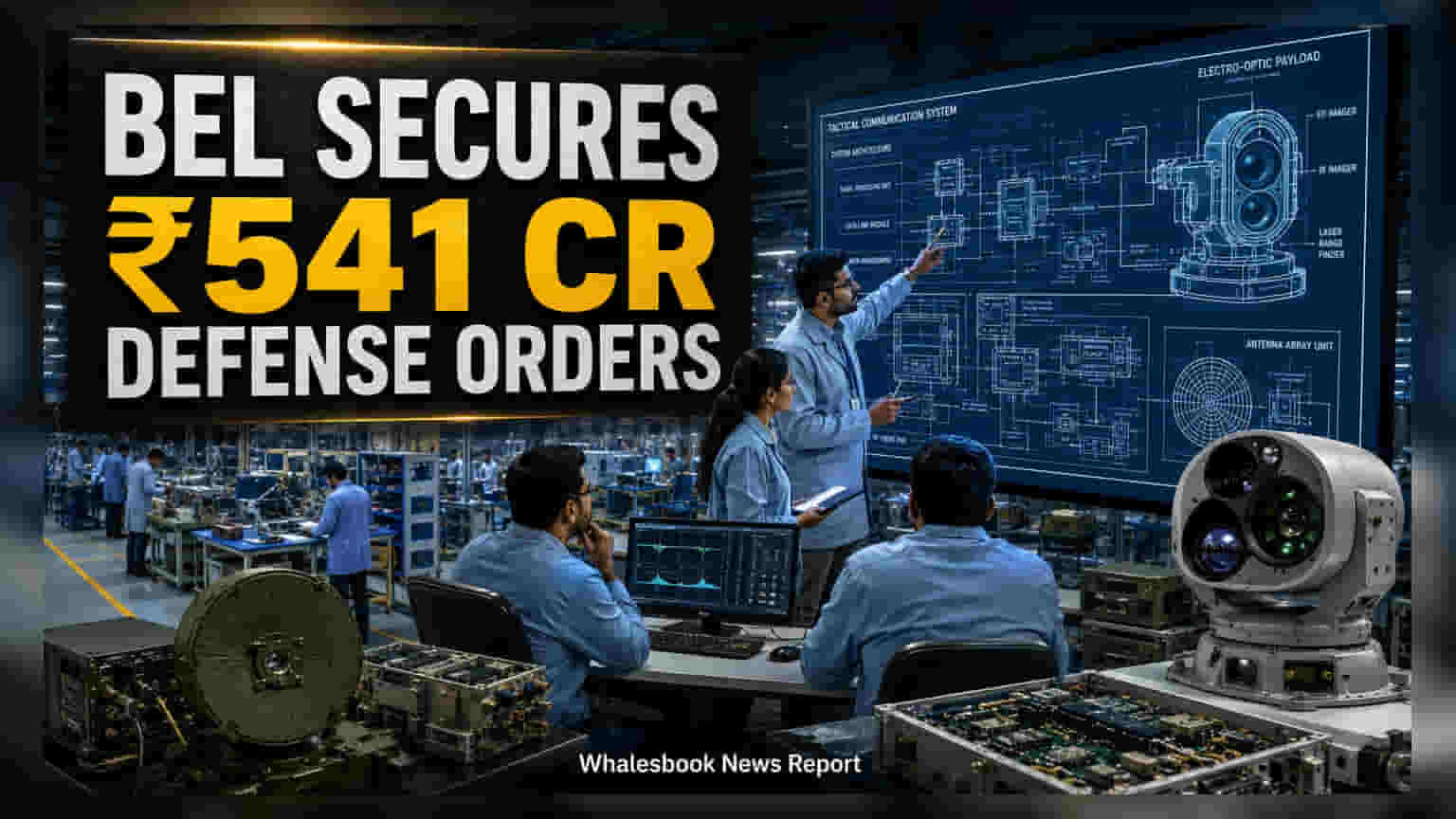
Bharat Electronics Limited (BEL) has bagged new defense orders worth ₹541 crore for communication and surveillance systems. Alongside the order inflow, the company reported an 8.8% rise in Q1 profit, though profit margins saw a slight decline. Investors are also watching the board's move to raise the company's authorized share capital to ₹1,000 crore, which is currently pending shareholder approval.
Bharat Electronics Limited (BEL), the state-run defense electronics major, has continued its steady stream of contract wins by securing new defense orders worth ₹541 crore. These fresh contracts, awarded since the end of July 2026, include orders for specialized communication equipment, electro-optics, ammunition fuzes, and Chemical, Biological, Radiological, and Nuclear (CBRN) systems. The company also includes spares and services in these new mandates, further adding to its substantial order book, which stood at ₹72,258 crore as of the start of July.
Financial Performance in Q1
Along with the order update, the company released its financial performance for the first quarter of the 2027 fiscal year. BEL recorded a strong 25.3% growth in revenue from operations, which reached ₹5,533 crore for the quarter. Net profit also followed an upward trend, rising by 8.8% on a year-on-year basis to touch ₹1,054 crore.
Despite the growth in revenue, investors are noting a contraction in profitability margins. The company's operating margin, often referred to as the EBITDA margin, slipped to 25.1% during the June quarter, compared to 28.1% in the same period last year. This dip indicates that the cost of executing projects or raw material expenses may be rising, impacting the profit earned on every unit of revenue. Tracking whether margins recover or stabilize in the coming quarters will be an important factor for shareholders.
Capital Structure and Future Outlook
In a significant administrative update, the company’s board has proposed an increase in its authorized share capital. The plan is to raise this from the current ₹750 crore to ₹1,000 crore by increasing the number of equity shares. This is a procedural move that requires approval from shareholders at the upcoming annual general meeting. Increasing authorized capital is often a step companies take to prepare for future growth, potential bonus issues, or stock splits, though shareholders should wait for specific management communication regarding the exact purpose.
Risks and Monitorables
While the company benefits from a strong government-backed order pipeline, it faces specific industry challenges. Reliance on imported semiconductors remains a material risk, as any disruption in the global supply chain can affect project timelines and increase costs. Additionally, with the stock trading at a relatively high valuation compared to some historical averages, the market is pricing in expectations of consistent earnings growth. Investors may monitor how the company manages execution costs to prevent further pressure on profit margins. Another important factor to watch is the 'book-to-bill' ratio, as the company needs to continuously win new, large-scale contracts to maintain the revenue visibility provided by its existing order backlog.