

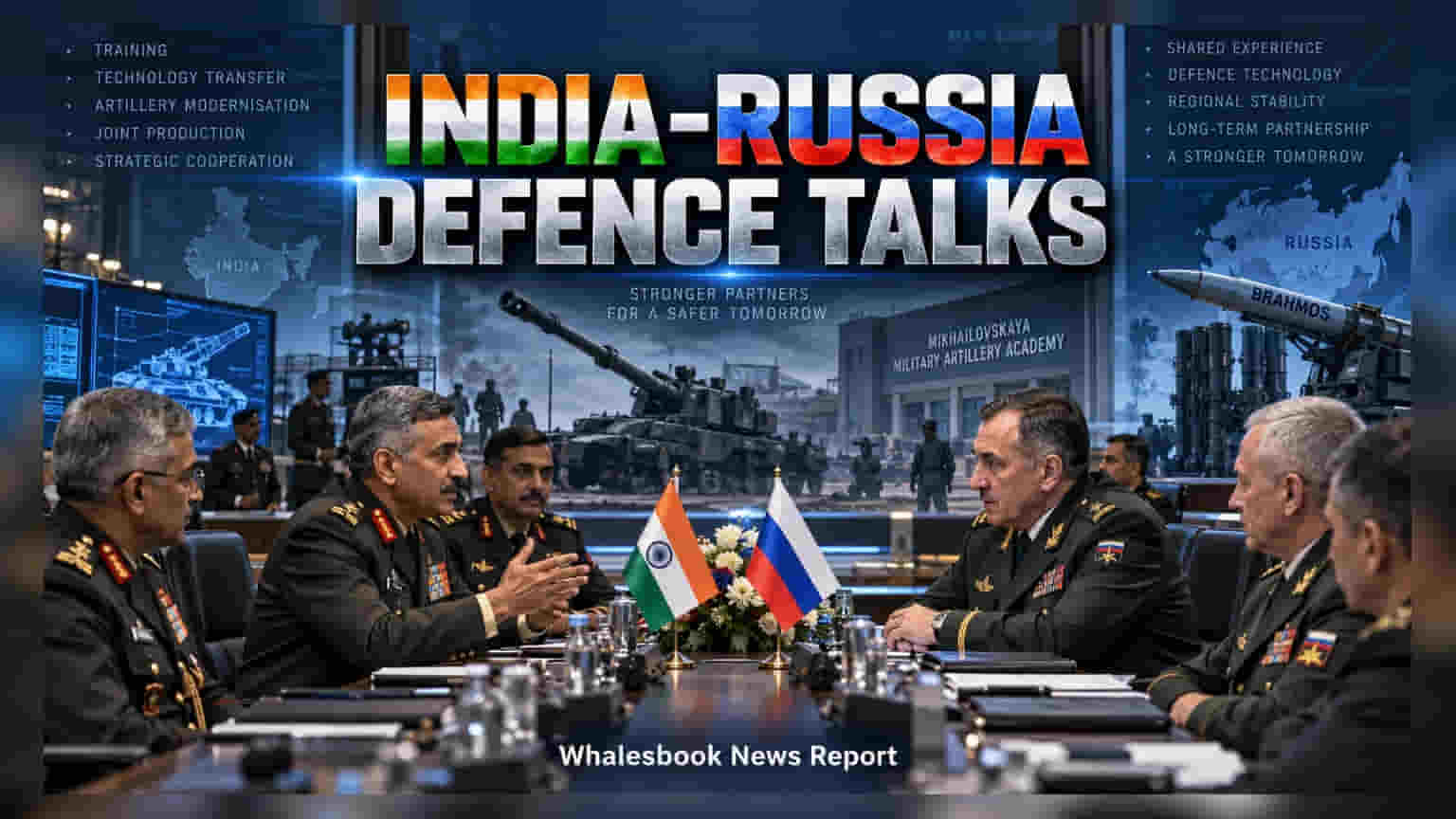
Chief of Army Staff General Dhiraj Seth concluded a three-day visit to Russia, focusing on artillery modernisation and joint capability building. This official engagement reinforces long-standing defence cooperation between the two nations, highlighting the stability of military technology partnerships and joint production efforts that remain critical for India’s defence manufacturing sector.
Chief of Army Staff General Dhiraj Seth has wrapped up a three-day official visit to Russia, marking a significant step in ongoing bilateral defence cooperation. The visit included high-level discussions with senior Russian defence officials, including the Deputy Minister of Defence, General Yunus-Bek Yevkurov. These talks were primarily aimed at improving military-to-military engagement and exploring new avenues for collaboration in training and technology transfer.
A major part of the visit focused on artillery modernisation and shared operational experiences. In St. Petersburg, General Seth toured the Mikhailovskaya Military Artillery Academy, interacting with faculty to understand evolving training methods. For investors, this emphasis on artillery and technology sharing is relevant as India continues to modernise its military inventory, much of which relies on collaborative frameworks with international partners.
The India-Russia defence relationship has long been a pillar of the nation's security architecture. This visit comes shortly after high-level meetings between Prime Minister Narendra Modi and President Vladimir Putin during the BRICS summit, highlighting the strategic importance both countries place on these ties. Beyond the supply of hardware, this partnership now focuses increasingly on technology transfer and joint initiatives like the BrahMos missile project, which involve participation from several domestic defence entities.
For the Indian defence sector, the stability of this relationship is essential. A significant portion of the Indian military's existing equipment is of Russian origin, requiring long-term maintenance, spare parts, and technology upgrades. Companies involved in these supply chains, such as Hindustan Aeronautics Limited, Bharat Electronics Limited, and Bharat Dynamics Limited, often benefit from the sustained stability of these international partnerships. While the domestic industry is pushing for self-reliance under the Atmanirbhar Bharat initiative, ongoing technology sharing with established partners remains a key factor for maintaining operational efficiency.
The long-term impact for shareholders in the defence sector will depend on how these high-level engagements translate into actual production orders, maintenance contracts, and successful technology transfers. The market will likely watch for upcoming joint exercises, such as the Indra series, and any further updates regarding joint production capabilities as the government looks to balance indigenous manufacturing with continued strategic cooperation.