

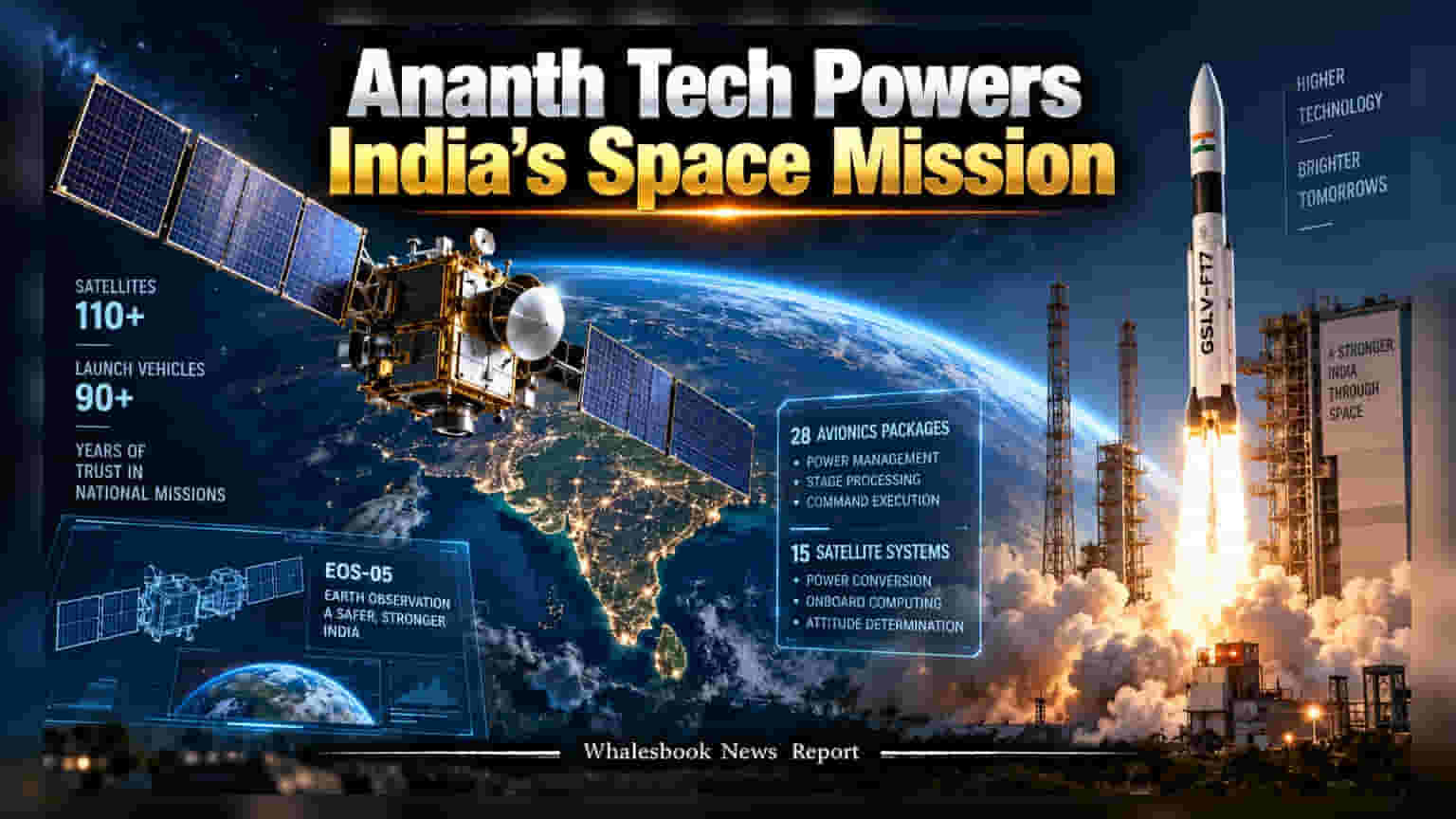
Hyderabad-based Ananth Technologies provided essential avionics and systems for the GSLV-F17 launch and EOS-05 satellite mission. This confirms the company’s role in supporting India’s space program. While the firm is private and not listed on stock exchanges, its sustained contribution reflects the growing scale of India's private aerospace manufacturing sector.
Hyderabad-based Ananth Technologies played a critical role in the successful launch of the GSLV-F17 mission, which placed the EOS-05 imaging satellite into geosynchronous orbit. The private company delivered 28 distinct avionics packages for the launch vehicle, handling vital functions such as power management, stage processing, and command execution. Additionally, it supplied 15 specialized systems for the EOS-05 satellite, supporting its power conversion, onboard computing, and attitude determination capabilities.
This partnership with the Indian Space Research Organisation (ISRO) is not an isolated event. Ananth Technologies has established itself as a long-term supplier for national aerospace initiatives, having contributed hardware to 110 satellites and 90 launch vehicles over the years. The company operates specialized infrastructure across Hyderabad, Bengaluru, and Thiruvananthapuram to manage the high-precision assembly, integration, and testing required for these complex missions.
For readers observing the aerospace sector, it is important to note that Ananth Technologies is a private, unlisted entity and is not traded on any public stock exchange. Its business model is heavily oriented toward defense and space-related contracts. While this provides a niche market position, it also introduces specific business realities that are common in this industry. The company operates with a heavy concentration of business from government agencies like ISRO and DRDO, which means its revenue stability is tied closely to the long-term project pipelines of these institutions.
Furthermore, the aerospace manufacturing sector often faces an elongated operating cycle. The nature of these projects involves long lead times for manufacturing and extended periods for payment realization, which require careful management of working capital. For private firms in this space, maintaining consistent investment in research and development and adhering to strict quality standards are essential to sustain their partnership with government programs.
The successful deployment of the EOS-05 mission, designed to provide continuous monitoring of the Indian landmass and maritime zones, demonstrates the company’s ability to execute on high-stakes requirements. Moving forward, the key factor for the company will be its ability to maintain its technological edge and continue serving the evolving needs of India’s space and defense programs as the sector sees increased private sector participation.