

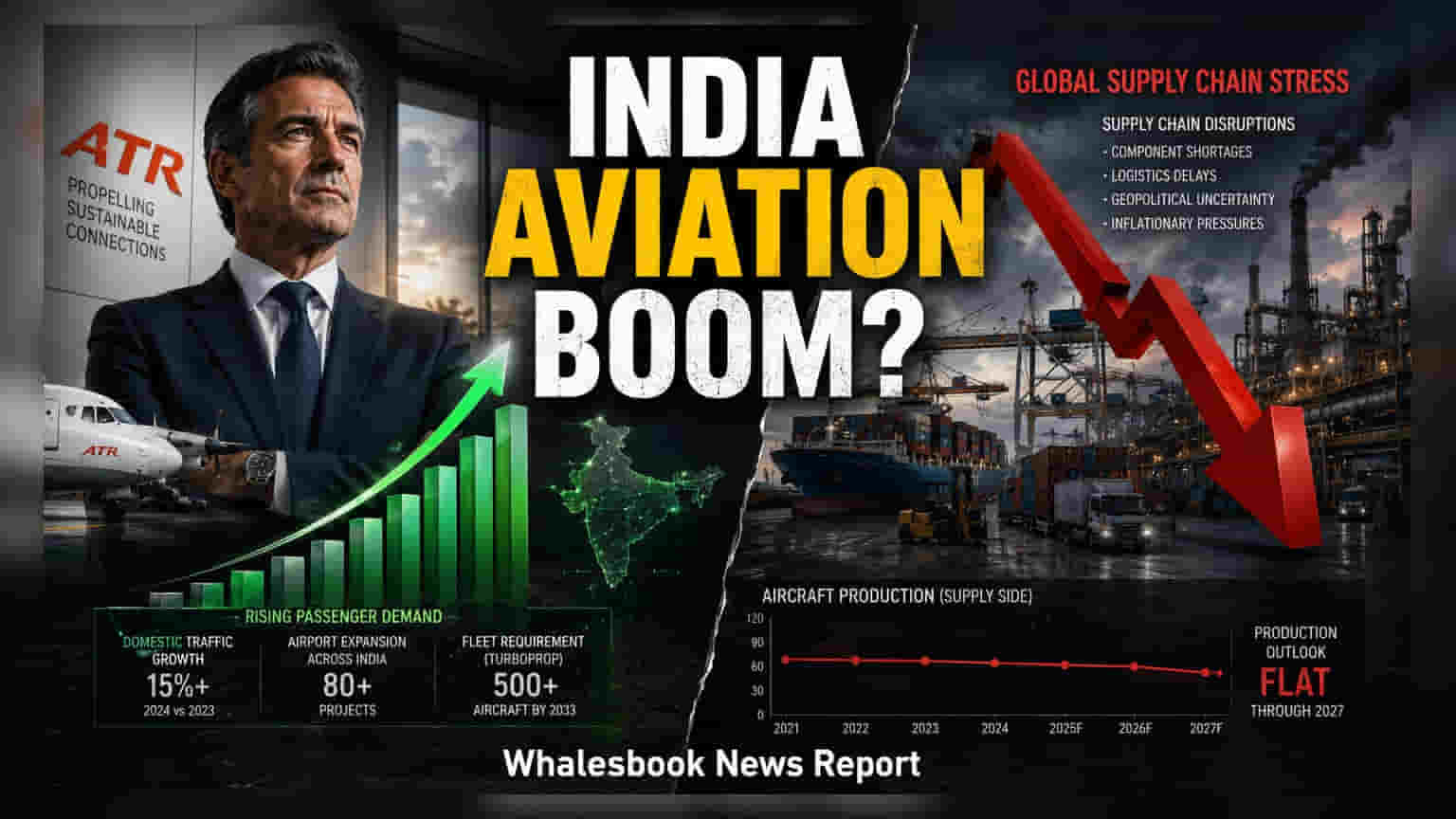
Turboprop maker ATR plans to supply 10 aircraft annually to India over the next 20 years, driven by regional aviation growth. However, global supply chain issues have capped production at 40 planes a year, creating a delivery backlog. The firm’s ability to meet Indian demand depends on its success in scaling manufacturing capacity back to pre-pandemic levels.
ATR, a joint venture between Airbus and Leonardo, has identified India as a core growth area for its turboprop aircraft. The manufacturer expects a steady demand for 10 planes each year over the next two decades. This target is supported by India’s expanding regional connectivity and government plans to open approximately 100 new airports by 2030. Currently, there are about 70 ATR aircraft operating in India, a fleet the company believes could expand significantly as domestic air travel becomes more accessible to smaller cities.
Production Bottlenecks Impact Deliveries
While demand in the Asia-Pacific region remains high—accounting for 40% of ATR's global orders—the company is struggling with production limitations. The manufacturer currently produces 40 aircraft annually, which is significantly lower than its pre-pandemic levels. These production problems are tied to global supply chain disruptions that have hampered the ability to source parts and assemble planes. With a global backlog of roughly 170 aircraft, ATR has set a goal to increase annual output to 60 planes by 2030. For investors, this means the company's revenue growth is currently tied more to its ability to resolve supply chain constraints than to securing new orders.
Strategic Focus on Local Support
To support a larger fleet in India, ATR is exploring the development of local services, including pilot training, aircraft maintenance, and the manufacturing of specific components. Collaborating with domestic partners in these areas is part of a strategy to ensure the long-term viability of the regional aviation market. However, the company has not yet provided specific timelines or details on capital spending for these projects.
Market Context and Monitorables
India’s regional air travel market remains under-penetrated, with air travel representing only about 3% of the over 4 billion annual intercity trips. While this suggests significant room for long-term expansion, investors should monitor ATR’s delivery performance and its progress in clearing the current order backlog. Any delays in scaling up production could impact the manufacturer’s ability to capture the projected growth in the Indian market, potentially benefiting competitors or shifting demand toward larger jet aircraft in the domestic sector. The next important update will be the company’s progress in increasing its annual production rate toward the target of 60 aircraft by 2030.