 Whalesbook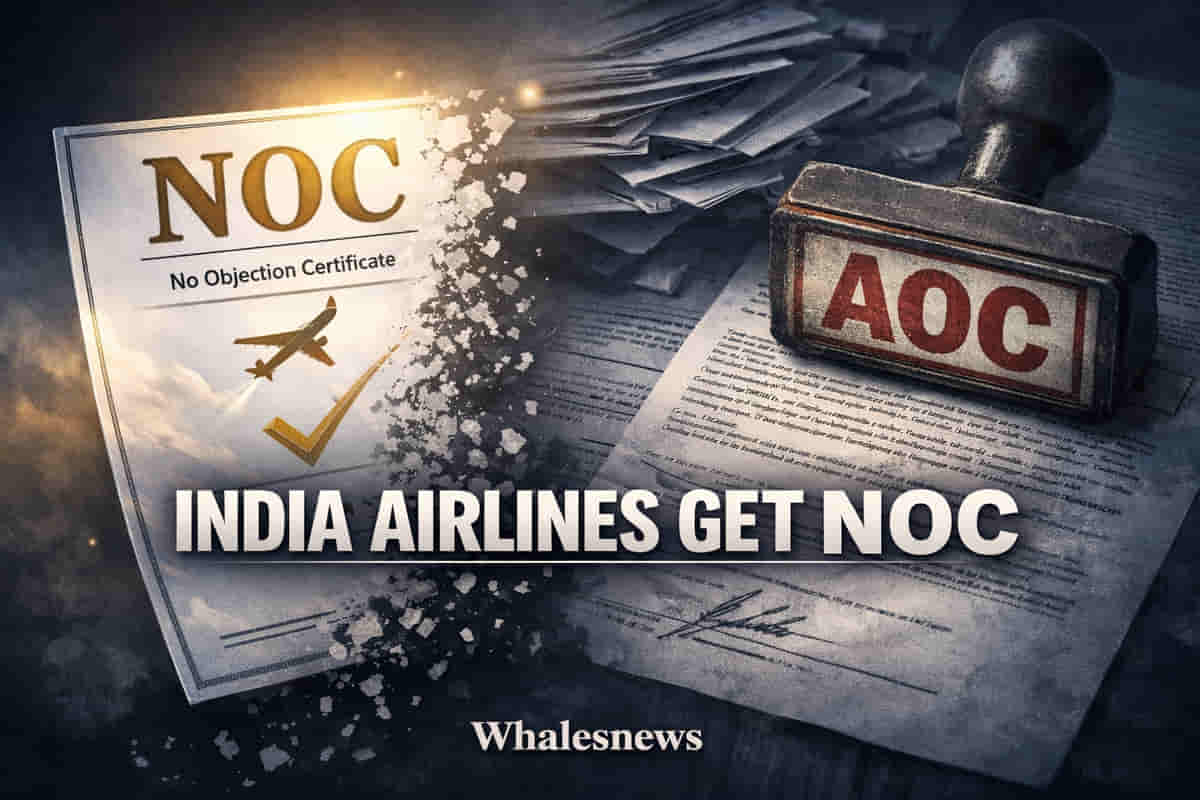
New Entrants Get Ministry Nod in India
India's Ministry of Civil Aviation has announced the issuance of No-Objection Certificates (NOCs) to three proposed airlines: Shankh Air, Al Hind Air, and FlyExpress. This announcement, made by civil aviation minister Kinjarapu Ram Mohan Naidu, also noted that Air Kerala already holds such a certificate. The news has sparked discussions about increased competition in India's aviation sector, which is currently dominated by a duopoly of IndiGo and Air India, who together control over 90% of the domestic market capacity.
The NOC: A First Step, Not a Guarantee
Industry experts and analysis suggest that the issuance of an NOC is merely the initial and easiest phase in the complex process of establishing a new airline. An NOC does not grant permission to fly, sell tickets, or commence commercial operations. It signifies only that the applicant company can proceed with the formal procedures for setting up an airline and apply for subsequent regulatory approvals.
Air Kerala, for instance, received its NOC in mid-2024 but has yet to induct any aircraft, a prerequisite for applying for an Air Operator Certificate (AOC) from the Directorate General of Civil Aviation (DGCA). Without an AOC, no airline can legally operate flights.
Hurdles for Aspiring Airlines
The path forward for Shankh Air, Al Hind Air, FlyExpress, and Air Kerala is fraught with significant challenges. Before they can even apply for an AOC from the DGCA, these proposed airlines must acquire at least one aircraft, either through purchase or lease. Aircraft leasing, a common route for startups, requires substantial upfront capital in the form of security deposits and bank guarantees, often amounting to millions of rupees.
Securing aircraft itself presents another obstacle, as manufacturers and lessors are already facing delivery backlogs with established carriers, making them hesitant to commit scarce resources to new, unproven operators. Even after securing aircraft and meeting stringent safety and staffing requirements, airlines must complete a series of proving flights to satisfy the DGCA before receiving final operational approval. The entire process from NOC to AOC can easily take over a year.
Market Reaction and Historical Context
The timing of the NOC announcement, coming after a period of significant passenger disruption and fare surges due to capacity constraints, has been interpreted by some as a government effort to foster competition and consumer choice. However, veteran aviation consultant Mark D Martin emphasizes that most airlines that receive initial clearances struggle to scale up and often fail before stabilizing operations.
India's regional aviation sector has a history of instability, with numerous airlines like Paramount Airways, Air Pegasus, Zoom Air, TruJet, Air Odisha, and Fly Big ceasing operations. While some like StarAir, Fly91, and Alliance Air have managed stable operations, the overall track record highlights that regulatory approvals alone are insufficient. Deep capital, reliable aircraft access, sustained demand, and effective management are crucial for survival.
Impact
This news has a moderate impact (6/10) on the Indian stock market. While it introduces the possibility of future competition, the significant regulatory and financial hurdles mean that the dominance of IndiGo and Air India is unlikely to be challenged in the immediate short term. Investors should view these NOCs as preliminary steps rather than definitive indicators of imminent market shifts. The long-term potential impact depends on the successful navigation of the complex operational and financial landscape by these new entrants.
Difficult Terms Explained
- No-Objection Certificate (NOC): An initial clearance from the civil aviation ministry allowing a company to start the formal process of setting up an airline.
- Air Operator Certificate (AOC): The mandatory license issued by the Directorate General of Civil Aviation (DGCA) that allows an airline to commence commercial flight operations.
- Directorate General of Civil Aviation (DGCA): India's aviation regulatory body responsible for safety, licensing, and oversight of air transport.
- Duopoly: A market structure dominated by only two major companies.
- Aircraft Induction: The process of acquiring aircraft, either by purchasing them outright or leasing them.
- Proving Flights: Test flights conducted by an airline under regulatory supervision to demonstrate its operational capabilities before receiving final approval.
- Original Equipment Manufacturers (OEMs): Companies that manufacture aircraft.