 Whalesbook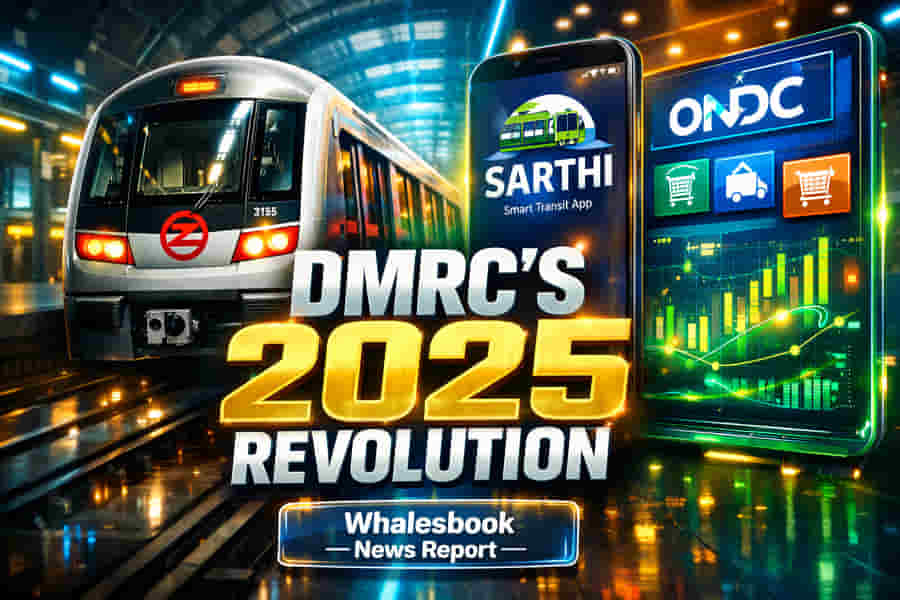
Delhi Metro's Defining Year: Expansion, Innovation, and National Acclaim in 2025
Delhi Metro Rail Corporation (DMRC) experienced a transformative year in 2025, characterized by ambitious expansion projects, significant technological advancements, and widespread national recognition. This period solidified its role as a vital urban transport backbone and a leader in transit innovation.
The Core Expansion Drive
The year kicked off with a strong push for its Phase IV expansion. On January 5, the foundation stone was laid for the substantial 26.5-km Rithala-Narela-Nathupur (Kundli) metro corridor. Passenger services also began on the Janakpuri West-Krishna Park Extension section, marking the operational debut of the Phase IV network. These developments propelled the Delhi-NCR metro network to span 394.448 km, connecting 289 stations and significantly enhancing regional connectivity.
Engineering Marvels on Track
DMRC achieved several formidable construction milestones throughout 2025, particularly on the Tughlakabad-Aerocity (Golden Line) and Magenta Line corridors. These feats included the completion of multiple challenging underground tunnels, the construction of the network's highest point at Haiderpur Badli Mor, and the intricate erection of long steel spans over active railway tracks. Notably, DMRC successfully tunnelled beneath the operational Red Line at Pulbangash, an engineering first for its Phase IV works, showcasing its advanced capabilities.
Digital Transformation for Commuters
Beyond physical infrastructure, DMRC embraced digital transformation to improve commuter experience. The launch of the Sarthi-Momentum 2.0 app aimed to provide seamless travel planning and information. Integration with the Open Network for Digital Commerce (ONDC) allowed for ticket booking via multiple platforms, making ticketing more accessible. The introduction of 'DMRC Pay powered by BHIM' facilitated cashless transactions. Additionally, priority frisking was introduced for special category passengers, underscoring a focus on inclusivity and convenience.
Strengthening National and Global Ties
DMRC extended its influence beyond Delhi, reinforcing its position as a key mobility partner. It secured a long-term contract for the operation and maintenance of the Chennai Metro Phase-II corridors. The corporation also signed significant Memoranda of Understanding (MoUs) with Indian Railways, Monash University, Mappls MapmyIndia, IIT Hyderabad, and various port authorities. DMRC also demonstrated its expertise on international stages, including the Smart City Expo in Barcelona.
Commitment to Sustainability and Social Responsibility
Sustainability and social responsibility remained central to DMRC's operations. The corporation actively sought to increase its renewable energy consumption by inviting bids for over 60 percent of its power needs from renewable sources. It inaugurated a dedicated metro station gallery honouring Param Veer Chakra awardees and opened a children's home. Observances like Cyber Security Awareness Month and year-long Janjatiya Gaurav Divas celebrations highlighted its commitment to societal engagement and national heritage.
Accolades and Public Engagement
DMRC and its leadership garnered several national honours in 2025, receiving accolades such as the Kirti Award for official language implementation and various energy-efficiency awards. Capping the year, the inauguration of a state-of-the-art Delhi Metro Museum at the Supreme Court metro station provided citizens with insights into the evolution of urban transport in the capital, reinforcing DMRC's dedication to public engagement, heritage, and learning.
Impact
This news has a significant positive impact on India's infrastructure development sector and urban mobility. It showcases successful project execution, technological adoption, and strong governance by a major public undertaking. This could boost investor confidence in related infrastructure companies and highlights India's growing capabilities in large-scale transit projects. The expansion also directly benefits millions of commuters in the Delhi-NCR region. Impact Rating: 8/10
Difficult Terms Explained
- Phase IV expansion: Refers to the fourth major stage of development and construction for new metro lines and extensions in the Delhi Metro network.
- MoUs (Memoranda of Understanding): Formal agreements or contracts between two or more parties outlining a commitment to cooperate on a project or initiative.
- ONDC (Open Network for Digital Commerce): An Indian government initiative aiming to democratize digital commerce by creating an open, decentralized platform for buying and selling goods and services.
- DMRC Pay powered by BHIM: A payment service integrated into the Delhi Metro system, utilizing the BHIM (Bharat Interface for Money) app for cashless transactions.
- Param Veer Chakra: India's highest military decoration awarded for valour in the face of the enemy.
- Janjatiya Gaurav Divas: A day celebrated in India to honour the contributions of tribal communities to culture and history.
- Tunnelling beneath operational lines: A complex engineering task involving digging underground tunnels directly below existing, functioning metro or railway lines without disrupting their services.