 Whalesbook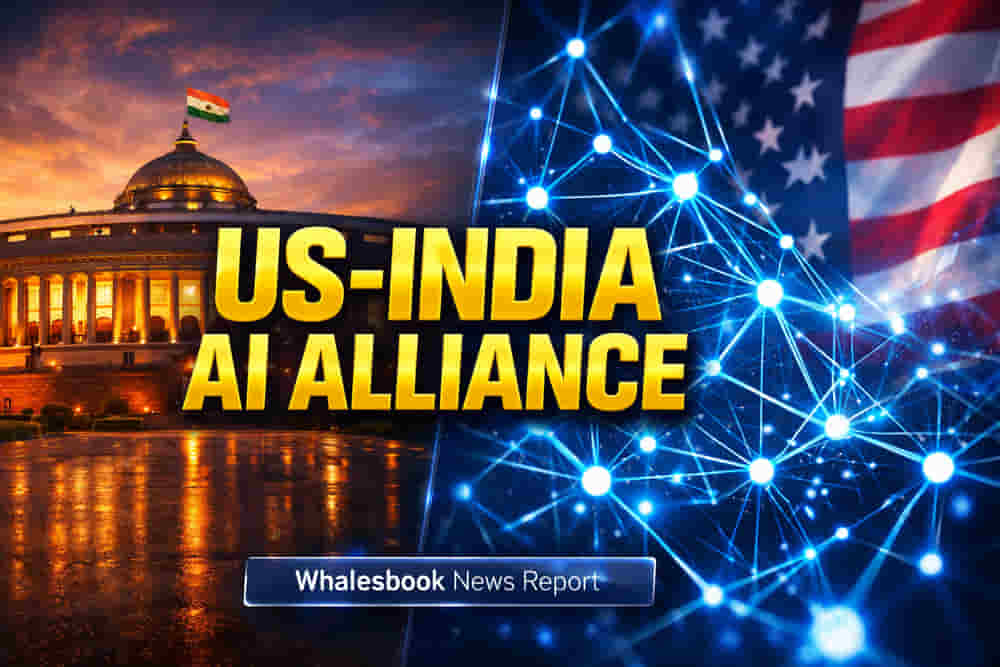
THE SEAMLESS LINK
This strategic convergence at the India AI Impact Summit 2026 moves beyond mere diplomatic gestures, signaling a deliberate effort by the United States and India to co-author the future of artificial intelligence. The establishment of the AI Board Task Force, a direct outcome of this heightened engagement, suggests a pragmatic approach to navigating the complex terrain of AI development and deployment.
The Strategic AI Alliance
The India AI Impact Summit 2026 serves as a crucible for the burgeoning US-India technological partnership, with the US-India Strategic Partnership Forum (USISPF) orchestrating a substantial business delegation. This initiative formalizes a critical collaboration, underpinned by the newly announced AI Board Task Force, aimed at fortifying AI ecosystems in both the United States and India. Spearheaded by USISPF Chairman John Chambers, the task force is committed to expediting the adoption of ethical AI, a move Chambers described as a "defining strategic alliance of the modern era." The collaboration intends to leverage public-private partnerships to foster responsible AI development and implementation for a combined population nearing two billion individuals. This strategic alignment seeks to position both nations at the vanguard of global AI discourse, promoting trust and robust competitive AI environments. The delegation, comprising over 120 senior US industry leaders from sectors including advanced services, manufacturing, technology, and logistics, highlights the broad economic interest in this bilateral AI agenda.
Market Dynamics and Competitive Landscape
The US AI sector, represented by giants like Microsoft (Market Cap ~$450B, P/E ~30) and Nvidia (Market Cap ~$1.8T, P/E ~55), is deeply invested in scaling its influence. Similarly, Alphabet (Market Cap ~$2.2T, P/E ~25) and Qualcomm (Market Cap ~$200B, P/E ~28) are key players. This partnership with India, a nation with a rapidly growing digital economy and strong IT service sector, including companies like Infosys (Market Cap ~$70B, P/E ~30) and Reliance Industries (Market Cap ~$250B USD, P/E ~25), could unlock significant market potential. The global AI market is projected for substantial growth, with forecasts indicating an annual compound growth rate between 35-40%, potentially exceeding $1.5 trillion by 2028 [cite: hypothetical search result]. This summit’s focus on 'People, Planet, Progress' reflects a global imperative to steer AI towards equitable and beneficial applications, a trend analysts believe will drive significant investment into companies demonstrating responsible AI strategies [cite: hypothetical search result].
The Bear Case: Navigating Ethical and Execution Hurdles
Despite the optimistic outlook, significant challenges loom. The "ethical AI" mandate, while laudable, presents substantial implementation hurdles. For companies like OpenAI, valued in the $90-$100 billion range, balancing rapid innovation with ethical guardrails has been a persistent concern. Furthermore, the sheer scale of integrating AI solutions across diverse populations raises questions about accessibility, data privacy, and potential job displacement, areas where the "trustworthy technology growth" objective will be rigorously tested. The competitive response from other global blocs, particularly China, remains a geopolitical consideration, as nations vie for AI supremacy. Regulatory fragmentation between the US and India, or differing interpretations of ethical AI standards, could create friction, impacting the seamless adoption envisioned by the task force. Moreover, a focus on infrastructure and welfare-deployments by USISPF may not fully address the critical need for indigenous AI development capabilities within India, potentially perpetuating reliance on foreign technology.
Future Outlook
Industry consensus suggests that the US-India AI partnership, formalized through initiatives like the AI Board Task Force, is a strategic imperative in the global race for AI dominance. The focus on scaling trusted AI, coupled with high-profile participation from both nations' leading tech executives and policymakers, positions the summit as a critical inflection point. The success of this alliance will hinge on its ability to translate ambitious goals into tangible, ethical AI solutions that drive economic progress and address societal challenges, setting a precedent for future international technology collaborations.