 Whalesbook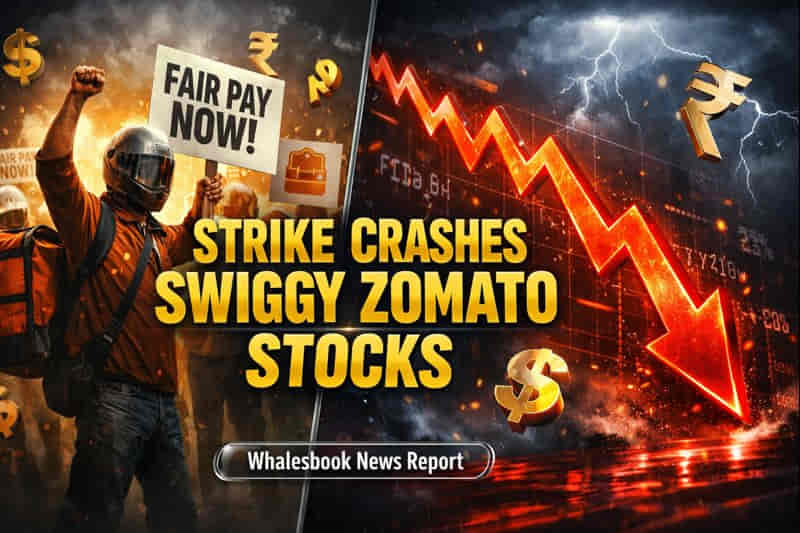
Swiggy and Zomato Stocks Dip Amid Nationwide Delivery Worker Strikes
Shares of major food delivery platforms, Swiggy and Zomato, experienced a notable decline following widespread strikes by delivery workers across India. The coordinated actions, which took place on December 25 and again on December 31, caused substantial disruptions to services, particularly during the high-demand festive period.
The Core Issue
Delivery workers participating in the strikes voiced strong demands for predictable earnings, basic employment protections, and greater transparency in the algorithms that govern work assignments and performance evaluations. These workers view temporary incentives and outsourcing measures, employed by companies to mitigate strike impacts, as insufficient to address fundamental concerns about their livelihoods.
Financial Implications
The strikes directly impacted the market's perception of these platform companies, leading to a fall in their stock values. Beyond immediate price drops, the situation exposes underlying operational vulnerabilities. Short-term fixes like increased incentives or rapid onboarding of new workers can erode profit margins and damage long-term trust between platforms and their delivery workforce.
Market Reaction
Investor confidence, previously reflected in stock prices, was tested by the scale and timing of the protests. The disruption during peak holiday demand periods, crucial for revenue generation and customer habit reinforcement, raised concerns about the operational resilience and underlying business model sustainability of these platforms.
Official Statements and Responses
Companies like Swiggy and Zomato attempted to cushion the effects of the strikes through measures such as offering short-term incentives, utilizing third-party logistics, and reactivating dormant worker accounts. However, union leaders have characterized these actions as sidestepping the core demands, warning of further, larger-scale actions.
Future Outlook
India's gig economy stands at a critical juncture. The strikes highlight a governance gap in how platforms manage technology, labor, and livelihoods. Experts suggest that a sustainable platform economy requires fundamental changes, including minimum earnings floors, portable social protections, transparent and contestable algorithms, and institutionalized dialogue between platforms and workers. Failure to address these issues could lead to recurring disruptions, reputational damage, and increased regulatory scrutiny.
Impact
The recent strikes and the subsequent stock price movements underscore significant risks and potential shifts within India's rapidly growing platform economy. For investors, this signifies the importance of labor stability as a driver of resilience and long-term value, rather than merely a cost. The situation could prompt regulatory bodies to establish clearer standards for gig worker classification and rights. For consumers, potential disruptions during peak periods highlight the dependence on a reliable delivery workforce.
Impact Rating: 7/10
Difficult Terms Explained
- Gig economy: A labor market characterized by the prevalence of short-term contracts or freelance work, as opposed to permanent jobs.
- Platform economy: An economic system where digital platforms facilitate transactions and interactions between buyers and sellers, often involving independent contractors or gig workers.
- Algorithms: A set of rules or processes followed by computers to perform tasks, used by platforms for work allocation, dynamic pricing, and performance monitoring.
- Precarity: A state of existence without security or stability, particularly regarding employment, income, and working conditions.
- Portable protections: Benefits, rights, or social security provisions (like health insurance or retirement plans) that workers can retain or transfer between different jobs or platforms.