 Whalesbook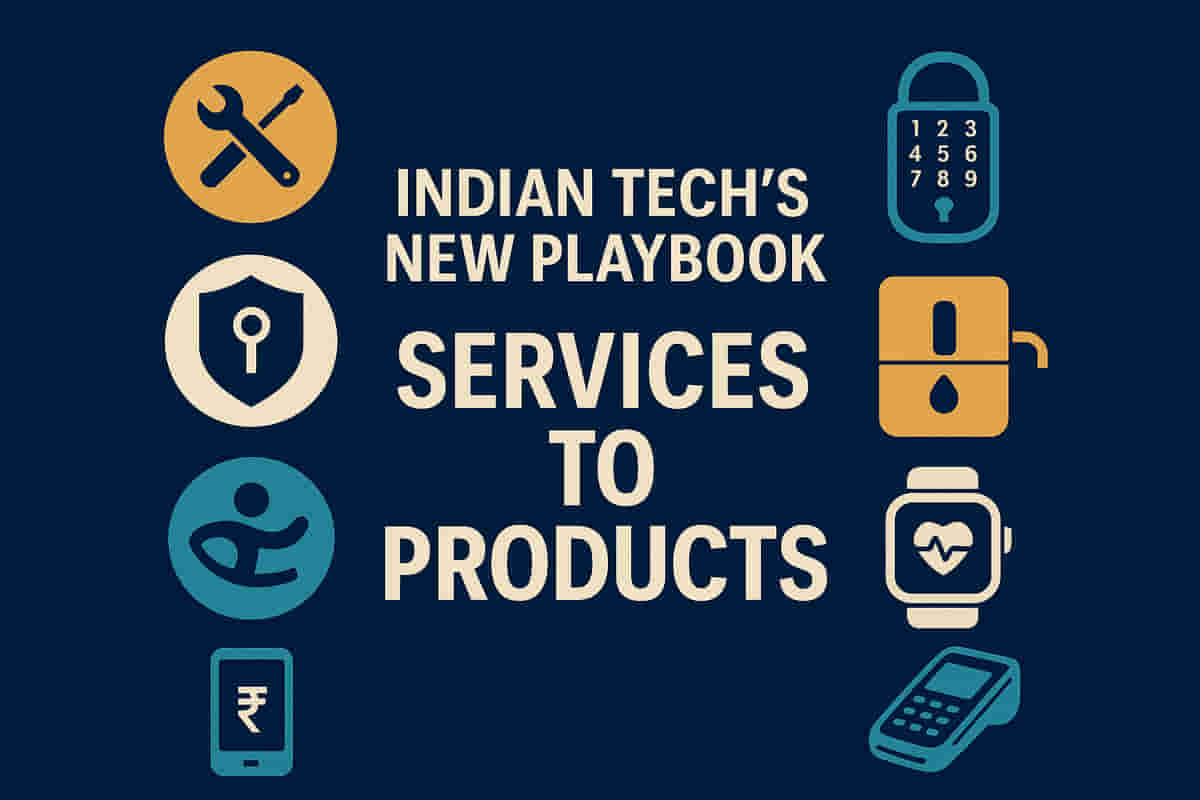
Indian tech startups are evolving their business models, moving beyond just providing services to selling products that complement their core offerings. This "service-attach model" aims to enhance customer stickiness and improve profitability.
Home-services platform Urban Company, which recently debuted on the stock market, saw its home-solutions brand Native contribute approximately ₹75 crore (11%) to its Q2 revenue of ₹380 crore. Its product business has grown substantially, and it's expanding sales to other e-commerce sites, aiming to improve operating margins and move towards profitability. CEO Abhiraj Singh Bhal stated the goal is to maintain customer connection digitally and physically. The company plans to add more products and potentially enter new categories like air conditioning.
MyGate, a security platform for gated communities, launched smart door locks and plans to expand into security cameras and home automation. While the product business is nascent, they are building B2B channels by partnering with developers.
HealthifyMe, a wellness platform, now sells its smart scales and continuous glucose monitors (CGMs) through e-commerce channels, in addition to subscriptions. CEO Tushar Vashisht highlighted that hardware aids in continuous data tracking, making richer data streams possible.
Paytm is monetizing its extensive base of 13.7 million soundboxes by charging merchants subscription and inference fees for AI-driven analytical and operational support services. This transforms the soundbox into an AI assistant, creating a new revenue stream and anchoring merchant relationships for cross-selling loans and insurance.
Most of these platforms adopt an "asset-light" approach, relying on OEM partnerships for manufacturing, except for Paytm's soundboxes. They are also largely positioning their products at the premium end of the market.
Impact:
This strategy shift is crucial for these tech companies as it diversifies revenue, enhances customer retention, and potentially leads to improved profitability and market expansion. It can significantly impact their valuations and financial performance if successful. Rating: 7/10.
Difficult Terms:
- Service-attach model: A business strategy where a product or service is offered alongside another core service to enhance customer value and loyalty.
- Stickiness: The ability of a product or service to retain customers and prevent them from switching to competitors.
- Business economics: The financial principles and factors that determine a company's profitability and operational efficiency.
- Adjusted Ebidta: A measure of operating performance before interest, taxes, depreciation, and amortization, with specific adjustments.
- Nascent: In the early stages of development or existence.
- OEM partnerships: Collaborations with Original Equipment Manufacturers, where one company produces goods for another company to rebrand and sell.
- Total addressable market (TAM): The total potential revenue opportunity available for a product or service in a market.
- Unit economics: The revenue and cost associated with a single unit of a product or service, indicating profitability per unit.
- Asset-light approach: A business strategy minimizing ownership of physical assets, often relying on outsourcing or partnerships.
- Monetize: To convert an asset or service into money or revenue.
- Subscription fees: Regular payments made by customers for ongoing access to a service or product.
- Inference fees: Charges for using analytical or AI capabilities provided by a service.
- Continuous Glucose Monitors (CGMs): Medical devices that continuously track glucose levels in the body.
- Soundbox: A device used by merchants to confirm digital payments with an audio alert.