 Whalesbook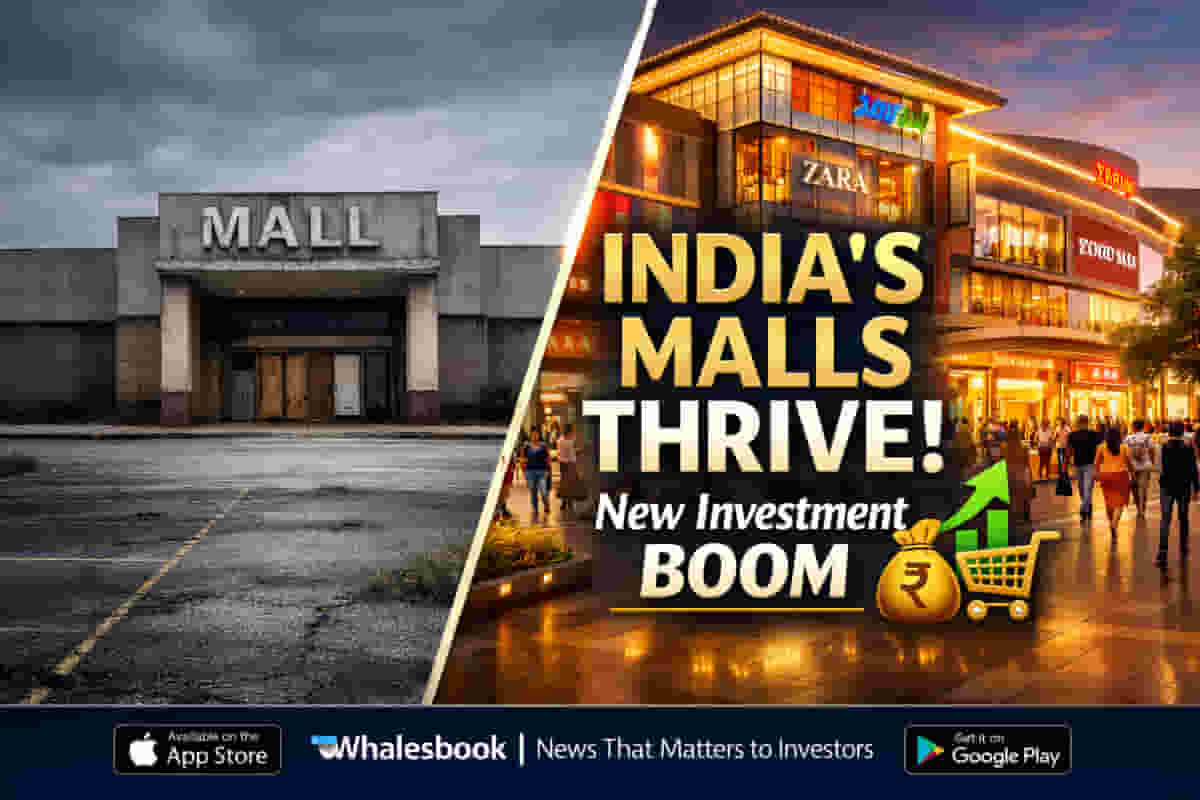
US Malls Struggle While India's Retail Sees a BOOM
In stark contrast to the challenges faced by shopping malls in the United States, India's retail real estate sector is poised for significant growth heading into 2026. While American retail giants shutter stores and grapple with increasing vacancies, India is witnessing a surge in capital focusing on older, often underutilized shopping centers. These "ghost malls," sitting on valuable urban land, are being eyed for revitalization, signaling a unique investment opportunity driven by robust domestic demand and favorable market conditions.
The Core Issue: Divergent Retail Realities
Across the US, the narrative is one of decline, with widespread store closures and rising vacancy rates plaguing traditional shopping malls. This trend highlights a shift in consumer behavior and market dynamics globally. However, India presents a vastly different picture. Property consultancies report that organized retail spaces in India's major cities maintained exceptionally high occupancy rates, ranging from 95% to 100% throughout 2025. This sustained demand underscores a critical shortage of quality retail space in India, with Grade-A mall stock standing at a mere 0.6 square feet per capita, a fraction of the approximately 23 square feet per capita available in the US.
Financial Implications and Investment Focus
This scarcity, coupled with a rapidly expanding consumption economy projected to reach $6 trillion by 2030, is driving intense interest in India's retail assets. Capital that might have once flowed into new developments is now increasingly targeting older shopping centers that had previously lost relevance. Knight Frank identified approximately 15.5 million square feet of such underutilized or outdated "ghost mall" stock. Selectively repositioning just 15 high-potential dormant centers could unlock an estimated ₹357 crore in annual rental revenue. Furthermore, Grade-A retail assets in India typically deliver internal rates of return (IRR) of 14% to 18%, nearly double the yields available in many Western markets, making them highly attractive to global investors.
Policy Support and Market Stability
Government measures during 2025 played a crucial role in bolstering sentiment across the real estate sector, including organized retail. The Union Budget 2025-26 increased total expenditure by 7.4% to ₹50.65 lakh crore, prioritizing infrastructure and urban development. Measures like revised income-tax slabs aimed to boost disposable incomes, indirectly supporting housing and retail demand. The allocation of ₹15,000 crore under the SWAMIH Fund II to complete stressed housing units, alongside initiatives like the ₹1 lakh crore Urban Challenge Fund and the National Geospatial Mission, signaled a strong push towards institutional-grade urban development and digital land records, enhancing long-term confidence.
Housing Market Dynamics
While the retail sector showed resilience, the residential market presented mixed signals through 2025. ANAROCK Research reported a 9% year-on-year decrease in housing sales across the top seven Indian cities in Q3 2025, with approximately 97,080 units sold. Despite this volume slowdown, the total transaction value rose by 14%, from ₹1.33 lakh crore to ₹1.52 lakh crore. This divergence indicates a stronger focus on premium and luxury segments, pushing capital towards assets offering predictable income over sheer scale. Consultants note this trend encourages investment in income-generating properties, including revitalized retail spaces.
The Revival of 'Ghost Malls'
The attention on "ghost malls" is driven by several factors. These underperforming assets are often well-located but misaligned with current market demands. Knight Frank's "Think India Think Retail 2025" report highlighted that many are being repurposed rather than demolished. Their spacious floorplates are suitable for healthcare facilities, vocational institutes, coaching centers, and skill-development hubs, especially in land-constrained cities. Moreover, physical retail continues to outperform online in conversion rates for direct-to-consumer brands, with offline channels proving two to three times more effective. Physical stores are increasingly vital for customer experience and trust-building, complementing digital platforms.
Expanding Opportunities and Selective Cycles
The retail reset is also expanding beyond metropolitan areas, with organized retail penetration increasing in Tier-II and Tier-III cities, according to Colliers India. Badal Yagnik, Chief Executive Officer and Managing Director of Colliers India, anticipates 2026 reinforcing India's position as a globally competitive real estate market. This phase of development is characterized by a selective cycle, anchored in end-user demand, balance-sheet discipline, and delivery credibility, according to Ashwinder R Singh, Chair of CII Real Estate. Sustainability, technology adoption, and governance will be key differentiators.
Expert Insights and Future Outlook
Shishir Baijal, Chairman and Managing Director of Knight Frank India, emphasized the focus on "reconnecting rising consumer demand with underutilized retail infrastructure." ANAROCK Research reiterates the scarcity factor of quality retail space, supporting existing assets. This confluence of high demand, limited supply, strategic government support, and the potential for repurposing outdated infrastructure explains why India's "ghost assets" are attracting significant global capital as 2026 unfolds. The market is shifting towards stable, income-generating properties, making revitalized retail spaces a compelling investment.
Impact
This trend is expected to significantly boost the Indian retail and real estate sectors, potentially creating numerous jobs in construction, retail operations, and ancillary services. Increased investment inflow will strengthen the economy, improve urban infrastructure, and provide enhanced retail experiences for consumers. For investors, it presents an opportunity for higher returns compared to global markets, particularly within the real estate and retail segments.
Impact Rating: 8/10
Difficult Terms Explained
- Grade-A malls: High-quality, modern shopping centers located in prime areas, typically featuring established brands and excellent amenities.
- Occupancy rates: The percentage of available space in a property that is currently leased or occupied by tenants.
- Per capita: A measure representing the average amount per person in a population.
- Consumption economy: An economy where the primary driver of economic activity is consumer spending.
- Ghost malls: Older or underperforming shopping centers that have lost their relevance but are often situated on valuable land.
- Repurposed: Adapted or converted for a new use or purpose.
- OPD clinics: Outpatient Department clinics, providing medical services without requiring overnight hospitalization.
- Vocational institutes: Educational institutions that provide training in specific trades or professions.
- Direct-to-consumer (DTC) brands: Companies that sell their products directly to end consumers, bypassing traditional retailers or wholesalers.
- Tier-II and Tier-III cities: Cities that are ranked below the largest metropolitan areas (Tier-I) in terms of size, economic development, and population.
- Internal rates of return (IRR): A discount rate that makes the net present value (NPV) of all cash flows from a particular project equal to zero; used to estimate the profitability of potential investments.
- Disposable income: The amount of income that households have available for spending and saving after income taxes have been accounted for.
- Stressed housing units: Residential properties or projects facing financial difficulties or delays in completion, often due to developer insolvency or funding issues.
- Balance-sheet discipline: A company's commitment to maintaining a strong financial position by managing its assets, liabilities, and equity prudently.