 Whalesbook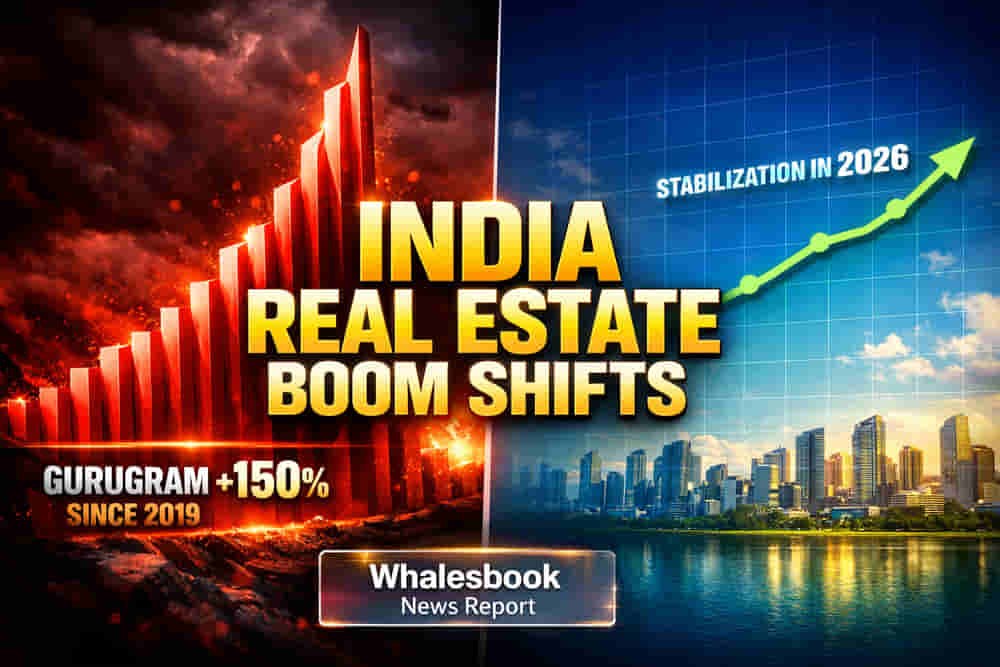
Property Market Set for Stabilization in 2026 After Major Price Surge
India's real estate sector is anticipating a significant shift towards price stabilization in 2026, following years of robust growth that saw property values in major cities, particularly Gurugram, surge by as much as 150% since 2019. This moderation is expected to bring much-needed affordability improvements for mid-income buyers, while the market pivots towards more sustainable, end-user driven expansion.
Record Price Growth Across Top Cities
PropTech platform Square Yards reported that Gurugram has witnessed the steepest price appreciation among India's nine prime residential markets, with an average increase of 150% since 2019. Other cities have also experienced significant gains: Pune saw prices climb by 115%, Noida and Greater Noida by 104%, Mumbai by 97%, and Bengaluru by 98%. This consistent upward trend has reshaped the property landscape across the country.
Shifting Market Dynamics in 2025
In 2025, registered residential transactions across India's nine key markets experienced a 5% year-on-year decline. However, this volume dip was overshadowed by a robust 11% increase in total sales value. This divergence is attributed to a 22% rise in average deal sizes, indicating a market maturing towards higher-value transactions rather than sheer volume expansion. This trend is particularly evident in markets like the Mumbai Metropolitan Region (MMR), where demand from a growing segment of wealthy Indians with higher disposable incomes has fueled the luxury and premium housing segments.
Affordability and Future Outlook
Tanuj Shori, CEO of Square Yards, noted that sustained price appreciation has begun to test affordability thresholds in several premium micro-markets. He anticipates that while demand remains resilient, the incremental growth in the luxury segment is likely to moderate in 2026. This points towards an onset of a stabilization phase, rather than an outright market slowdown. Parvinder Singh, CEO of Trident Realty, added that customers are increasingly discerning, seeking well-planned, substantial living spaces. Consequently, 2026 is projected to witness broader-based, end-user led growth, anchored in value and sensible expansion into peripheral urban corridors, contingent on active developer participation and execution.
Impact
This stabilization phase and improved affordability for mid-income buyers could stimulate demand across a wider segment of the population. It may also lead to a more balanced market, reducing the risk of speculative bubbles. For the construction sector, it signals a need to focus on delivering quality and value. This trend could positively influence related industries such as home loans, interior design, and building materials. The shift towards end-user driven growth suggests a healthier, more sustainable real estate market in the long run. However, developer execution and infrastructure development will be critical for realizing this potential.
Impact Rating: 7/10
Difficult Terms Explained
- PropTech: Technology solutions and platforms designed for the property and real estate industry.
- Housing Inflation: The rate at which the cost of housing (rent and home prices) increases over time.
- Affordability Thresholds: The point at which housing prices become excessively high relative to average incomes, making it difficult for people to purchase homes.
- Micro-markets: Small, specific geographical areas within a larger city that have distinct real estate characteristics and price points.
- End-user Led Growth: Market expansion driven by individuals or families buying property for their own use, rather than by investors seeking capital appreciation.