 Whalesbook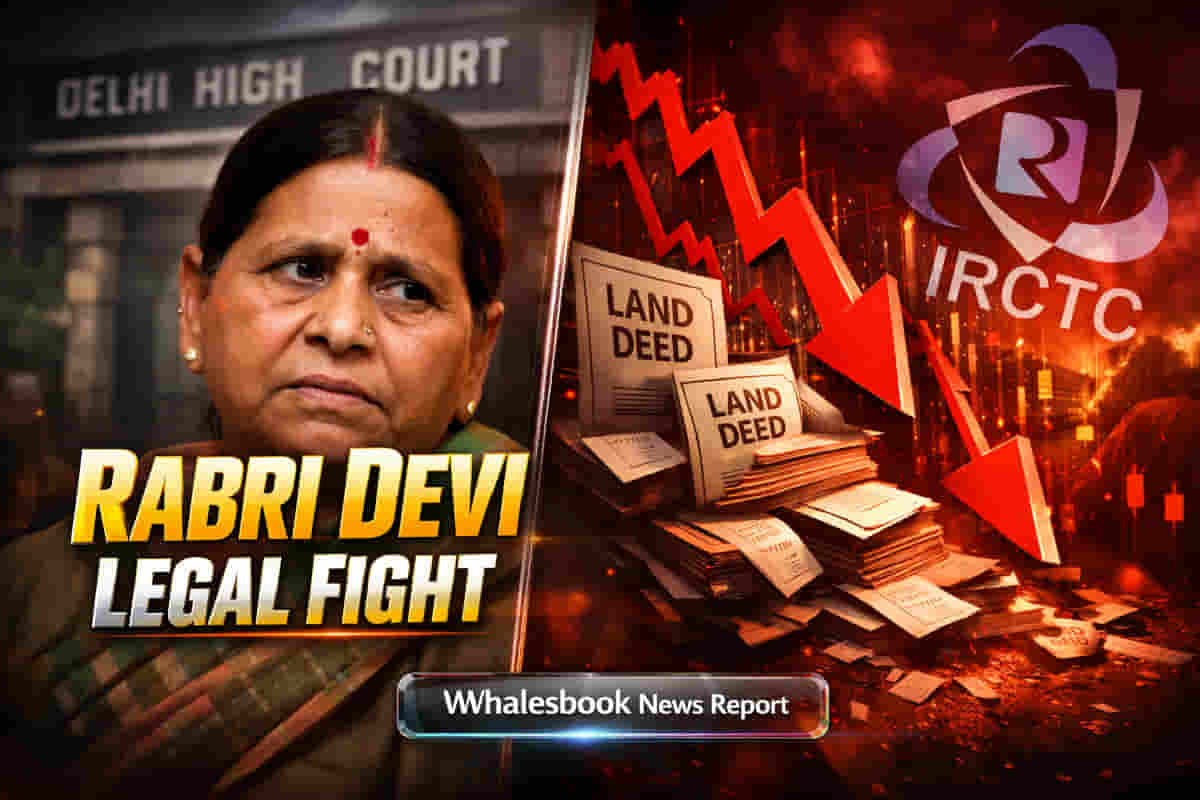
Legal Proceedings Unfold
The IRCTC scam case, a high-profile corruption probe, has seen another procedural development as the Delhi High Court heard a plea from Rabri Devi, former Chief Minister of Bihar and wife of former Railway Minister Lalu Yadav. On Friday, Justice Swarana Kanta Sharma issued a notice to the Central Bureau of Investigation (CBI), demanding a response to Devi's challenge against a trial court order that framed charges against her. This development keeps the decade-old scam firmly in the public and judicial spotlight, raising questions about accountability in public office.
Allegations of Corruption and Collusion
The CBI's investigation alleges a quid pro quo scheme during Lalu Yadav's tenure as Union Railway Minister from 2004 to 2009. Central to the accusations are the leasing of two Indian Railway Catering and Tourism Corporation (IRCTC) hotels in Ranchi and Puri. The agency claims these contracts were awarded to a private firm, Sujata Hotels, through a manipulated tender process. In return, prime land parcels, allegedly valued at crores of rupees, were transferred to a company purportedly linked to Rabri Devi and their son, Tejashwi Yadav, at significantly undervalued prices.
Trial Court's Prima Facie Findings
The trial court, in its detailed order on October 13, had concluded that there was sufficient evidence to proceed, stating that Lalu Yadav was aware of and influenced the tender process. Judge Vishal Gogne observed that "material modifications in the tender process" occurred, leading to the distinct possibility that "at the point of sale, the land parcels were undervalued and then came to be vested in the hands of Lalu Yadav." Charges of corruption, criminal conspiracy, and cheating were framed against Lalu Yadav, while Rabri Devi and Tejashwi Yadav face charges related to criminal conspiracy and cheating.
Yadav Family's Defense
The Yadav family has consistently refuted the allegations, questioning the probe's integrity and the evidence presented by the CBI. They maintain that the case is politically motivated, aimed at targeting opposition leaders. Their defense hinges on demonstrating a lack of direct involvement or illicit gains, asserting that the transactions were legitimate and the case lacks substantive proof. This legal battle is thus framed as a contest between the prosecution's claims of bribery and corruption and the defense's assertion of political persecution.
Next Judicial Steps
Following the Delhi High Court's issuance of notice, the case is scheduled for further hearing on Monday. The court's focus will be on reviewing Rabri Devi's plea and the CBI's response, potentially impacting the trajectory of the IRCTC scam trial. This ongoing judicial process highlights the long arm of anti-corruption laws and their application to individuals in high public offices, even years after their tenure.