 Whalesbook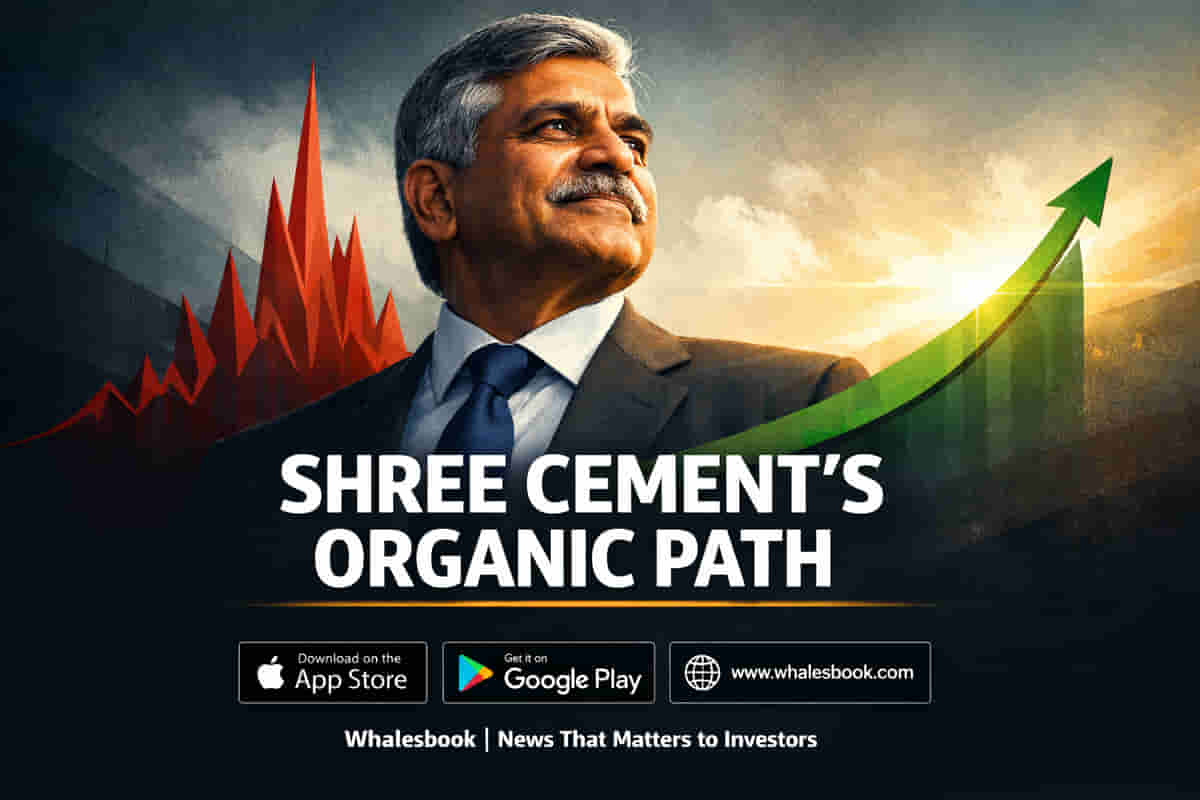
Shree Cement Chairman Bets on Organic Growth Amidst Sector Consolidation
H.M. Bangur, the 72-year-old chairman of Shree Cement, India's third-largest cement producer by capacity, has revealed his distinct strategy in a rare interview, choosing to steer clear of the aggressive acquisition race dominating the Indian cement industry. While peers like the Aditya Birla Group's UltraTech Cement and Gautam Adani's Ambuja Cements are actively pursuing inorganic expansion, Bangur remains unfazed, advocating for efficiency and organic growth as the more prudent path.
The Core Issue
Bangur painted a picture of a challenging cement sector. Despite India's GDP growth, cement demand growth has remained tepid at 4-5%, significantly below the traditional 1.3-1.4 times GDP multiplier. He noted that while margins appear healthy at 25-30%, long-term price appreciation has lagged inflation, putting profitability under pressure. The capital-intensive nature of the industry results in low returns on capital, often around 7-8%, which is barely sufficient to cover debt and interest. Shree Cement, however, is relatively insulated due to its lower debt levels.
Growth Philosophy
Shree Cement has largely sidestepped inorganic growth, a strategy Bangur strongly defends. He argues that acquisitions typically demand a 50% premium over the cost of setting up a new plant. While offering faster capacity gains, this approach burdens companies with debt and can disrupt strategic long-term planning. Bangur stated he is willing to pay at most a 10% premium for assets, preferring to invest in new, modern plants through organic expansion which, in his view, can yield more capacity over a decade for the same investment.
Market Reaction
Bangur believes that the intense focus on acquisition-led growth in the industry might be misplaced. He pointed out that Shree Cement has grown from the 10th to the 3rd largest player without any major acquisitions, demonstrating that organic growth can be highly effective. He suggests that the real measure of success is the growth rate achieved, not necessarily the method. Competitors like UltraTech are acknowledged for their management bandwidth to handle complex integrations, while Adani's recent entry is seen as too early to judge, despite potential synergies from their other businesses.
Official Statements and Responses
Bangur explicitly stated his strategy: "Our growth plans are not weak and we are simply choosing a different route." He dismissed the idea of acquiring struggling players unless at a significant discount, emphasizing that his focus remains on building low-cost, modern plants with the latest technology. He also clarified Shree Cement's commitment to its core business, eschewing diversification into adjacent sectors like paints or steel, and instead focusing on cement and ready-mix concrete (RMC).
Future Outlook
The chairman sees significant potential in the growth of RMC in India, aiming to mirror the higher adoption rates seen in markets like the UAE. He also touched upon raw material security, emphasizing the need for substantial limestone reserves. Regarding capacity utilization, he noted it's currently just under 60%, a figure expected to remain moderate due to continuous addition of new plants. Bangur also shared personal insights, including his annual pursuit of the CAT exam for self-assessment and his admiration for Warren Buffett's investment philosophy.
Impact
This strategic divergence by a major player like Shree Cement could influence market dynamics within the Indian cement sector. Investors may reassess the premium valuations placed on acquisition-driven growth versus the sustained, efficient expansion favored by Bangur. It highlights differing philosophies on market share acquisition and operational strategy, potentially leading to varied performance outcomes for companies.
Impact Rating: 7/10
Difficult Terms Explained
- Organic Growth: Business expansion achieved by increasing output and sales through the company's own resources, rather than through mergers and acquisitions.
- Inorganic Expansion: Business growth achieved by acquiring or merging with other companies.
- EBITDA: Earnings Before Interest, Taxes, Depreciation, and Amortization; a measure of a company's operating performance.
- Ready-Mix Concrete (RMC): Concrete that is manufactured in a batching plant, then mixed and delivered to a construction site in a truck as a single product.
- Capacity Utilization: The extent to which a factory or plant is operating relative to its potential full capacity.
- Synergies: The concept that the combined value and performance of two companies will be greater than the sum of the individual parts.
- Consolidation: The process where a market becomes dominated by a small number of firms, often through mergers and acquisitions.