 Whalesbook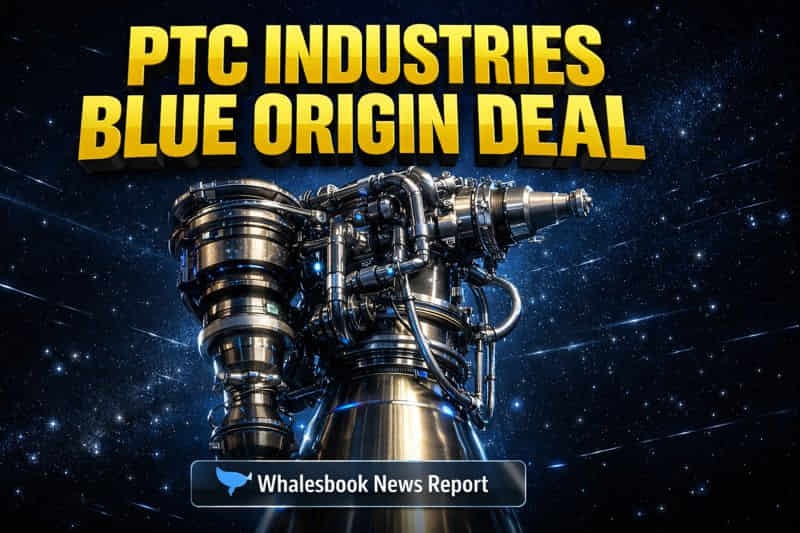
PTC Industries Limited announced that its wholly-owned subsidiary, Aerolloy Technologies Limited, has secured a significant development and supply order from Blue Origin, the space exploration company founded by Jeff Bezos. The contract entails the manufacture and supply of large superalloy investment castings essential for the BE-4 engines that will power Blue Origin's New Glenn orbital launch vehicle.
Blue Origin Contract Boosts Aerospace Ambitions
This deal positions Aerolloy Technologies as a key supplier in the demanding commercial space sector. The move aligns with India's broader push for self-reliance in aerospace and defence manufacturing. The components are critical for the high-performance BE-4 engines, which are also slated for use by United Launch Alliance's Vulcan Centaur rocket.
Mixed Quarterly Results Mask Revenue Growth
The positive development comes as PTC Industries navigates a challenging financial period. The company recently reported a 12% year-on-year decline in net profit for the second quarter, despite achieving double-digit growth in both revenue and operating earnings (EBITDA). This suggests that while sales volumes and operational efficiency improved, increased costs or other factors impacted the bottom line.
Strategic Orders Bolster Defence and Space Portfolio
PTC Industries has been actively expanding its order book in defence and aerospace. On January 7, 2026, a previous announcement detailed an ISRO-linked order for Vikram Sarabhai Space Centre, involving the conversion of titanium sponge into specialized alloy ingots. Furthermore, in August 2025, the company secured a contract valued at over ₹100 crore from BrahMos Aerospace for titanium castings, underscoring its growing role in strategic sectors.
Stock Performance Muted Amidst Sectoral Gains
Despite the significant Blue Origin contract, PTC Industries' share price showed minimal movement. The stock closed on the National Stock Exchange (NSE) on January 9, 2026, at ₹17,550, marking a slight decrease of ₹17, or 0.10%. This muted reaction may reflect investor focus on the Q2 profit dip or a broader market sentiment.