 Whalesbook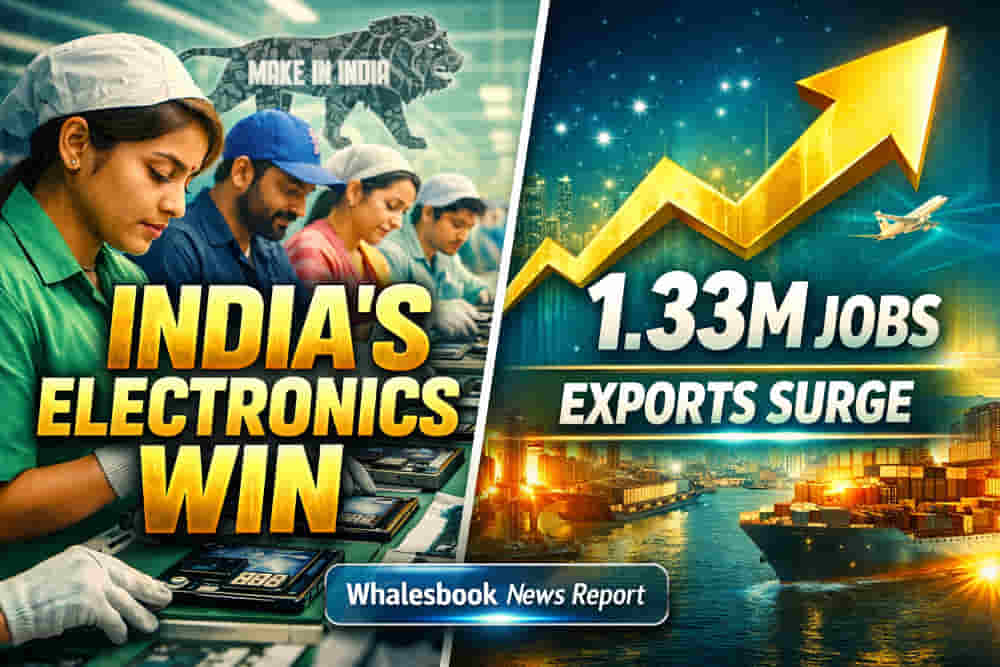
India's Electronics Sector Surges, Fueled by PLI Scheme
The "Make in India" initiative's electronics sector is marking a significant success, having generated more than 1.33 million jobs over the past five years. This remarkable growth is largely attributed to the Production-Linked Incentive (PLI) scheme, which has transformed smartphone manufacturing and led to a nearly tenfold increase in exports during the same period.
Job Creation and Inclusivity
According to industry body India Cellular and Electronics Association (ICEA), nearly 70% of the newly created jobs have gone to women and first-time job seekers. Out of the total 1.33 million jobs, approximately 400,000 are direct roles within manufacturing facilities, while an estimated 930,000 indirect jobs have been created in ancillary industries, logistics, and support services.
In the fiscal year 2025 alone, the mobile phone manufacturing ecosystem paid an estimated ₹25,000 crore in wages to its blue-collar workforce. Direct employees earned an average salary of ₹18,000 per month, with indirect staff receiving around ₹14,000 monthly, underscoring the sector's substantial economic contribution.
Manufacturing and Export Growth
Mobile phone production within India has seen a dramatic increase, soaring to over ₹5.45 lakh crore in FY25 from ₹2.2 lakh crore in FY21. Concurrently, exports have surged nearly tenfold, exceeding ₹2 lakh crore during the same timeframe. The ICEA represents major global and domestic players including Apple, Google, Dixon Technologies, Tata, and Foxconn.
Key Players and Government Recognition
The growth has been significantly propelled by the Apple ecosystem, including its contract manufacturers like Foxconn, Pegatron, and Tata Electronics. Since the PLI scheme's introduction, Apple has shifted a substantial portion of its manufacturing to India, with over 20% of iPhones now produced domestically. Minister of Electronics and Information Technology, Ashwini Vaishnaw, has acknowledged the sector's role in creating large-scale, skilled blue-collar jobs, particularly for women.
Future Outlook
Industry experts predict that India is on track to become the world's second-largest mobile phone exporter by 2026. Smartphones have rapidly climbed the ranks, becoming India's second-largest export product category in FY25, a significant jump from the 167th position in FY15. Pankaj Mohindroo, chairman of ICEA, expressed optimism that continued policy stability will enable further scaling of production, deepening domestic value addition, and creating millions more jobs.
Impact
This news indicates significant positive momentum for the Indian manufacturing sector, particularly electronics and mobile phones. It suggests strong growth potential for companies involved in this ecosystem, contributing to economic expansion and employment. The emphasis on job creation, especially for women, highlights positive social impact. The news is likely to boost investor confidence in the sector.
Impact Rating: 8/10
Difficult Terms Explained
- Make in India: A government initiative launched to encourage companies to manufacture goods within India, aiming to boost domestic production, create jobs, and increase exports.
- Production-Linked Incentive (PLI) Scheme: A scheme by the Indian government offering financial incentives based on incremental sales achieved by companies for the products manufactured in India.
- Ancillary Industries: Businesses that provide support services or components to larger manufacturing industries.
- Blue-collar staff: Employees who perform manual labor or skilled trades, typically in manufacturing, construction, or maintenance roles.
- Contract manufacturers: Companies that produce goods on behalf of another company, often under the brand name of the client company.